The Ritz-Carlton Tokyo: a great 53rd floor on top of tired rooms
Verdict. Well built, well staffed and visibly old: worth it in a Club room or on points with top-tier Marriott status, not as a cash-paid base room with a paid breakfast.
If you have top-tier Marriott status or you're willing to pay for the club, I think the Ritz-Carlton is a very good stay. It's a really good hotel on the 53rd floor and a slightly tired one on the floors below. The rooms are big, spotless and solidly built, but they were last redone in 2015, and you can tell. Book it for the Club Lounge, the concierge and the view west to Fuji, and don't expect much from the room.
It takes up floors 45 to 53 of Midtown Tower in Roppongi, and it opened in 2007. A room renovation has been on its way every year since 2022, and every year it's next year.
I stayed three nights on Marriott points with top-tier status, booked one category above the cheapest room. I was upgraded to a corner Executive Suite on 49, and bought lounge access at the desk for one night.
Arrival
Arrive by taxi. The porte cochère is at the back of the tower, facing Hinokicho Park, and the door team there is big and quick. My bags were taken at the kerb, and a bellman rode up with me to the 45th-floor lobby.
I wouldn't come by subway. Roppongi Exit 8 is sold as a direct connection, but in practice it's an eight to ten minute walk through the Midtown mall, and when you reach the ground-floor lifts there's nobody there to meet you. Taxis like to drop at the mall too, so carry the address in Japanese and ask for the hotel entrance by the park.
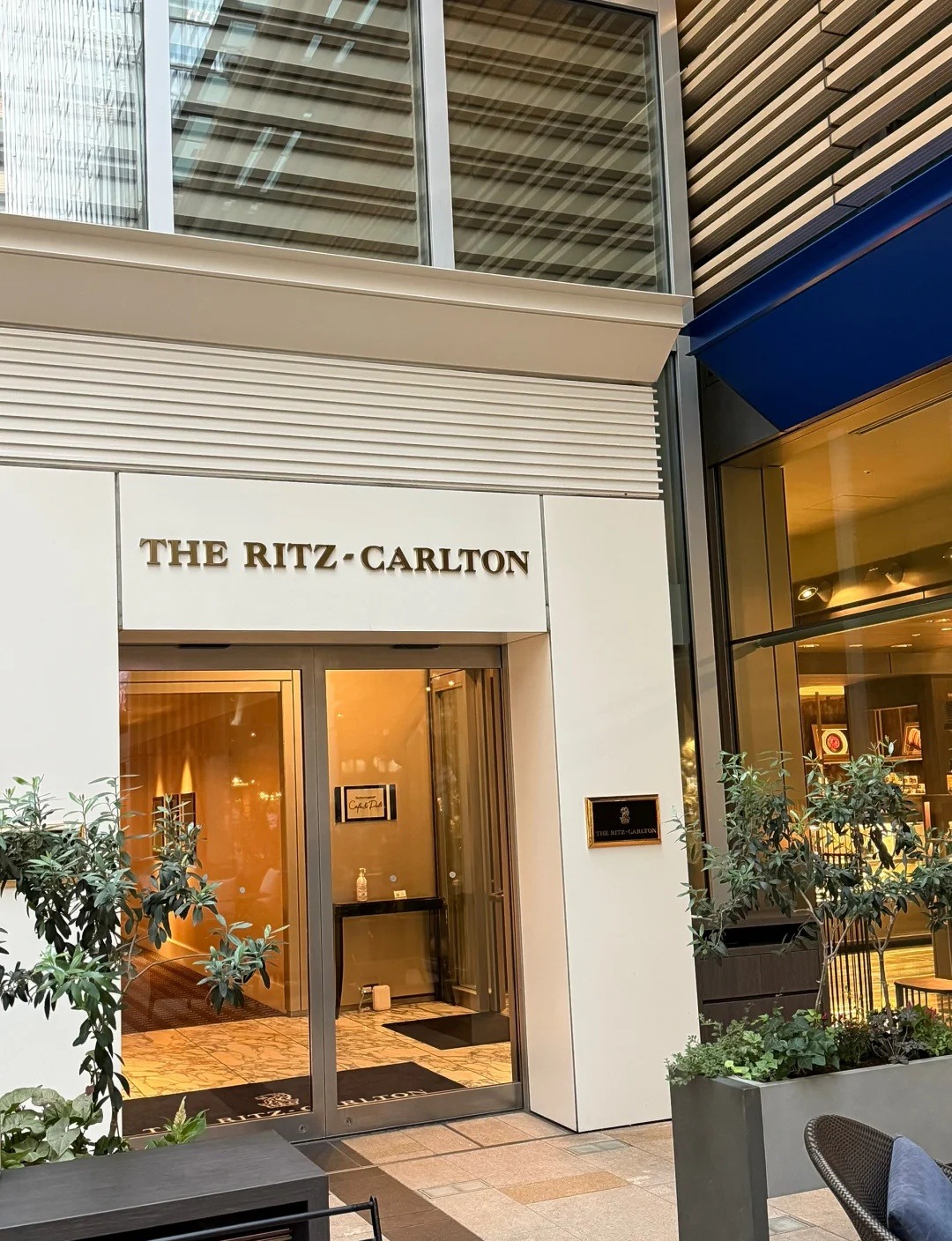
The lobby is small and gets queues on Friday and Saturday afternoons. Every trip to your room means two lifts.
My room wasn't ready when I arrived at half past one, and here that's normal. The hotel runs close to full, and a room before three is luck. They handled it well, though, sending me off to lunch and emailing me the moment the room was ready, which is better follow-up than I've had at most Tokyo hotels.
If you have top-tier status and want breakfast as your welcome gift, skip online check-in and do it at the desk. Online check-in picks the points option for you, and you can't change it afterwards.
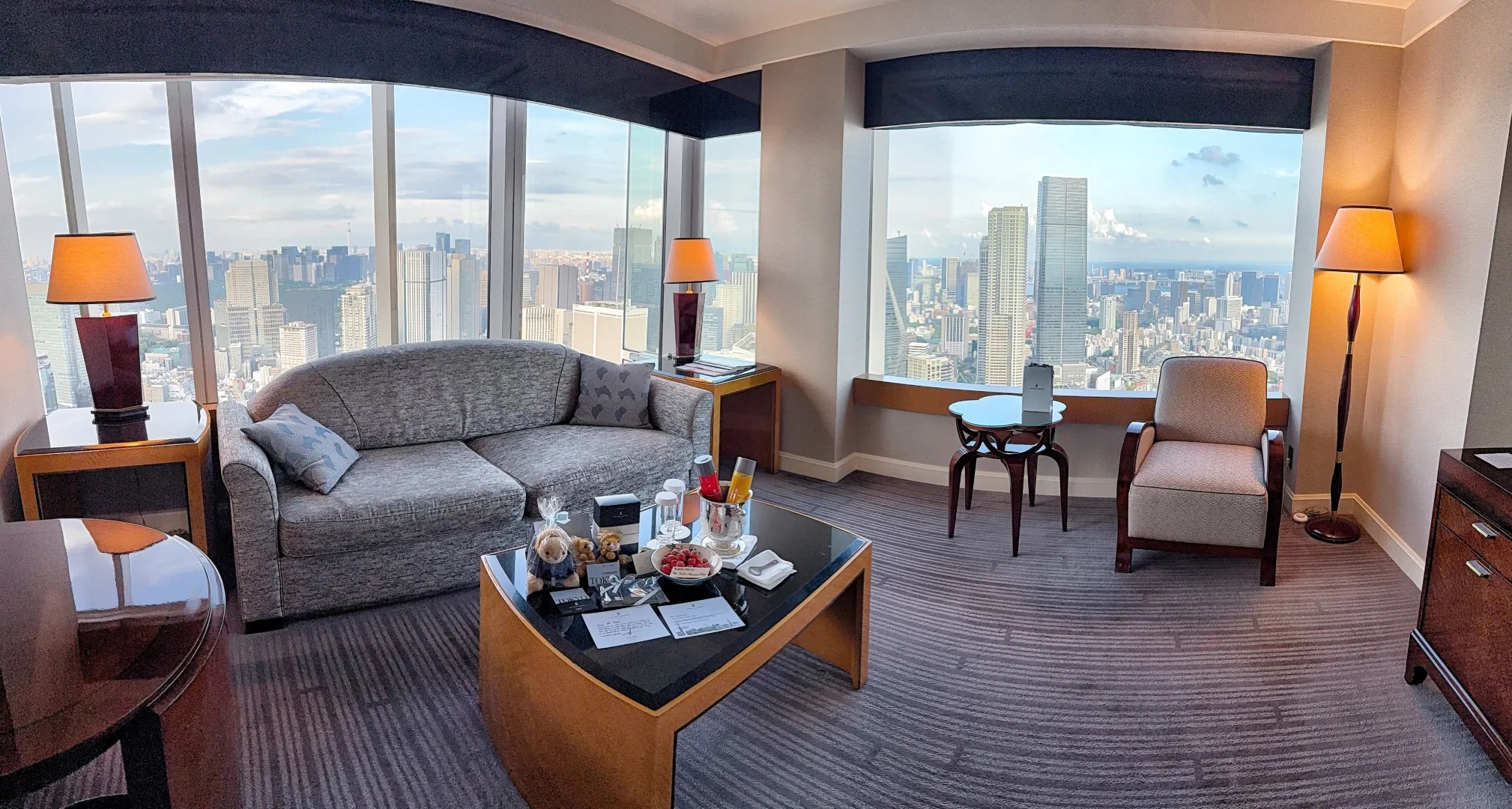
The welcome was a handwritten card, a box of wagashi and a postcard naming each landmark in the view.
The room
The rooms are dated, but they aren't shabby. I looked hard for wear and didn't find any, and the lacquered cabinets are still glossy. It's the style, the lighting and the layouts that have aged.
The lighting is the worst of it. The corridors are dark, and at night the room is dim enough that I struggled to see. The dark wood soaks up whatever light there is. There's one master switch for every light, which takes the room from dim to off in a single press. If you've just come from the Bulgari or Janu, it'll feel heavy.
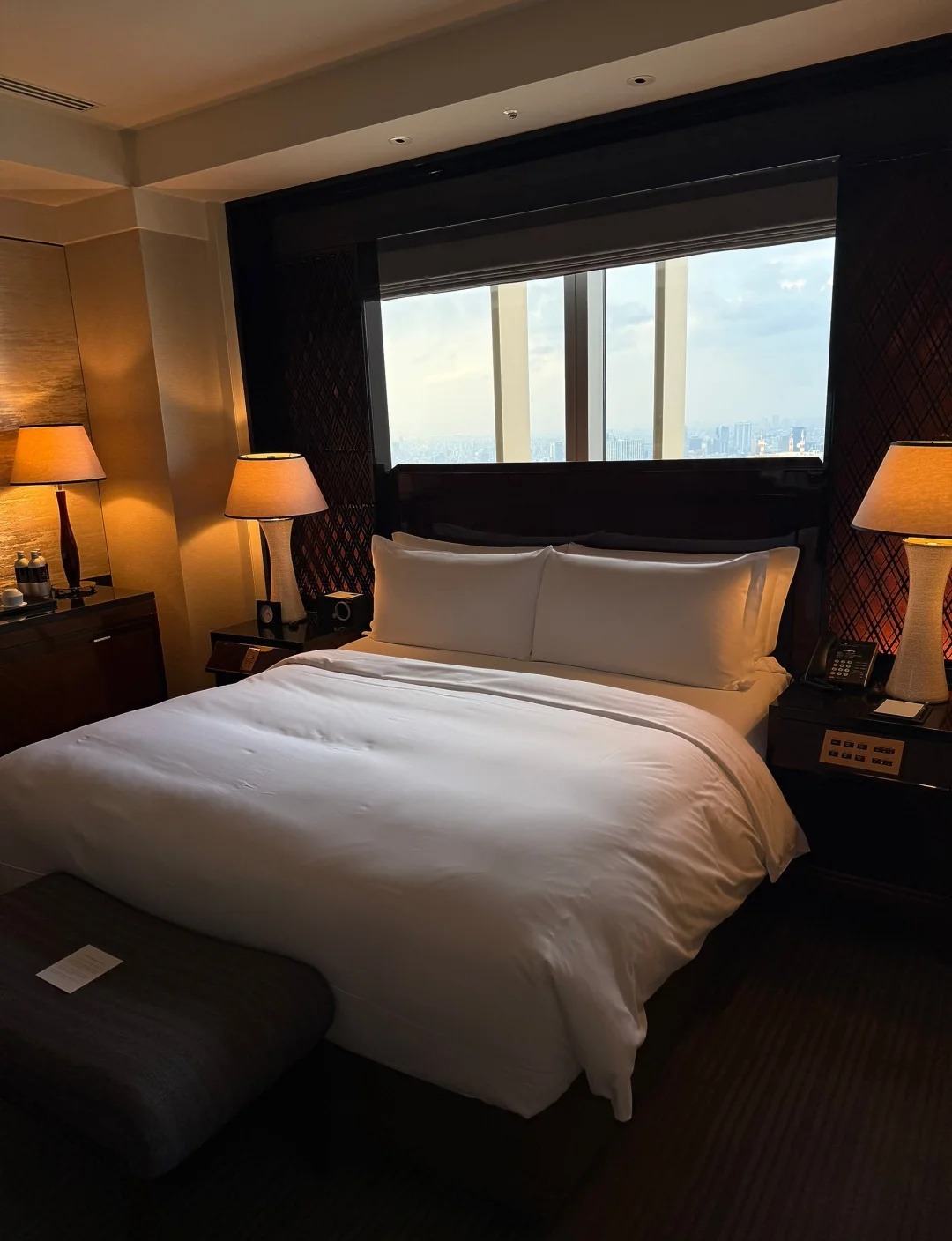
The size makes up for a lot. Even the entry Deluxe is 52 square metres, which is large for Tokyo. You get a long foyer, two walk-in closets and a marble bathroom with twin basins, a deep tub and a separate shower. The shower stall is cramped and dim, but the rest of the bathroom beats most in the city, and the bed is excellent.
The toiletries are full-size Diptyque, and a card in the room tells you a bottle costs ¥8,000 if it goes home with you. The minibar is fully stocked, at ¥1,300 for a Coke.
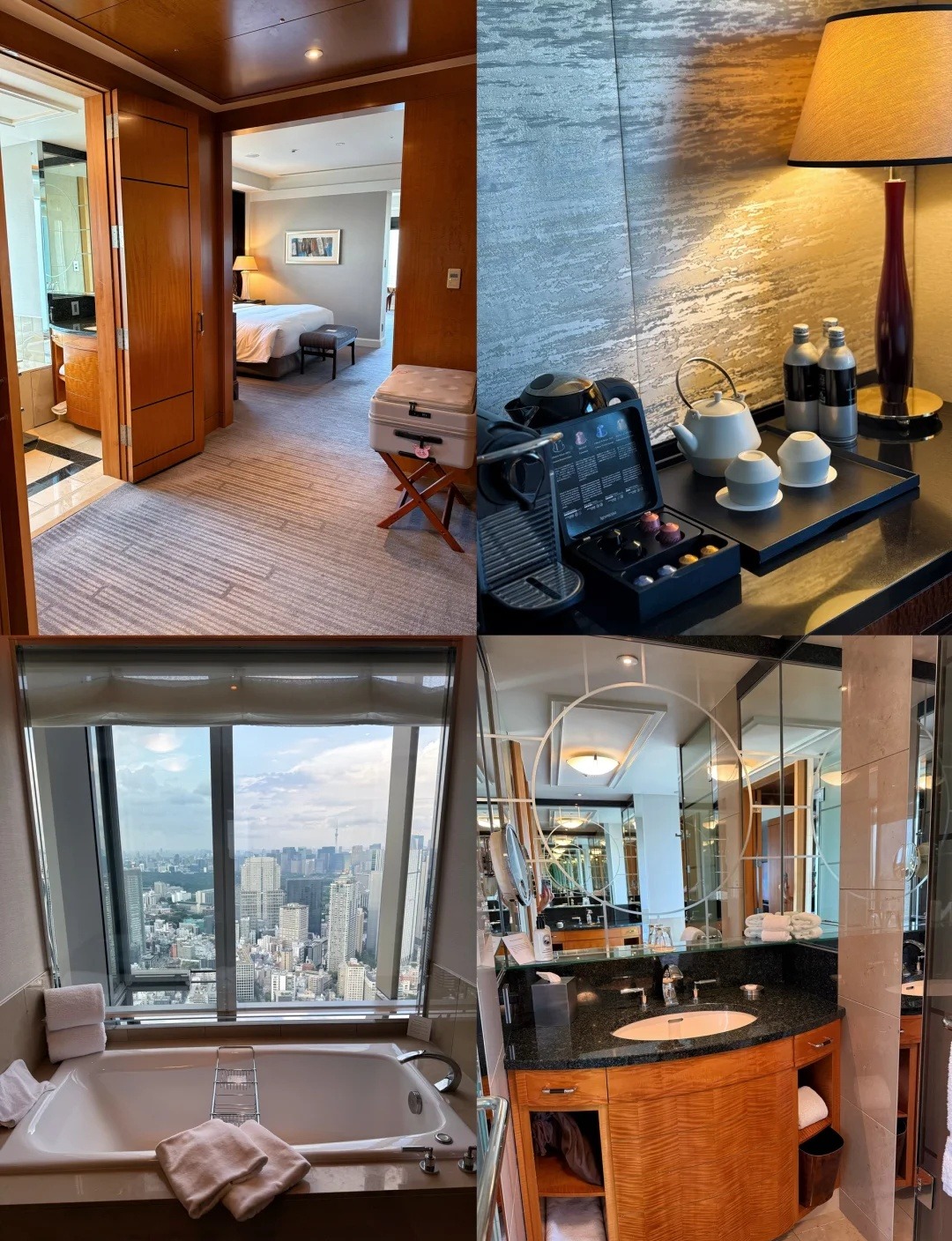
My corner Executive Suite had the strangest layout I've seen at this price. The front door opens straight onto the bathroom, and you walk through the bedroom to reach the living room, like a flat designed by someone who'd only had one described to them over the phone. The payoff is that living room: two walls of glass looking east over Tokyo Bay to Shinagawa, with the Skytree to the left and planes dropping into Haneda all evening.
There were a couple of practical annoyances too. My bedside had a USB port and no socket, so pack a short extension lead. And the desk chair is too low for real work. Standard rooms have small TVs with no streaming.
Which side to book
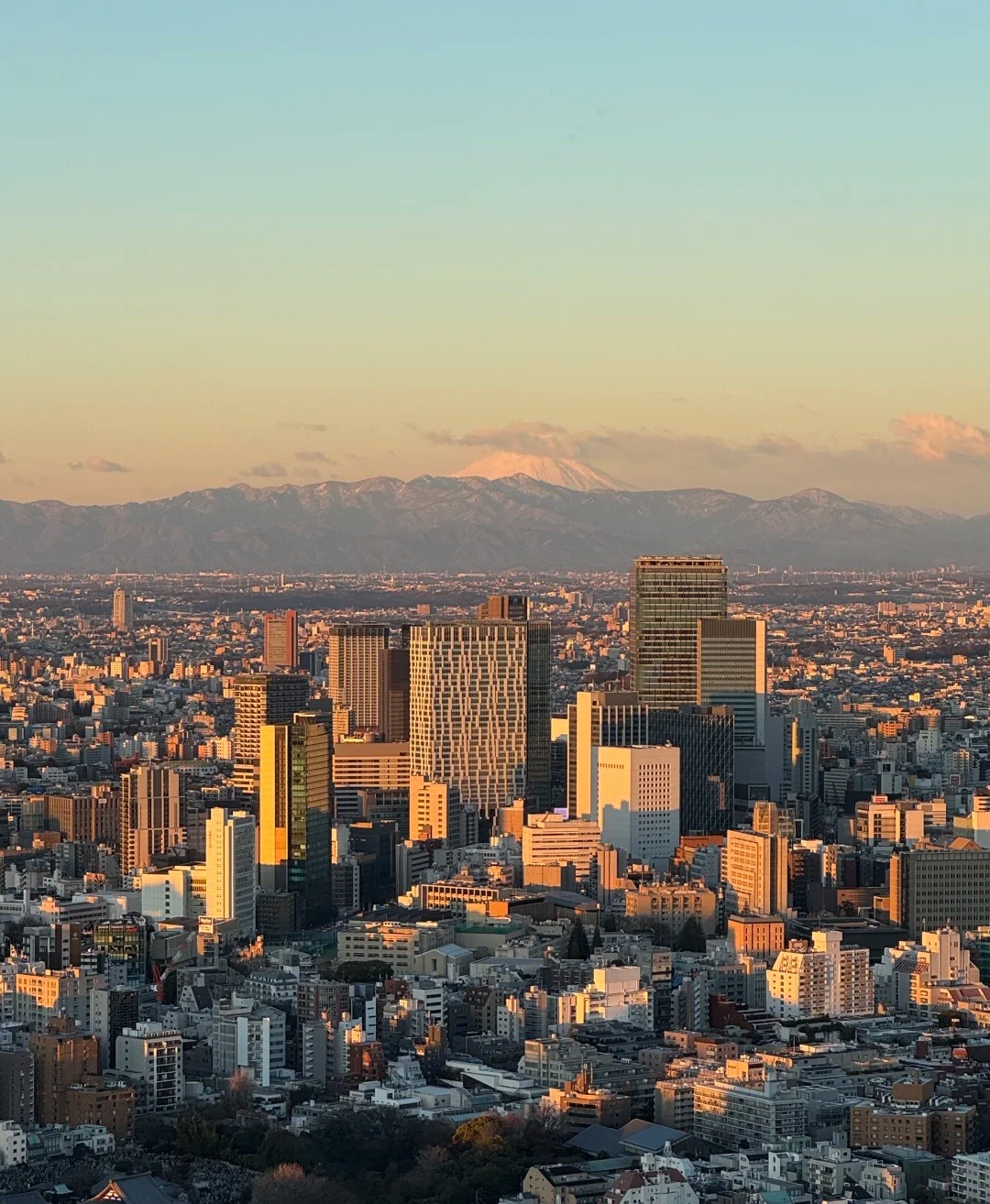
Don't book for Tokyo Tower. The Azabudai Hills towers now stand right in the way, and from most rooms you see a sliver of it or nothing at all. West is the best view: Fuji, Shinjuku and the National Stadium, clearest on winter mornings and often hazy in spring. East gives you the bay and the city at night. Avoid any room where a ledge cuts across the window.
Which room to book
The three non-club room types are the same 52 square metre room with different windows. The cheapest Deluxe, on 47 to 50, already faces west over Midtown towards Fuji, so I wouldn't pay for the step up. If you want to spend more, spend it on a Club Deluxe on 51 to 53. The lounge is worth more than any view upgrade.
The suites are big but odd. The 120 square metre Carlton Suite has a column in the middle of the living room and only one bathroom, which is a quick way to find out how well you really know the other couple. It's a bad pick for two couples, but fine for a family, because it pairs with a standard room as a connecting set.
Service
The concierge is the best department here, and one of the best in Tokyo for hard restaurant bookings. Counters that won't take a foreign booking direct, and three-star places with long waits, are exactly what this desk is good at. Email weeks ahead and be patient, because the replies are slow, but the tables do come through.
The rest of the service is warm at its best and a bit mechanical when it's busy. Housekeeping came in at midday, redid the room completely and folded the clothes I'd left out. English is excellent.
When the hotel is full the cracks show, with breakfast stretched, a queue at the single concierge desk and a welcome that can feel scripted. Whether someone walks you to your room or just hands you a key depends on how busy they are.
The desk is clearly more relaxed, and chattier, in English than in anything else. I saw nothing I'd call unfair, but if you're travelling with Mandarin-speaking family, I'd drop the hotel a note before you arrive.
Breakfast
If breakfast comes with your room, it's good. Otherwise, at ¥6,500, I don't think it's worth it. It's in Towers on 45, from 7:00 to 10:30. You get a small buffet of bread, cold cuts, fruit and yoghurt, plus one main, one dessert and one drink ordered at the table. Fresh juice is included.
Order the eggs Benedict, the safest and best hot dish, and eat the pastries, which are the strongest part of the meal. Better still, ask for the Japanese set. It isn't on the menu, but they'll make it if you ask: several kinds of sashimi and grilled fish, in small portions.
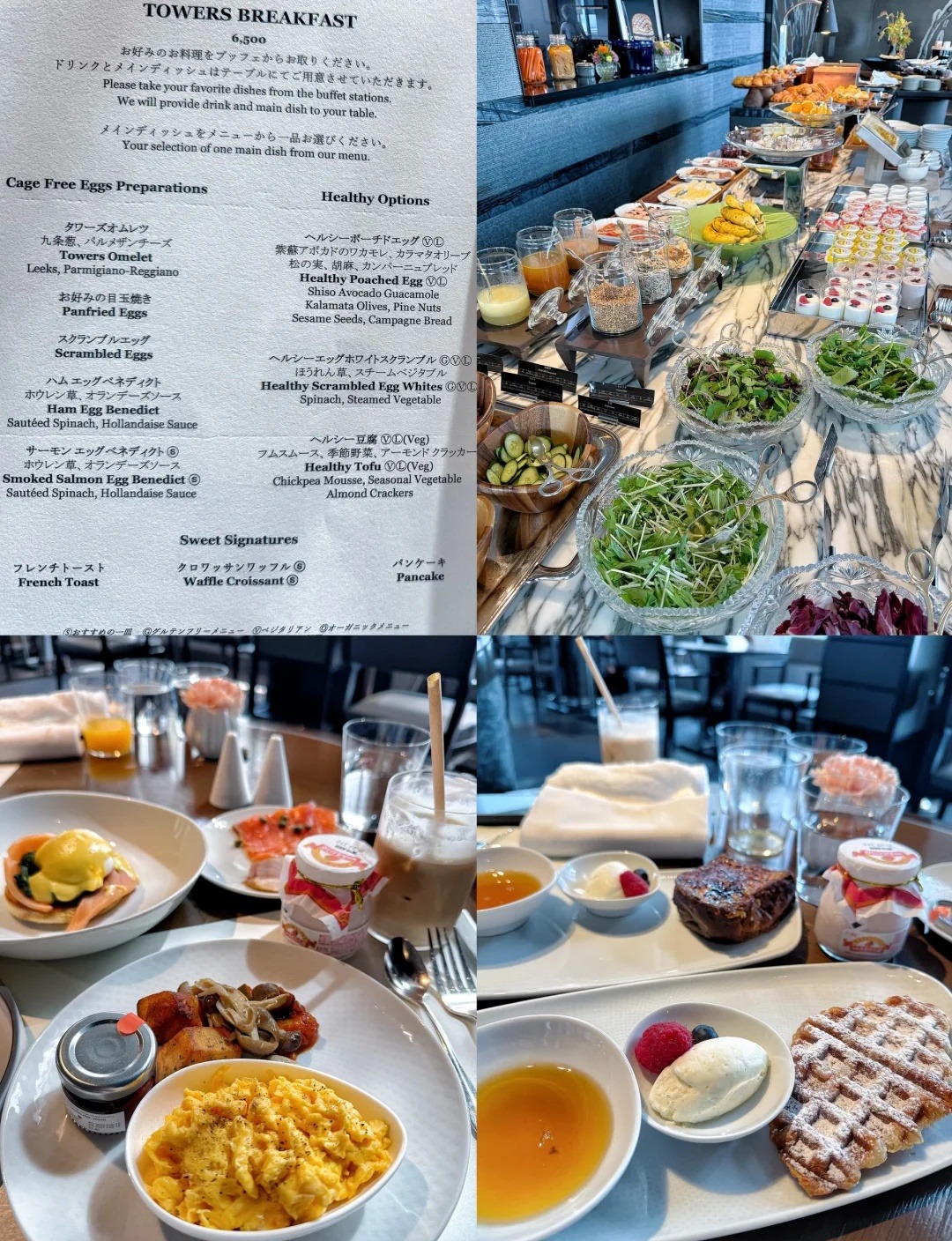
The buffet is thin for the money, with a lot of bread and packaged items. At 7:00 my food came in ten minutes. By nine on a Sunday or a Japanese holiday you'll wait, and the kitchen may drop the Japanese set altogether.
If breakfast is included, enjoy it. Otherwise, go down to the Midtown basement for a bakery. Club guests can eat in the lounge instead.
Restaurants and bars
The two meals worth planning around are lunch at Héritage and an evening in the Club Lounge. The rest is fine.
Héritage by Kei Kobayashi
Héritage by Kei Kobayashi has held one Michelin star since the 2025 guide, and lunch there is the best food in the hotel. The three-course lunch, around ¥11,800 with coffee, tax and service, is one of the best-value fine-dining meals in any Tokyo hotel. Children under nine aren't allowed.
Hinokizaka
Hinokizaka has sushi, tempura, kaiseki and teppanyaki counters. It's good, but I wouldn't go out of my way for it. Sushi starts at about ¥12,500 for lunch and ¥23,000 for dinner, and the portions are small. Roppongi and Akasaka have better sushi for the same money.
The Bar
The Bar is known for its Diamonds Are Forever martini, and the cocktails are very good. There's a per-person cover charge in the evening, though, so it isn't the place for one quick drink.
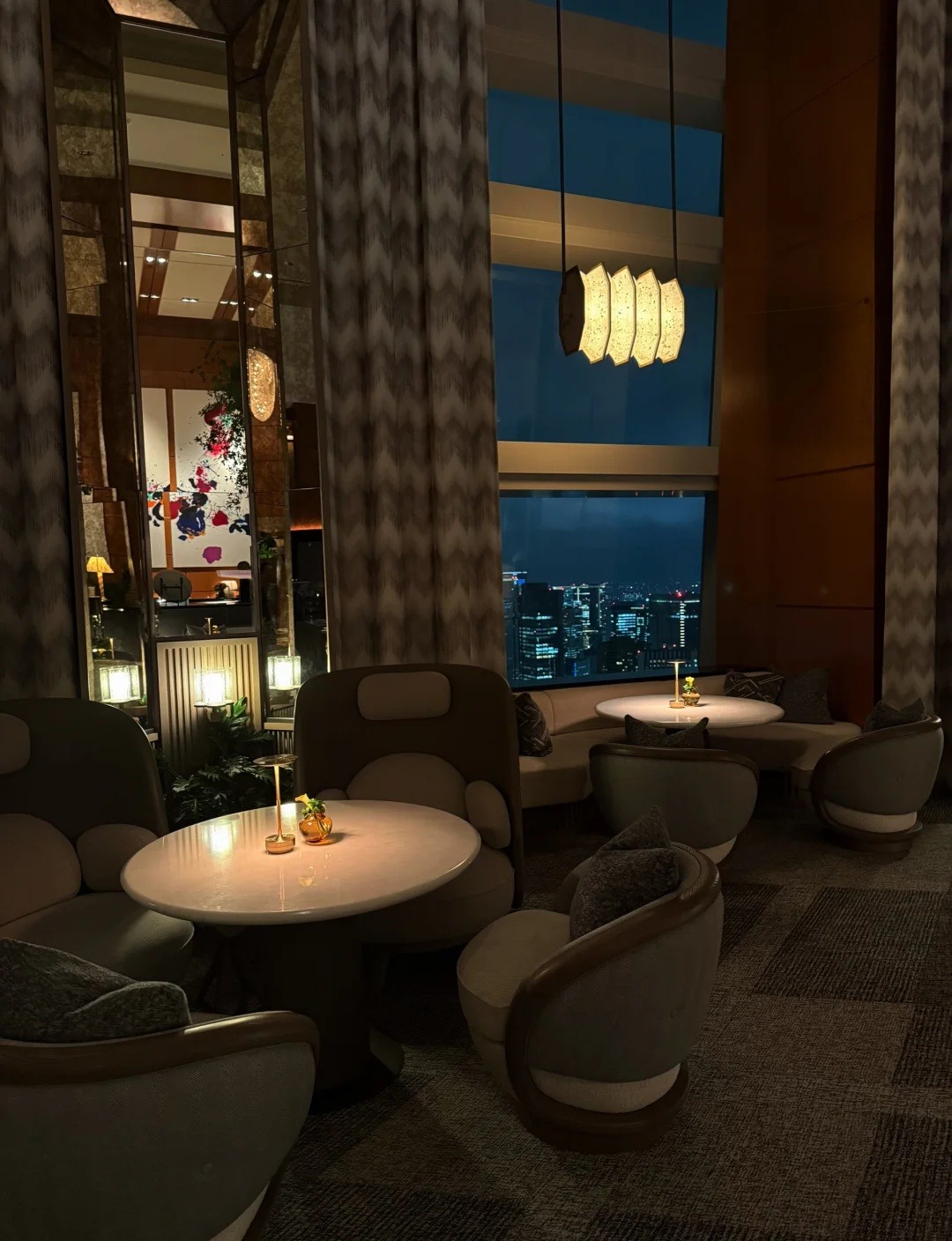
The restaurants close at 21:00 and the bars around midnight. After that it's room service only.
Club Lounge
The Club Lounge is the hotel's real product. It runs breakfast, a light lunch, afternoon tea, evening hors d'oeuvres and cordials, with champagne poured whenever it's open. The food is now a full buffet, and it's good; my evening plate of curry, salmon and duck easily replaced dinner.
Know the rules before you count on it. No Marriott status gets you in, and a suite upgrade doesn't include it. At the desk it costs about ¥25,000 per person per night, so it doubles for two, though it's worth asking for a better price. Children under 12 turn into pumpkins at 18:30, when they have to leave. On Japanese holidays it gets crowded, with time limits.
Pool and gym
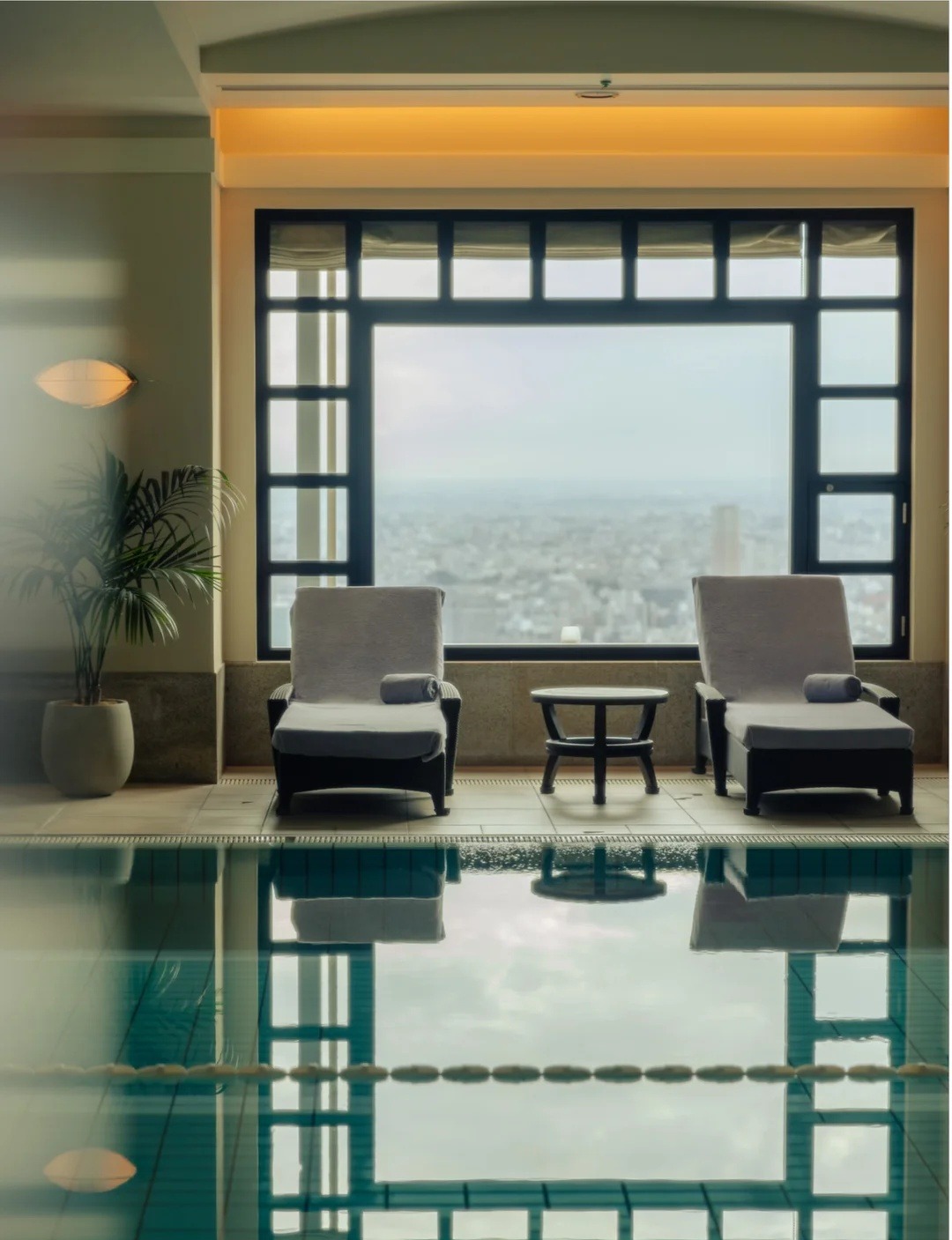
The pool on 46 is a proper 20 metre, four-lane lap pool. Caps are compulsory and lent free, and photographs are discouraged. Next door, the single-sex heat experience has a hot bath, cold plunge, cedar sauna and steam room. It's a pleasant Japanese-style bath, but not an onsen. The 24-hour gym looks towards Fuji.
Location and sense of place
The location suits restaurants, galleries and taxis. The Suntory Museum, 21_21 Design Sight and the National Art Center are a short walk away, and the Midtown side stays calm at night. There's no JR line, though Nogizaka on the Chiyoda Line is three minutes away and the airport limousine bus stops at the door.
This is an American grand hotel that happens to be very high up. Japan shows up in the view, the bath etiquette and the sushi counter, but you won't find much of it in the rooms. Aman Tokyo, Hoshinoya and Janu do far more.
Is it worth it?
Yes, if you book it right. The 53rd floor, the concierge and that view west are the real thing, and the rooms are big and spotless, just old. Book a Club room, or use points for a suite, and it's a very good stay. Just don't pay cash for a base room and then pay for breakfast on top.
The base Deluxe averaged about ¥126,000 a night in September 2026, including tax and service. For that you get a big, well-kept room that looks its age, and a ¥6,500 breakfast that doesn't justify itself. Four Seasons Otemachi, the Bulgari and the renovated Park Hyatt all have fresher rooms.
A Club Deluxe averaged about ¥177,000. The extra ¥50,000 buys the lounge for two, and I think the lounge turns this into a different hotel, with breakfast, a light dinner and drinks taken care of.
On points with top-tier status, it's one of the best Marriott redemptions in Tokyo, at roughly 98,000 to 140,000 points a night. Suites are handed out often, even when the hotel turns down the upgrade award itself. Book one category above base, and avoid Golden Week and Saturdays.
I'd book it if you have top-tier Marriott status, want a concierge who can get you into hard restaurants, or plan to live in the club lounge. Families with older children do well in a Carlton Suite with its connecting room.
I'd book something else if you want design; the Bulgari makes this hotel look drab. For Japan inside the building, choose Aman Tokyo or Hoshinoya. For a fresher Marriott, The Tokyo EDITION, Toranomon is newer, though the Ritz lounge is better value. And if it's your first trip and you're using a JR pass, I'd stay near Tokyo Station.
If you go, book the Club Deluxe, high and facing west. Without the club, take the cheapest Deluxe on the Fuji side.
At a glance
| Best for | Top-tier Marriott members on points, club-lounge regulars, serious diners who need a concierge with pull, couples marking an occasion, families in a Carlton Suite with its connecting room |
| Not for | Design-led travellers, anyone fresh from Bulgari or Janu, JR-pass sightseers, cash-paying guests in a base room buying breakfast |
| Room to book | Club Deluxe, high floor, west side; the base Deluxe on the Fuji side if you skip the club |
| Room to avoid | Anything sold on a Tokyo Tower view; the Carlton Suite for two couples (one bathroom); rooms with a ledge across the window |
| Skip | Paid breakfast, sushi at Hinokizaka, the subway route in |
| Don't miss | Lunch at Héritage, the off-menu Japanese breakfast, an evening in the Club Lounge, the gym on a clear winter morning, facing Fuji |
| Rough nightly rate | Deluxe about ¥126,000, Club Deluxe about ¥177,000 (September 2026 averages, tax and service included); about 98,000-140,000 points |