Shangri-La Tokyo: great people in a hotel that has stopped moving
Verdict. Warm, capable staff, big rooms and the easiest arrival in Tokyo make it the city's best hotel for families and rail-heavy trips; anyone after design, a view or a sense of Japan should book elsewhere.
If you're travelling with children or your trip is built around trains, I think the Shangri-La is the most practical luxury hotel in Tokyo. The staff are some of the nicest hotel people I've met anywhere, and the rooms are big and spotless. The catch is that the place still looks like 2009, because that's when it was decorated, and nobody has really touched it since.
It's 200 rooms on the top floors of a 37-storey tower right beside Tokyo Station. If you don't have kids or a Shinkansen to catch, there are more interesting places to stay within a few blocks.
I stayed three nights in a Horizon Club Deluxe on the east side, on a high floor.
Arrival
Let them meet you on the platform. It's the best thing this hotel does, and it starts before you even reach the building. Email them your train and car number, and staff in red uniforms will be waiting on the platform when you step off the Narita Express or the Shinkansen. They take your bags and walk you out of Tokyo Station, which, if you've ever tried it on your own, is worth a lot.
Book it for when you leave, too. Mention your train at check-in, and someone will walk you to the right platform and the right car.
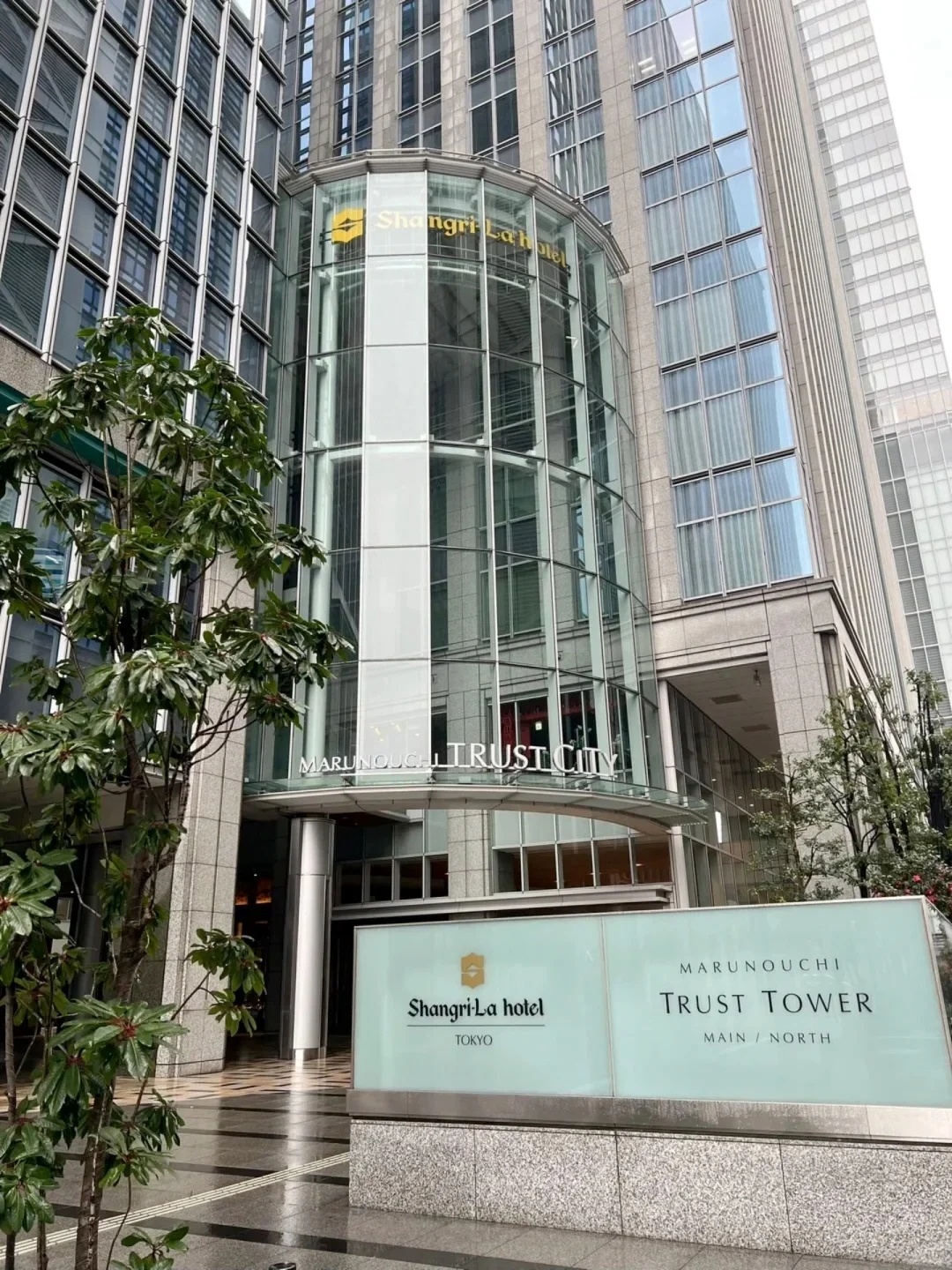
If you come on foot, the door is hard to find. The hotel shares its street entrance with an office building, Marunouchi Trust Tower, so you're looking for a hotel logo on the side of an office. Use the Nihonbashi Exit (Yaesu North sends you the wrong way) and look for the sign across the road from Yamada Denki. I wouldn't want to do it in the rain with two suitcases and a toddler.
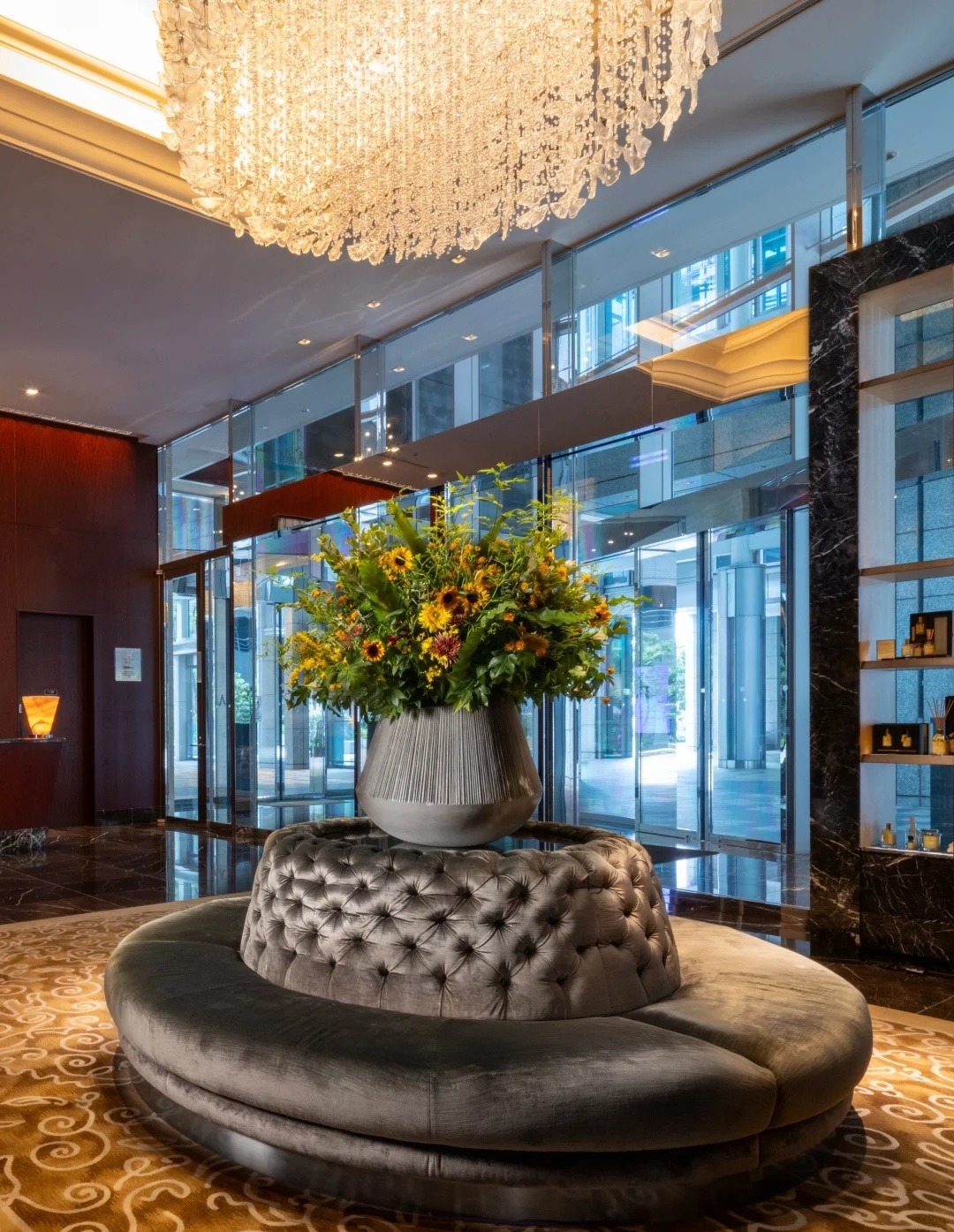
Once you're through the door, it gets much better. There's a small lobby at street level with a bell desk, flowers and a crystal chandelier, and staff take you up from there.
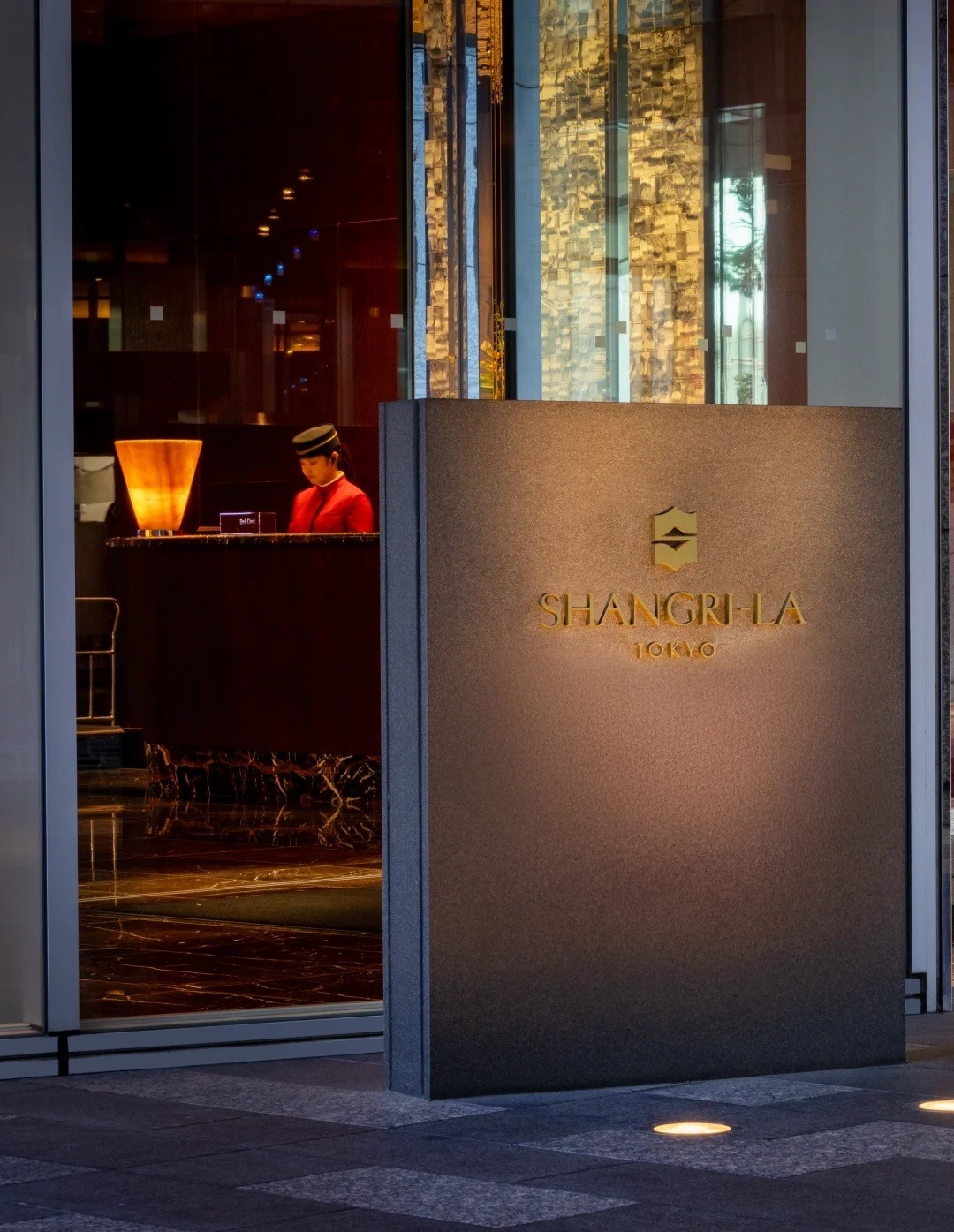
By car, use the B1 drop-off. It has its own small reception and a lift straight up to the 28th-floor lobby. Some taxi drivers don't know it exists, so have the address ready.
Because I was on a club floor, I checked in sitting down in the 37th-floor lounge with a glass of melon juice, and it was done in minutes. The main desk on 28 is a different story. It can be slow, especially on convention weekends, and the lobby up there is small for a hotel this size.
If you have Shangri-La Circle status, know that it does almost nothing here. Tokyo is on a short list of hotels the programme leaves out of member upgrades and early check-in or late checkout, along with the likes of Paris and The Shard. You can be a top-tier Diamond and still get exactly the room you paid for, so book the room you actually want. The desk is often generous anyway, but I wouldn't count on it.
The room
After the staff, the size is the big win. Even the entry Deluxe is 50 square metres, which is very large for Tokyo, and a family of four fits in a king room comfortably. The basic twin is bigger than the one at The Tokyo EDITION, Toranomon.
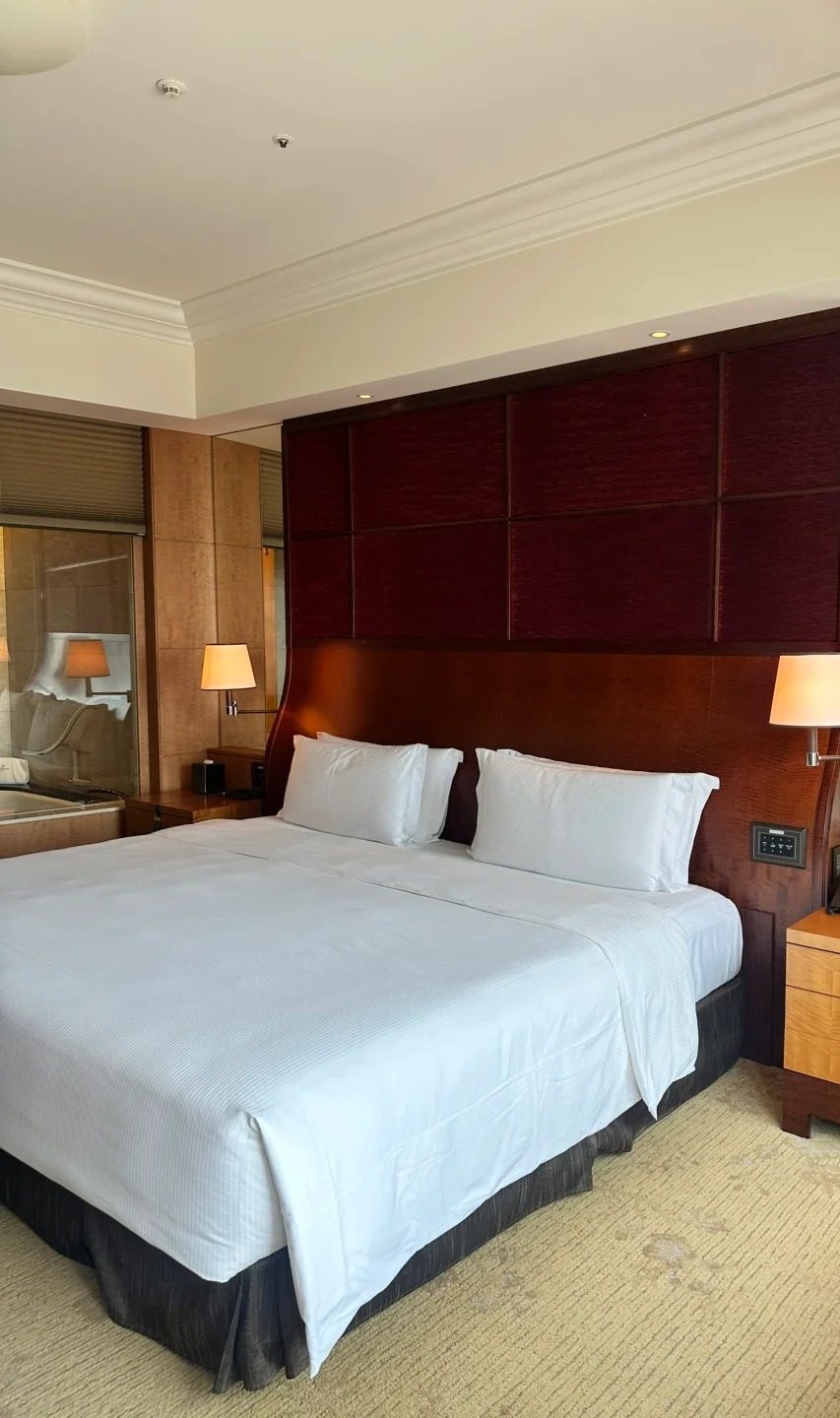
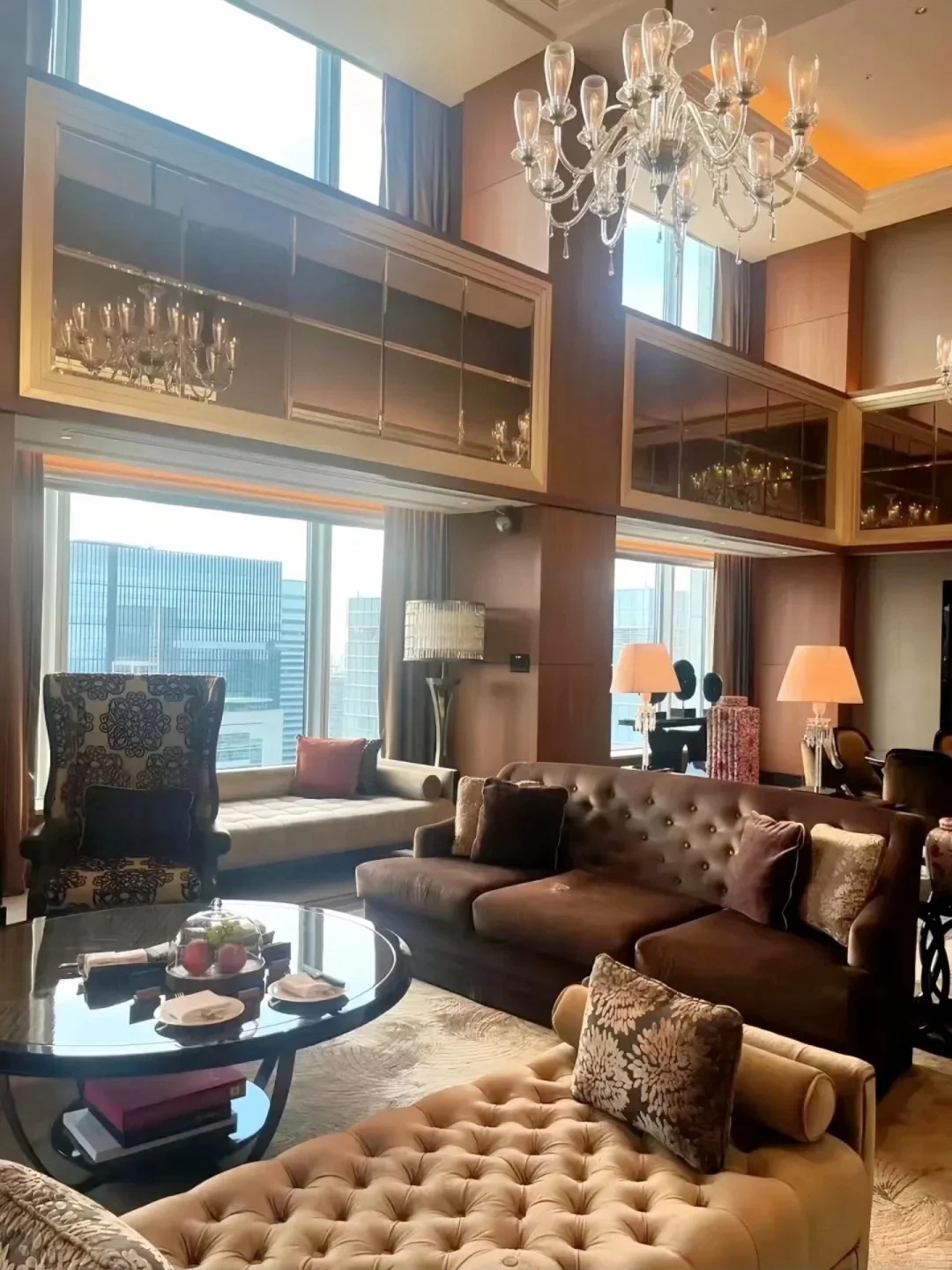
Then there's the look: dark wood, leather and marble, with deep red and gold fabrics on everything. It's well made and properly clean, and nothing in my room was worn or stained. It's just a 2009 idea of luxury, and next to the newer hotels around the palace it feels heavy, like sleeping inside a very clean, very expensive cigar box.
What I liked:
- The bed. It's a Stearns & Foster mattress, soft but supportive, and one of the best hotel beds in Tokyo. The pillows are excellent. You can buy the pyjamas at the front desk, and there's a little Shangri-La teddy bear for ¥5,200 if you have kids.
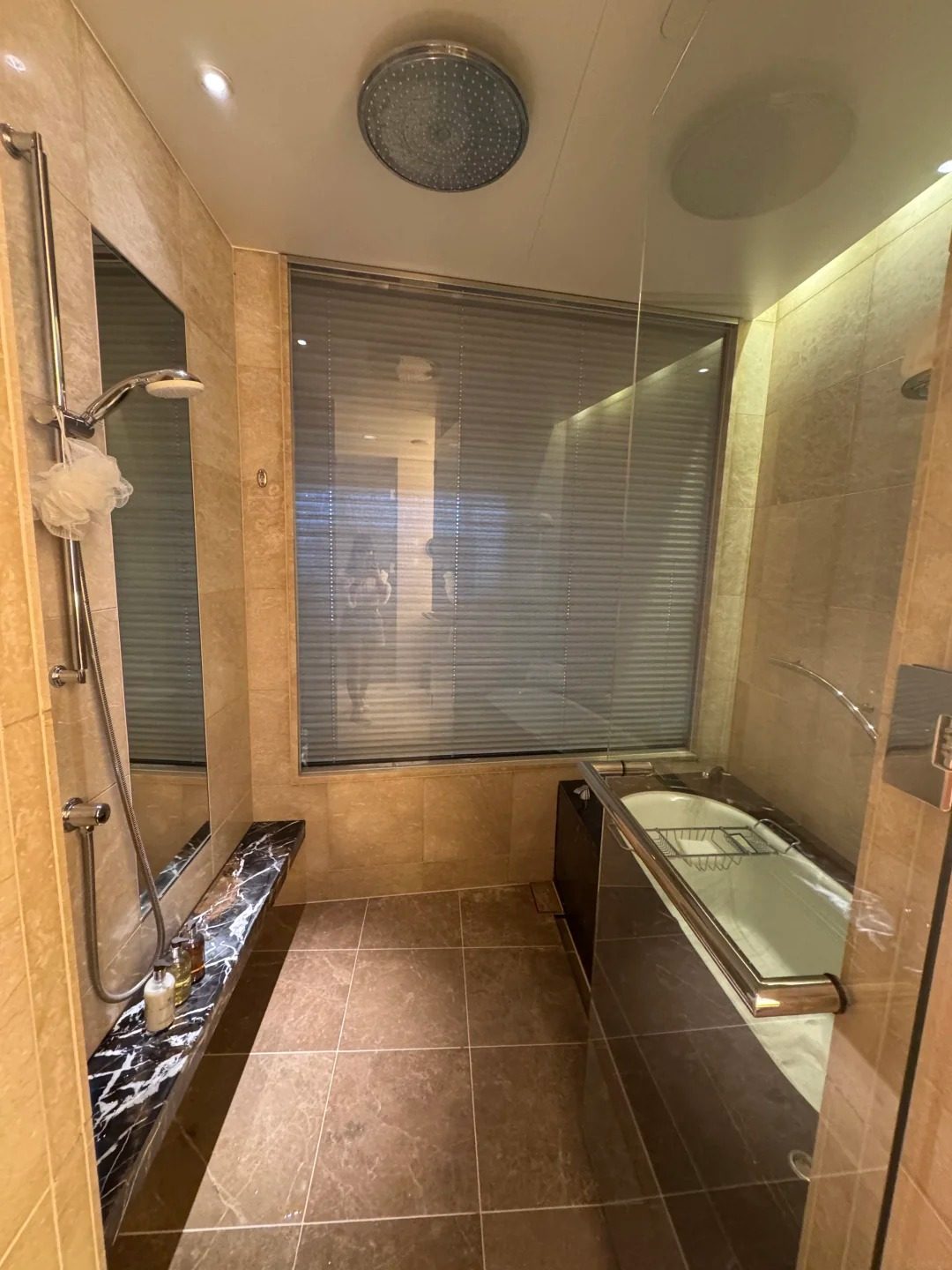
- The bathroom. A marble wet room with a rain shower and a tub, a glass wall to the bedroom with a blind, and a separate toilet. The water pressure is excellent, and there's a TV built into the mirror.
- The little things. A long sofa at the window, a proper desk, free Nespresso and Ippodo sencha, and a walk-in closet with a yukata and a yoga mat.
Which side to book
Be fussy about which side of the building you end up on.
The west side is sold as "Imperial Garden View", and I don't think that's fair. It isn't a palace view. You look down on the Tokyo Station tracks and across a row of Marunouchi office towers, and somewhere behind them there's a thin strip of palace green. On a clear day you'll get Fuji. On most days you get trains, and you can hear them too, even on the higher floors. Calling that an Imperial Garden View is a bit like calling my flat "Ocean View" because I can see a puddle. The afternoon sun is harsh as well.
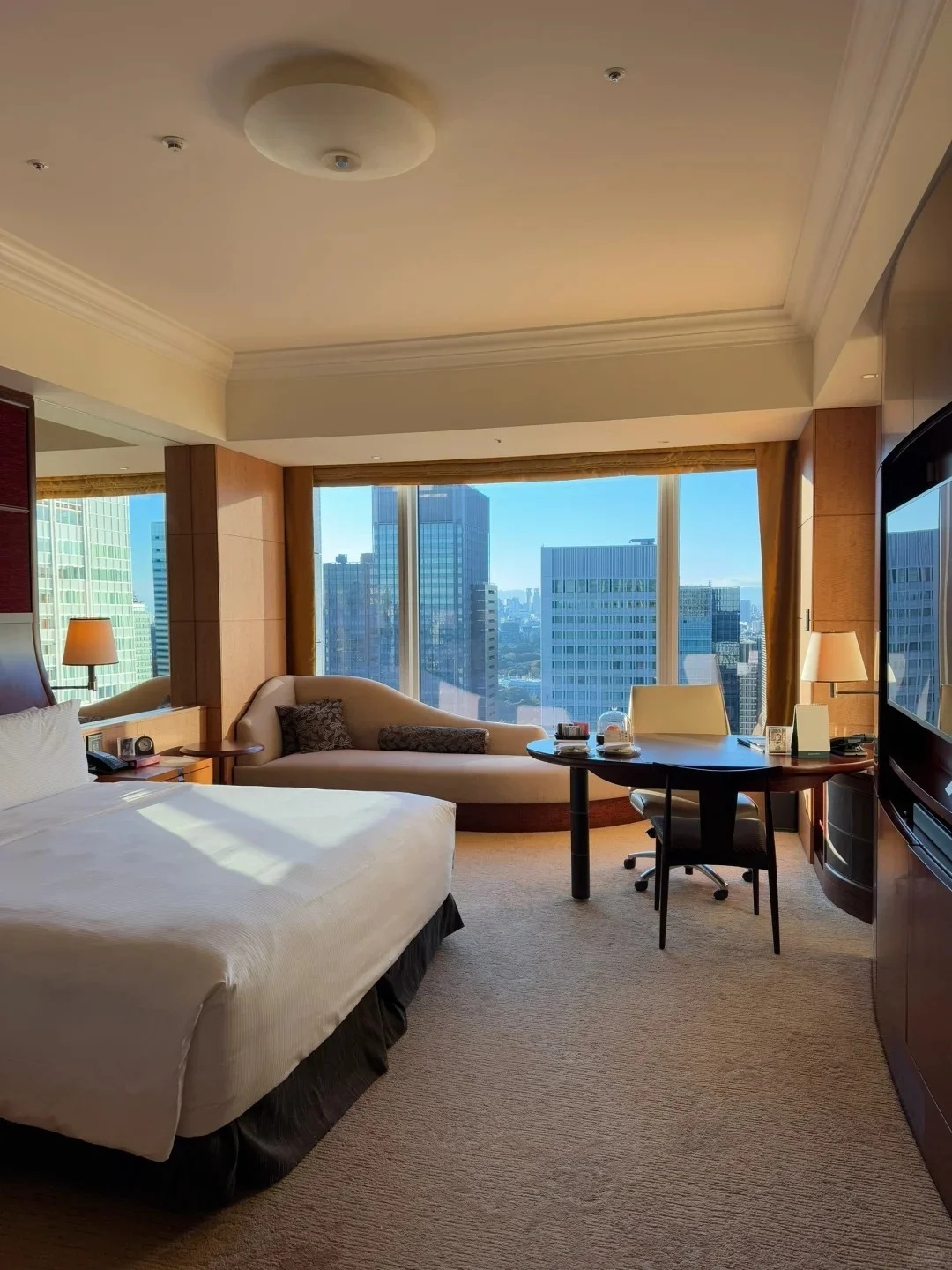
The east side looks out over Nihonbashi towards the Skytree, gets the sunrise and is much quieter. I slept really well there. If you're a light sleeper, ask for it.
The corner Premier rooms are what I'd book next time. They're 68 square metres with windows on two sides and a tub with a view, and they have the best outlook in the hotel.
Service
The staff are the reason to stay. The service is warm and quick, and it goes well past the job description. Staff use your name and remember how you take your coffee, and they'll often sort something out before you've got round to asking. If someone in your group gets ill, a staff member will take you to hospital and stay the whole time to translate.
The concierge is one of the best in Tokyo for hard-to-get tickets and Shinkansen errands. Their first restaurant ideas tend to lean expensive, though, so give them a budget up front.
English is very good, and quite a few staff speak Chinese. If you're travelling with Chinese-speaking parents, there's no easier luxury hotel in the city: Mandarin at the desk, congee and dim sum at breakfast, and Chinese art on the walls.
Because of all that, it doesn't feel very Japanese. The lounge team is mostly non-Japanese, and the service style is international. It's lovely, but you could be in Singapore.
Turndown brings chamomile tea, a chocolate and an origami crane.
If you have kids, this is a brilliant hotel. They get teddy bears and activity books, cots and bottle sterilisers are ready to go, and under-sevens eat breakfast free. There are 13 connecting pairs of Garden View rooms (a king and a twin, 100 square metres together), and you can only book them by emailing the reservations team. The Executive Suites have a pull-out bed, and they'll even set up a tent in there for the kids.
The service does slip when it's busy: New Year, convention weekends and mornings when a tour group fills breakfast. In-room breakfast tends to turn up late, so order it the night before.
Breakfast
Breakfast is small but good, and my advice is to order off the menu and mostly ignore the buffet. It's in Piacere on 28 from 7:00, for hotel guests only.
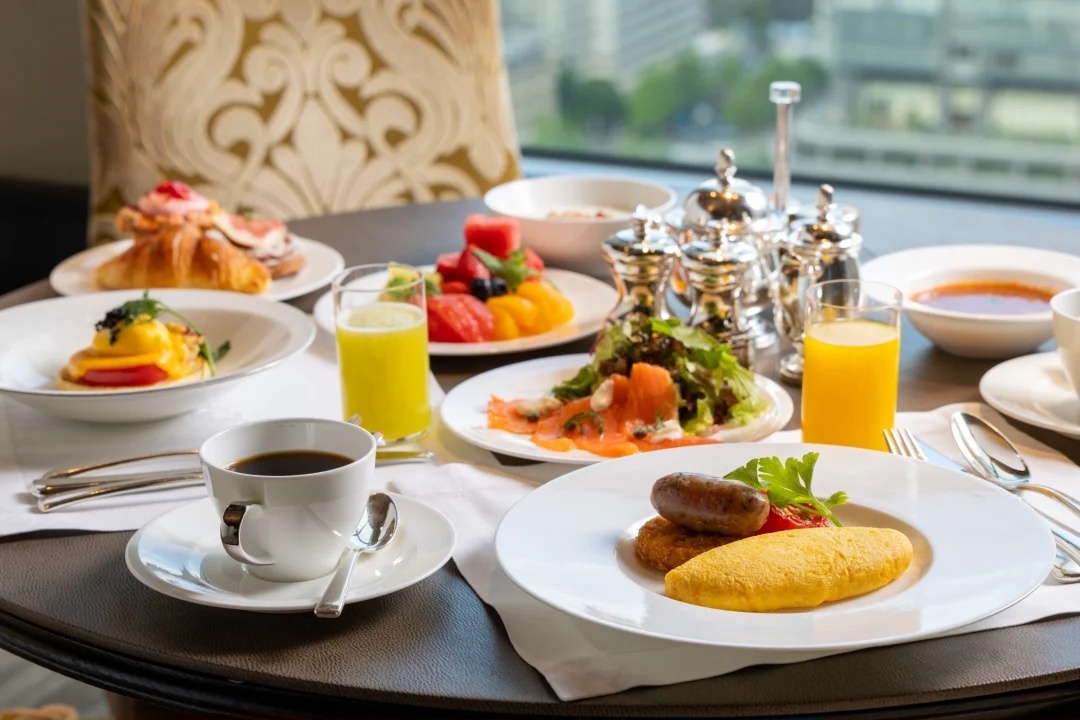
The buffet is compact: congee, smoked salmon, cold cuts, yoghurt, pastries and fruit. The coffee is mediocre. What I'd order instead:
- Eggs royale with lobster and caviar. Easily the best thing on the menu.
- The soufflé pancake. It takes a while, so call down before you leave the room and they'll have it ready soon after you sit down.
- The "Oriental" set with congee and dim sum, or the Japanese set.
- Melon juice, the hotel's signature. They're very proud of it. It's nice. It's melon juice.
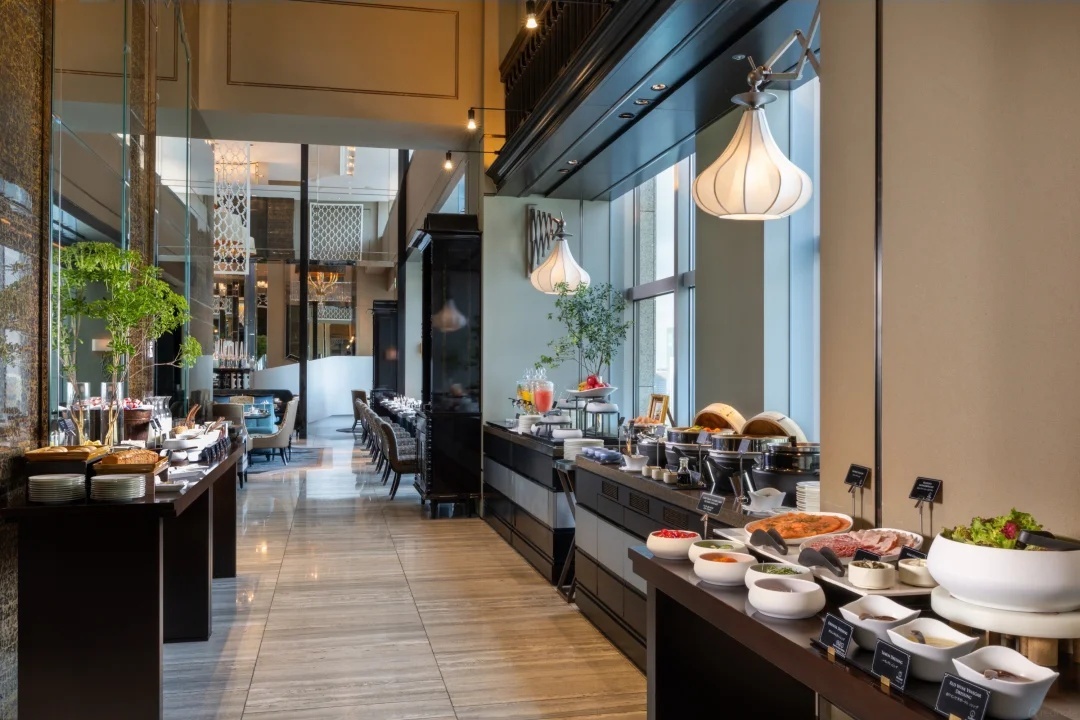
Avoid 10am at weekends, when there's a queue. The club lounge serves breakfast too, but it's nearly always full. If you have lounge access, you can eat at Piacere and still help yourself to the lounge buffet.
If breakfast is in your rate, have it. If it isn't, I wouldn't pay about ¥7,800 a head with Daimaru and the Tokyo Station food halls a minute away.
Restaurants and bars
Drink in the lobby and eat at the counters. For a 200-room hotel there aren't many places to eat, but two of them are very good.
The Lobby Lounge
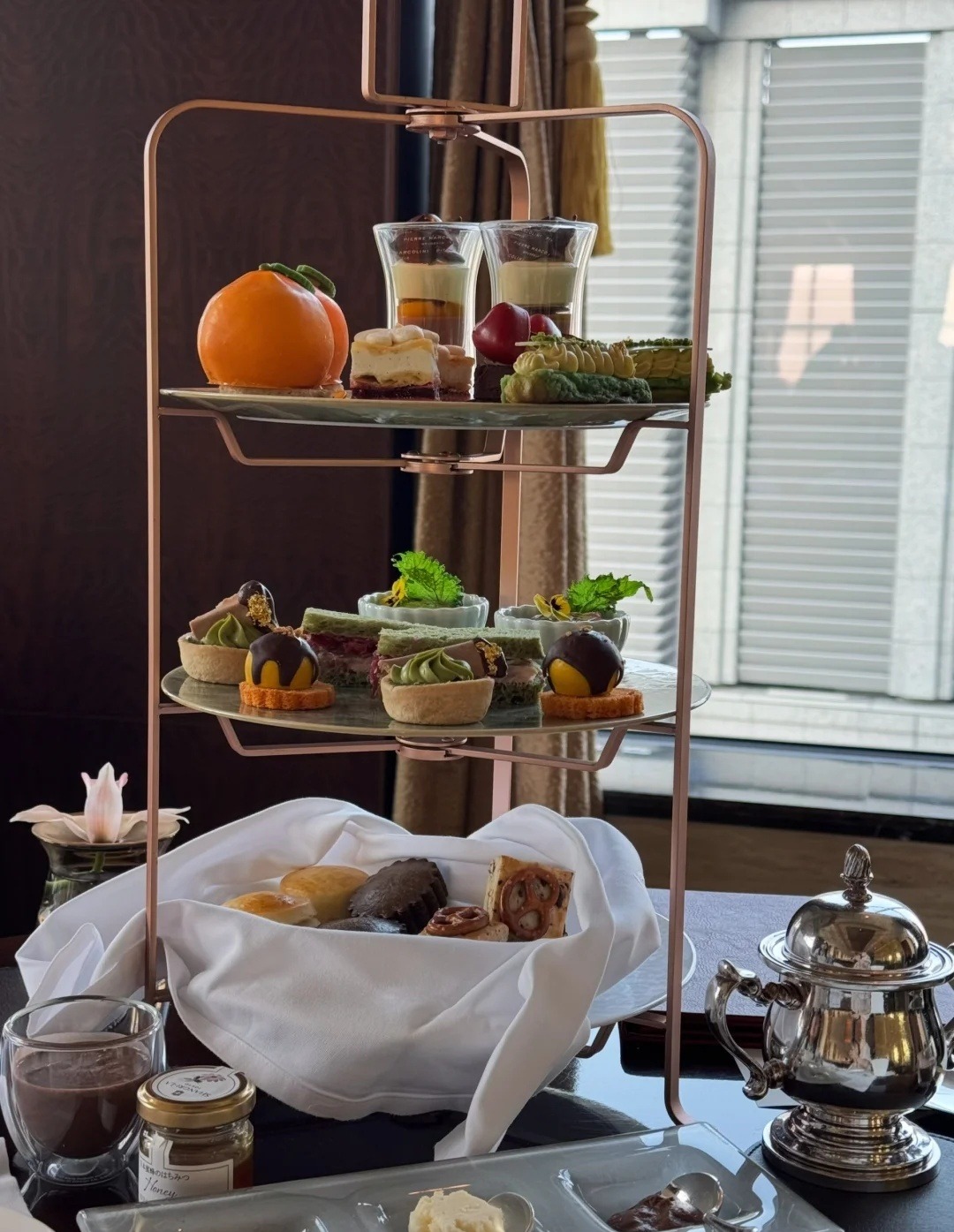
The Lobby Lounge is now the place for a drink. Since March 2026 it has four signature cocktails made with Shingo Gokan's SG Group, at ¥2,860 each. I liked the Shangroni, a white negroni. At night the room is quiet and half empty, which suited me fine. By day it does afternoon tea, and that's hard to get a table for.
Nadaman
Nadaman on 29 is the Japanese restaurant, and my advice is to sit at a counter. The sushi counter got a new chef in May 2026, Ryohei Sato from Ginza Onodera, and that's the seat I'd book now. Teppanyaki is the old favourite, and the foie gras with truffle is the highlight. But the "Diamond" course is ¥29,700 plus 15%, and its A5 fillet tasted a lot like the A5 you can buy at a good supermarket. The set kaiseki is the riskiest money you can spend in the building. If you have Shangri-La Circle points, this is the best place to use them.
Piacere
Piacere, the Italian, has reopened after a long renovation with seasonal set dinners: ¥24,200 in autumn and ¥38,500 for the November white-truffle menu, both plus 15%. It's closed for dinner on Sundays and Mondays. I wouldn't stay here for it. There's no Chinese restaurant either, which in Tokyo is no real loss.
Room service
Room service runs 24 hours. Order the Asian dishes; the laksa and the curry are both good.
Horizon Club lounge
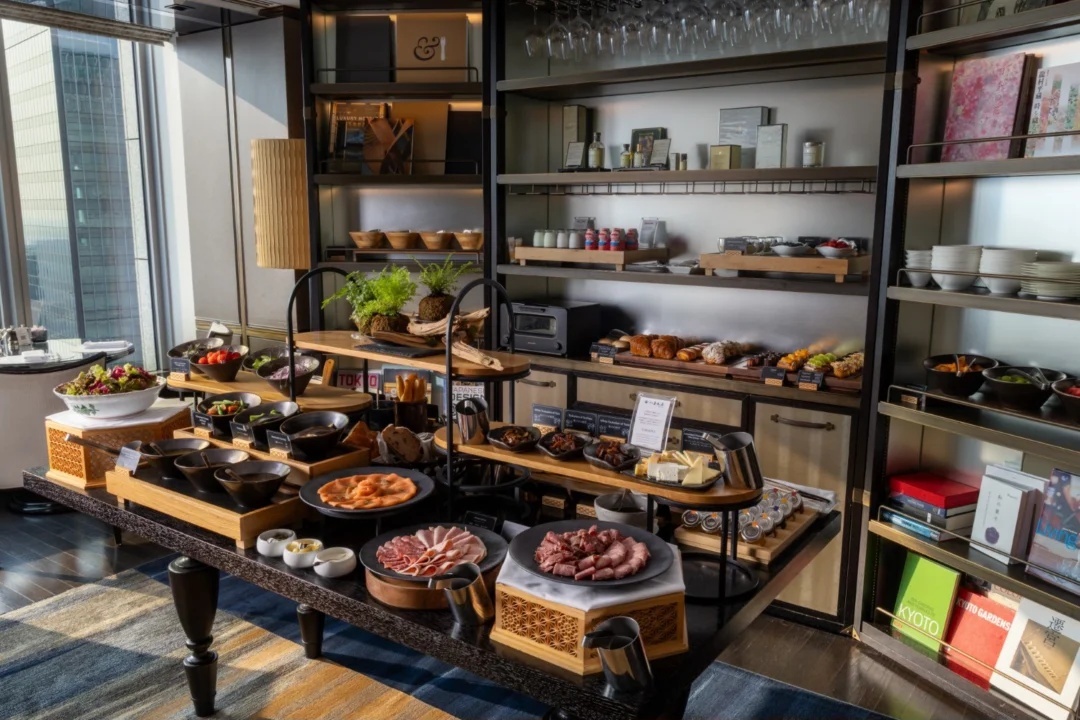
The Horizon Club lounge on 37 is calm and the food is good. At cocktail hour I had sashimi, roast beef, sea bream and roast duck, and there wasn't a dud among them. But it's small, and cocktail hour runs only 17:30 to 19:30, which is also the only time they serve alcohol; ask for a beer at five and you'll be politely refused. The club room itself is the same room you'd get without the club, so I'd only pay for it if you'll actually use the evenings and get up for breakfast.
Pool and gym
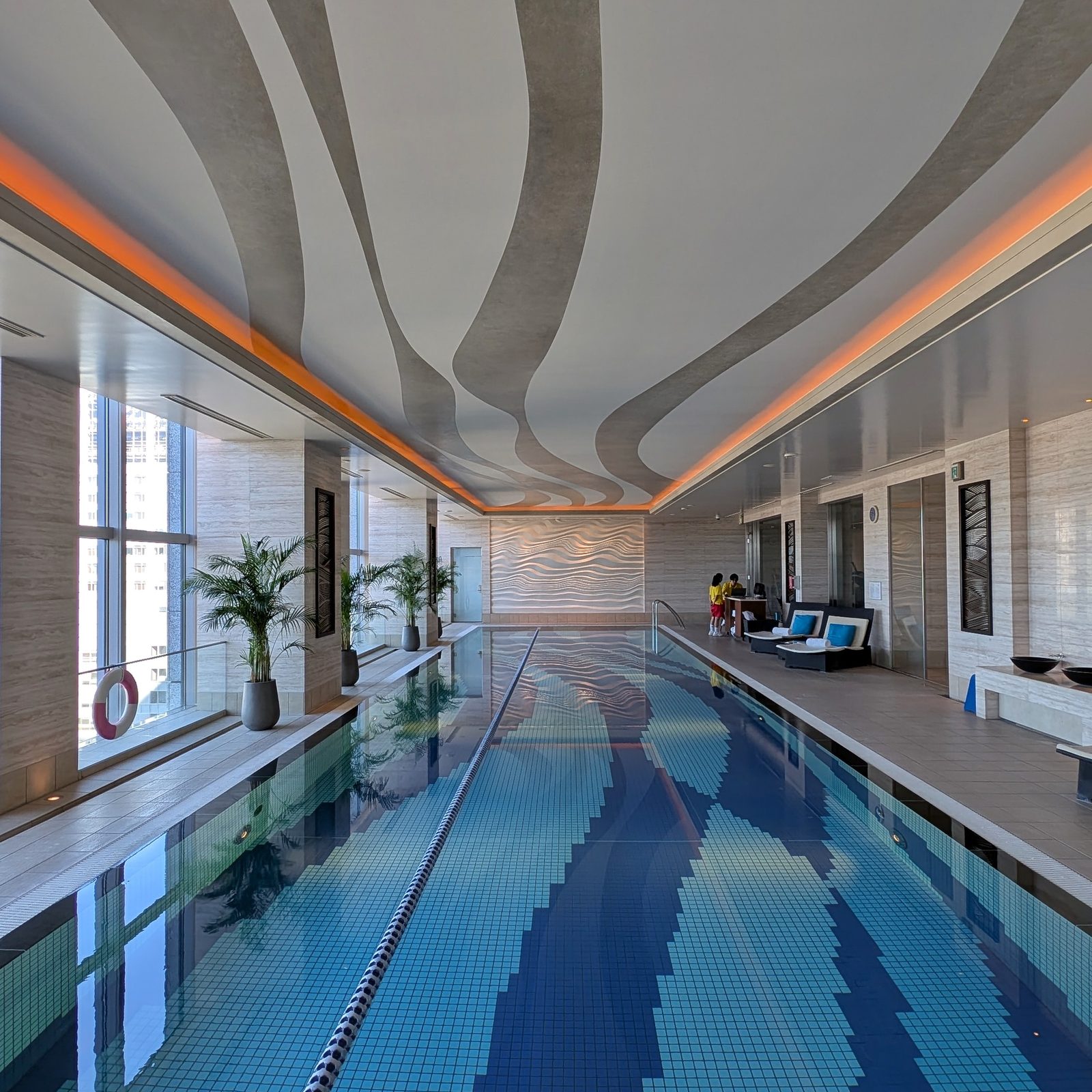
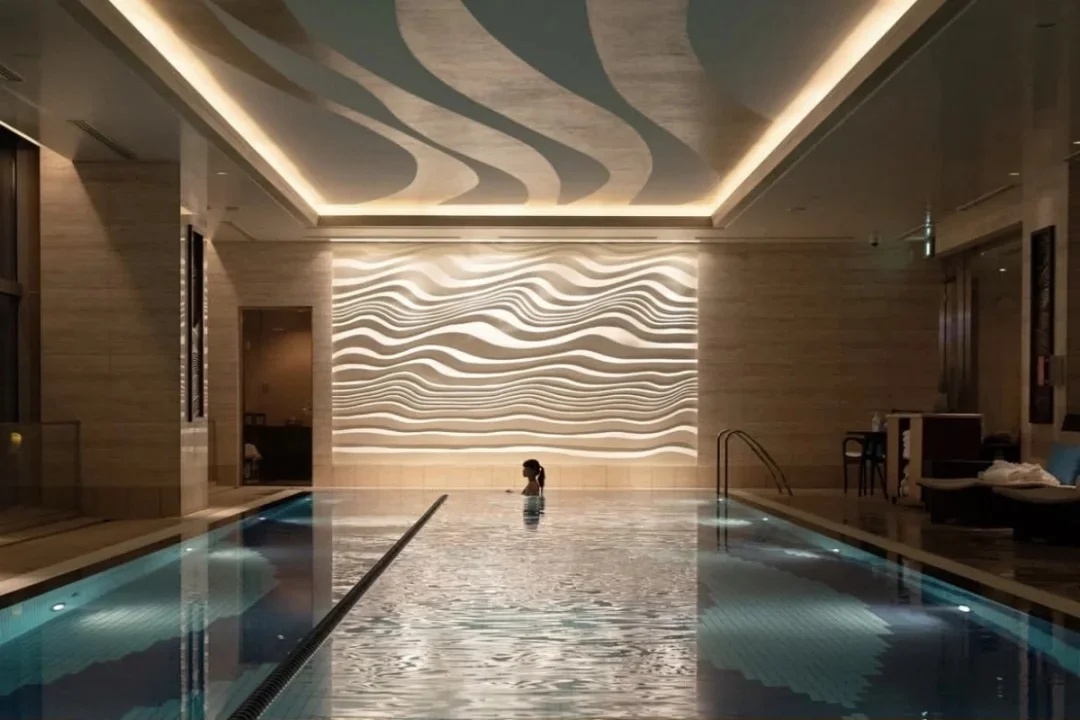
The pool is 20 metres, on 29, with views towards the palace side. You book a time slot and wear a swim cap. The gym is open 24 hours and lends you clothes and shoes, but it's small. The locker rooms each have a whirlpool and a sauna; they're not big, and there's no onsen.
Location and sense of place
The location is perfect for trains and fairly dull at night. Across the road on the Yaesu side there are lively izakaya backstreets, and Nihonbashi and Daimaru are a short walk. The palace is 15 to 20 minutes on foot, or you can borrow one of the hotel's free BMW bikes.
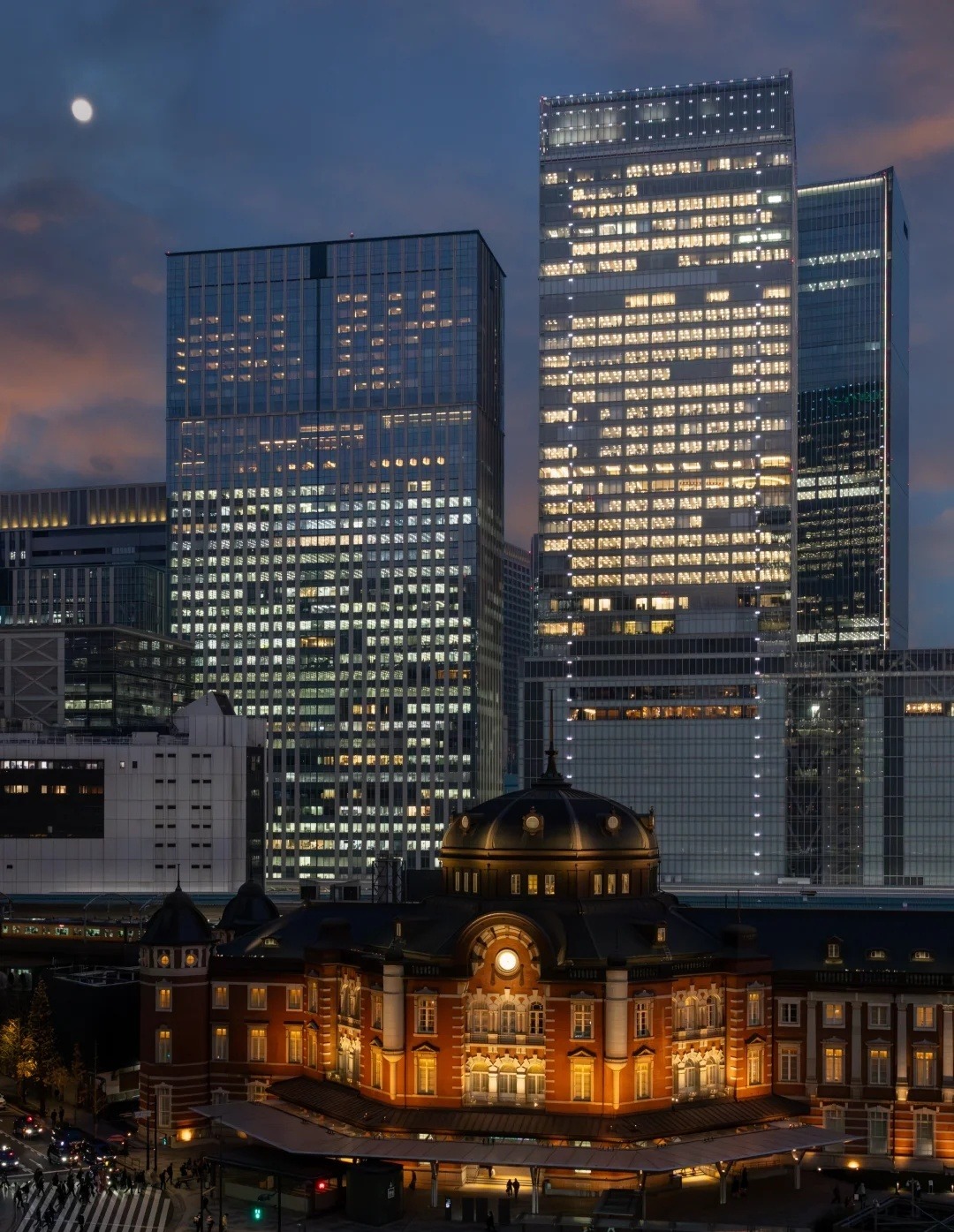
The streets around the Nihonbashi Exit will be a building site until about 2030, with Torch Tower going up right in front, so expect cranes.
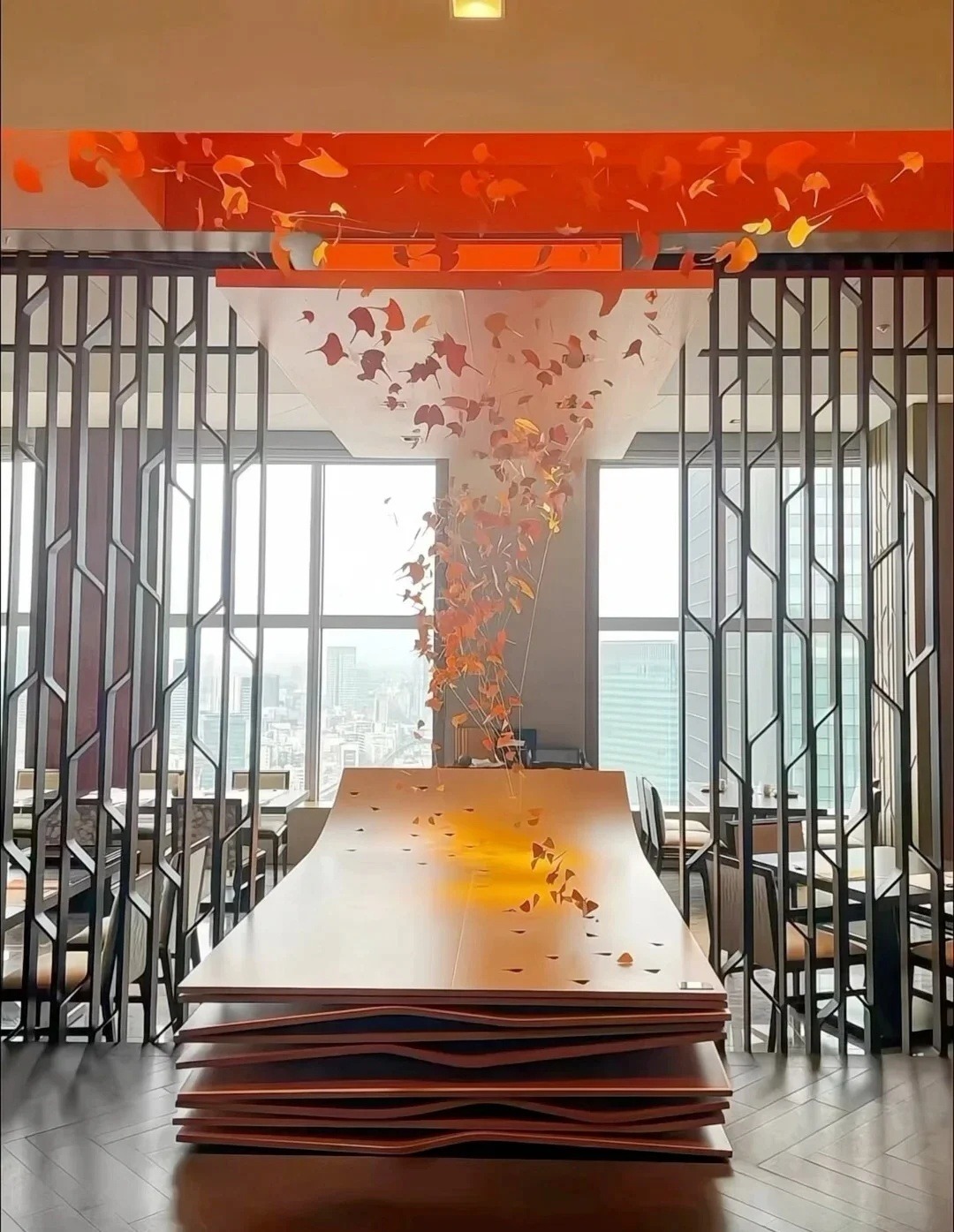
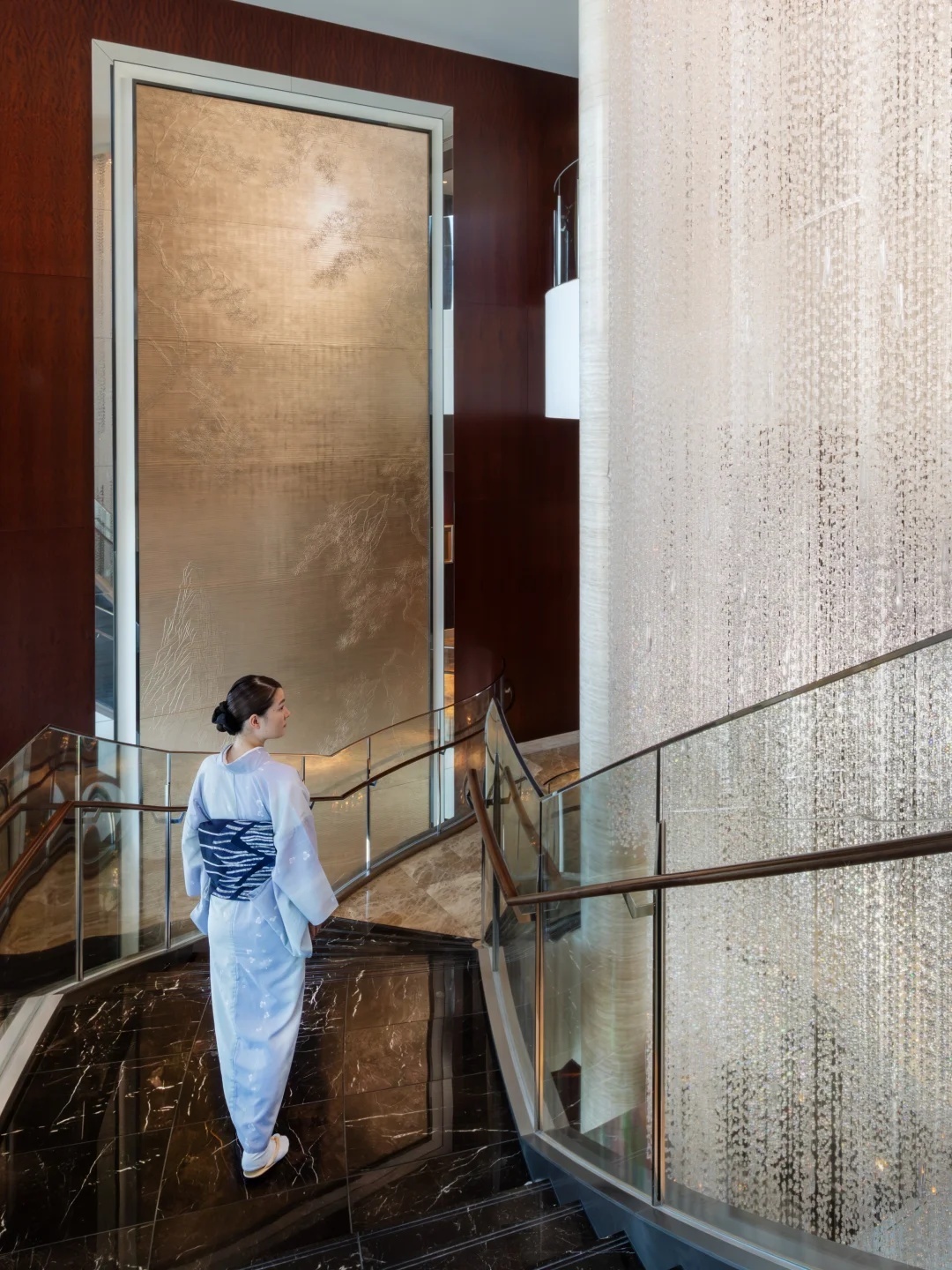
As for feeling like you're in Japan, there isn't much of that inside. The art is mostly Chinese, and the design is general "Asian luxury hotel". Japan turns up in the details: the yukata and the sencha, kimono at Nadaman, and ginkgo leaves (Tokyo's emblem) in the art. For a hotel that feels Japanese all the way through, I'd book Hoshinoya Tokyo, Aman Tokyo or the Palace Hotel.
Is it worth it?
Yes, if you have kids or your trip runs on the Shinkansen. For anyone else, I don't think so: until they redo the rooms, there are better hotels on the same few blocks.
The hotel has one Michelin Key, and Forbes dropped it from five stars to four after 2023. I think that's fair. The staff are as good as anyone's in Tokyo, but the rooms haven't kept up. Four Seasons Otemachi and the Palace Hotel have three Keys each and feel a generation newer.
Prices have roughly doubled since 2018, when rooms started at around ¥55,000. On top of that, 15% service goes on every meal and drink.
I'd book it if you're travelling with children or grandparents. Between the room sizes, the connecting pairs, free breakfast for under-sevens and the platform pickup, it's easier than anywhere else in Tokyo. I'd also book it if your trip runs on trains, or if you're travelling with Chinese-speaking family.
I'd book something else if it's your first trip and you want restaurants and evenings right outside the door; for that, stay at The Tokyo EDITION, Ginza. If you want the palace view this hotel promises, Four Seasons Otemachi actually has it. For the same platform pickup in brand-new rooms, Four Seasons Marunouchi is a few minutes away, though the rooms are smaller. The Conrad has rooms as big, better views and more quiet, but it isn't next to the station.
If you go, book a corner Premier, as high up as you can get. On a smaller budget, take a plain Deluxe on the east side and skip the club. And I wouldn't pay extra for the Imperial Garden View unless you need the connecting rooms.
At a glance
| Best for | Families and multi-generation groups, Shinkansen and Narita Express trips, Chinese-speaking travellers, business in Marunouchi or Otemachi |
| Not for | Design lovers, anyone wanting Japanese sense of place, light sleepers on the west side, Shangri-La elites expecting upgrades |
| Room to book | Corner Premier (68 sq m), high floor; east-side Deluxe on a budget |
| Room to avoid | Deluxe Imperial Garden View: train noise, afternoon sun and a mostly blocked palace view |
| Skip | Paid breakfast, Nadaman's set kaiseki, the Horizon Club if you won't use breakfast and cocktail hour |
| Don't miss | The platform meet-and-greet both ways, eggs royale, an SG Group cocktail in the Lobby Lounge, Nadaman's sushi counter |
| Rough nightly rate | From about US$530 before tax and service; around US$765 all-in on an ordinary summer night |