Conrad Tokyo: get the bay and the lounge, or go elsewhere
Verdict. A big, spotless room over Hamarikyu and the bay with a lounge that carries the stay; until they renovate the 2005 rooms, there are better places to stay in Tokyo.
If you have Hilton status or lounge access, the Conrad can be one of the most comfortable stays in Tokyo. Without them, I think you're paying close to Ritz-Carlton money for a queue, a crowded breakfast and a view of offices. It really is two different hotels depending on how you book.
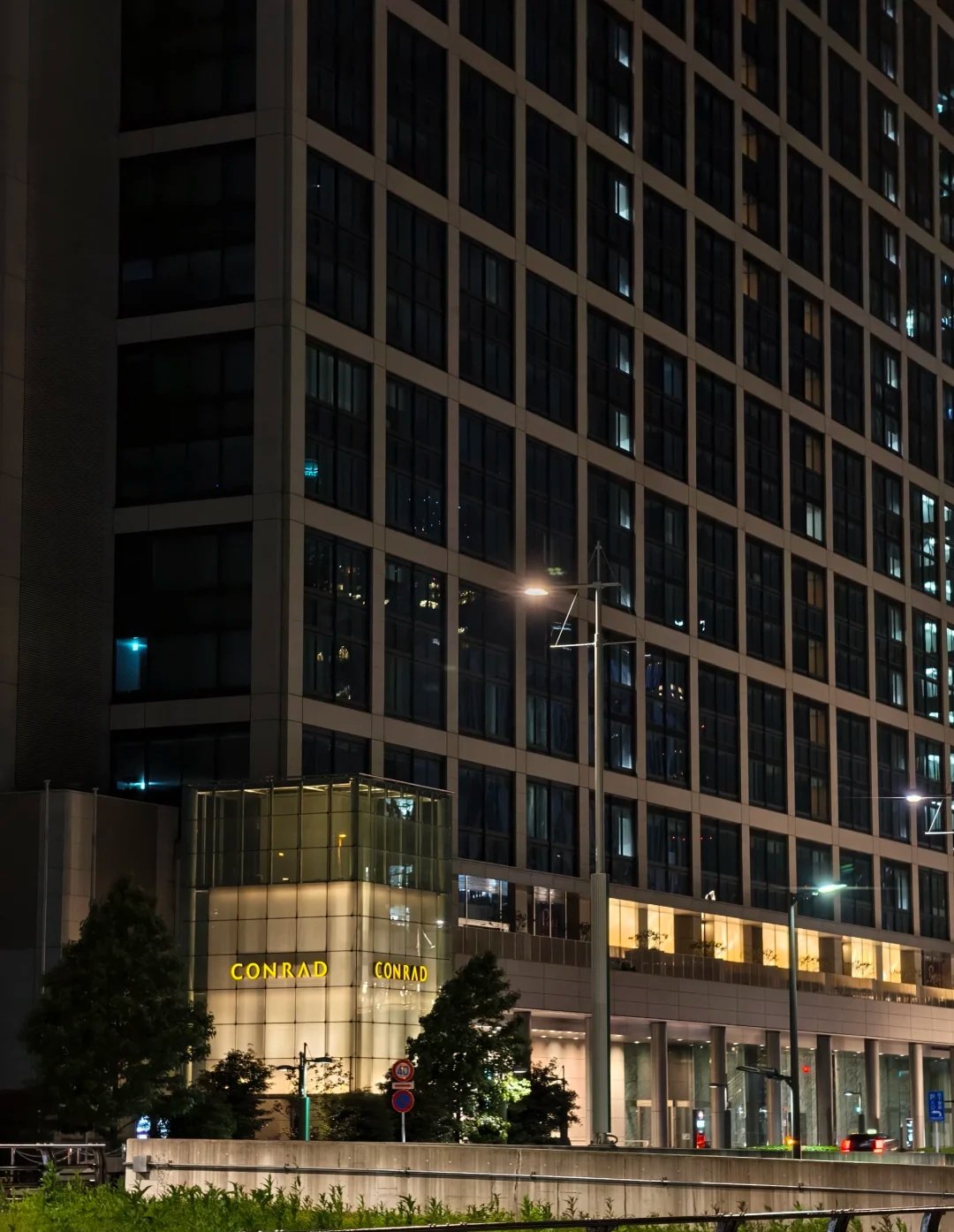
It's Hilton's flagship in the city, on floors 28 to 37 of an office tower in Shiodome. It opened in 2005, and the rooms haven't been renovated since.
I stayed three nights in an Executive Bay View King on the 36th floor.
Arrival
If you come by taxi, it's easy. Staff meet cars at the ground-floor driveway, and the bags go straight up to your room. Then it's a lift to the sky lobby on 28 and a second lift to the rooms. That's two lifts every time you go out, and at busy times there aren't enough of them.
On foot, the hotel is hard to find. There's no big sign, and the floors underneath are offices for SoftBank companies, so from the street it looks like exactly what it is: an office tower with a hotel sitting on its head. From JR Shimbashi it's ten minutes of underground passages. I'd use the Oedo line instead, because Shiodome station is more or less under the building. From Haneda, a taxi takes under half an hour.
Executive guests and Hilton Diamonds check in sitting down in the lounge on 37, and I was done in minutes. The desk on 28 is a different story. When I walked past at three on the Saturday, the standing queue was 30 to 40 minutes long. Weekend check-out is no better.
Don't count on an early room. You can drop your bags before 15:00, but the only guaranteed way in is paying for the night before.
The welcome is thin: one piece of house chocolate, no fruit and no card. Birthdays are the exception; if you mention one in advance, a cake appears. I left asking about late check-out until my last morning and got 30 extra minutes, so ask at check-in instead.
The room
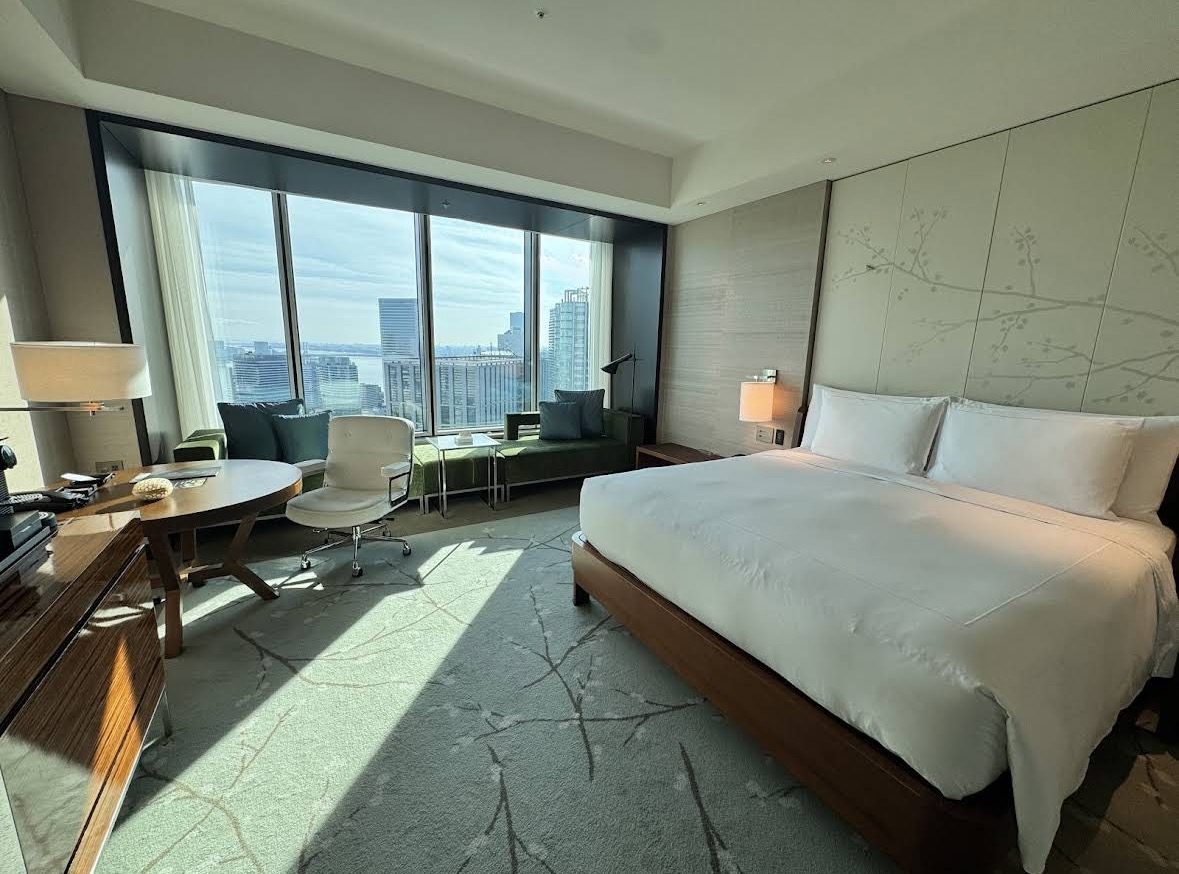
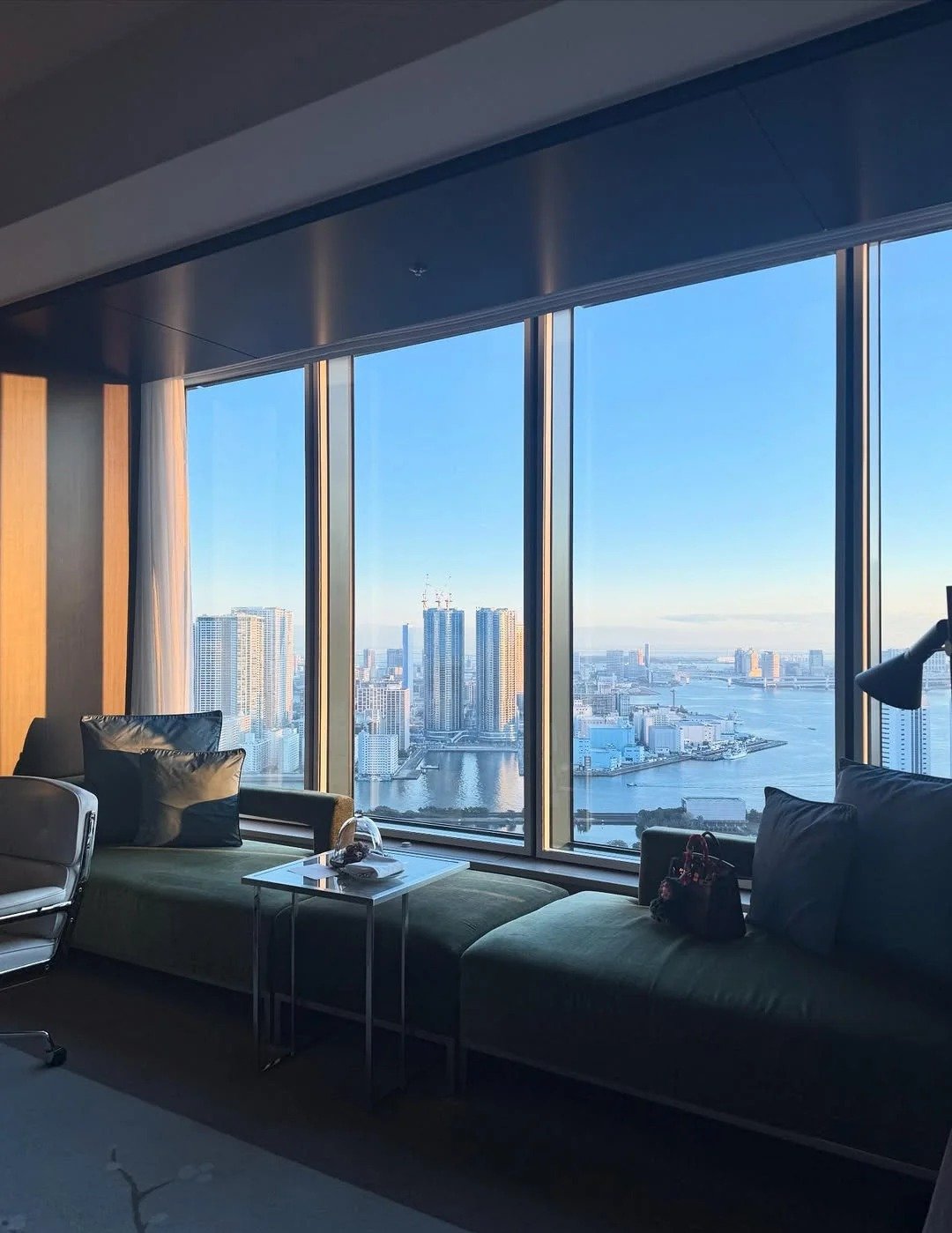
The room is big and the view is superb, but the fittings are from 2005. Entry rooms are 48 square metres, which is generous for Tokyo, with windows about three metres high and a cushioned banquette running along the glass.
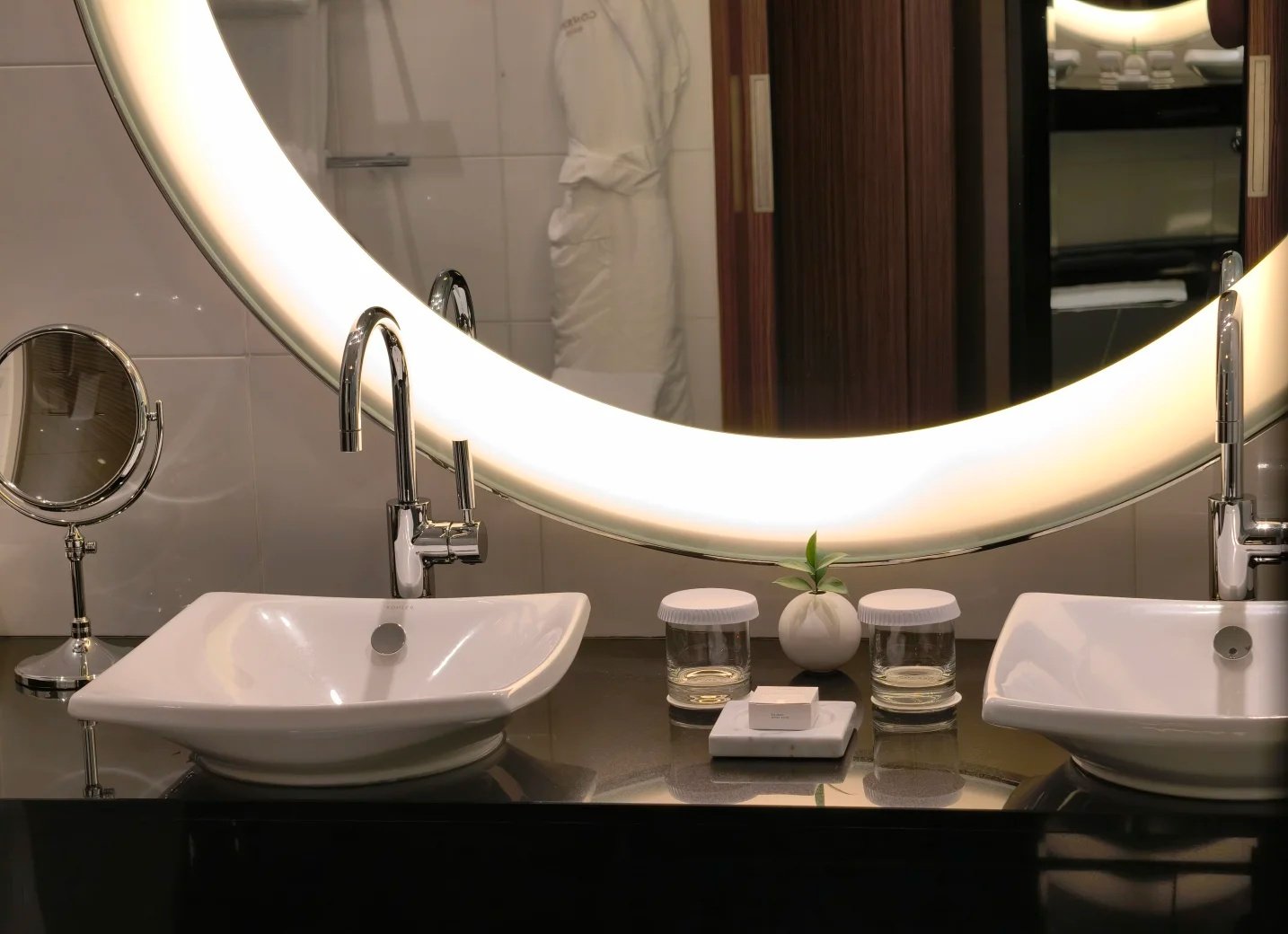
Bathroom
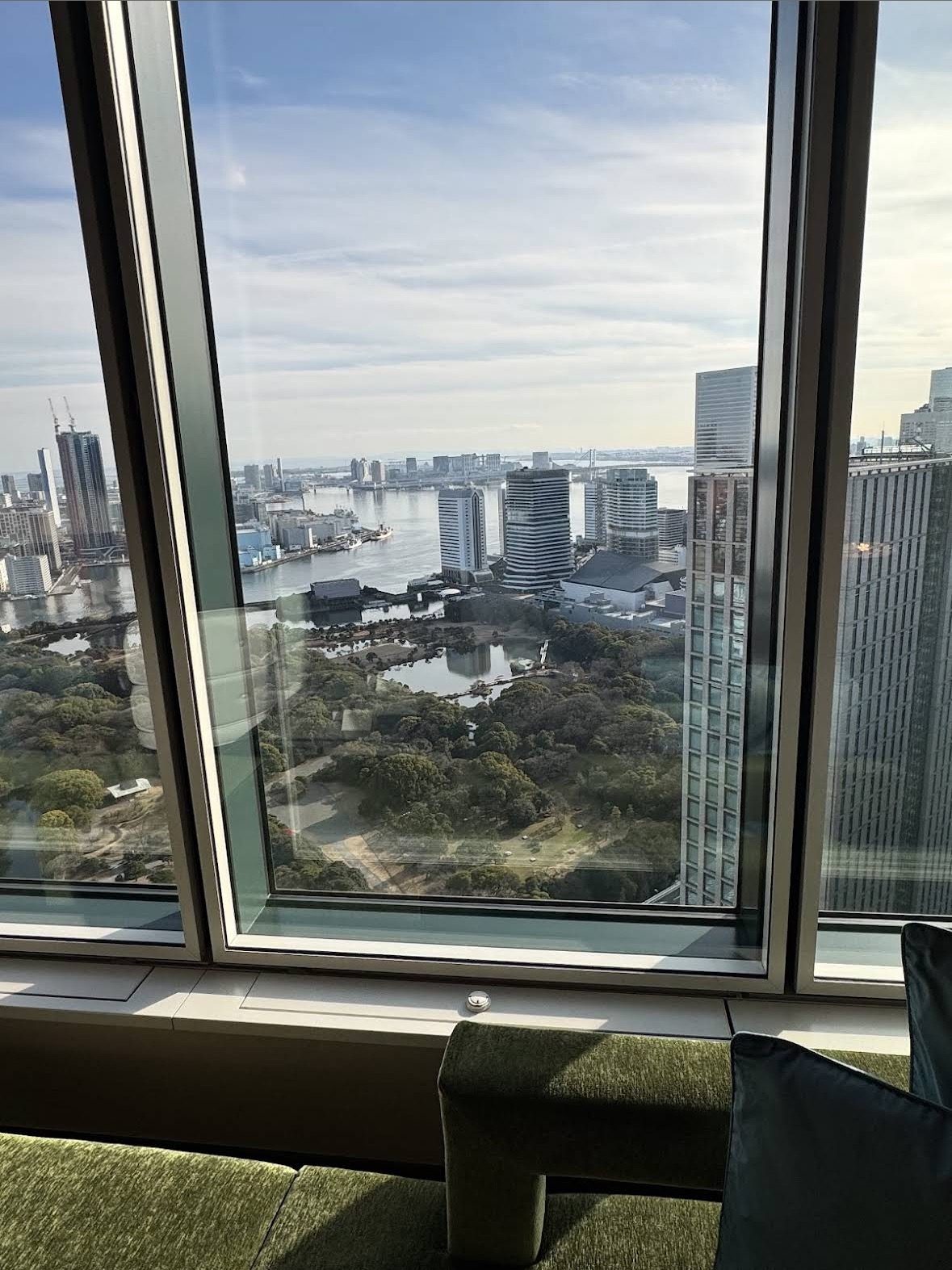
The bathroom is the best part. It has black tile, twin basins, a freestanding tub, a separate rain shower with very strong pressure, and a glass wall with an electric blind, so you can lie in the bath and look across the bay. Hamarikyu Gardens, the Tokugawa family's old tidal garden, sits right below, with the Rainbow Bridge and Odaiba beyond. That view from the tub is the single best reason to book this hotel.
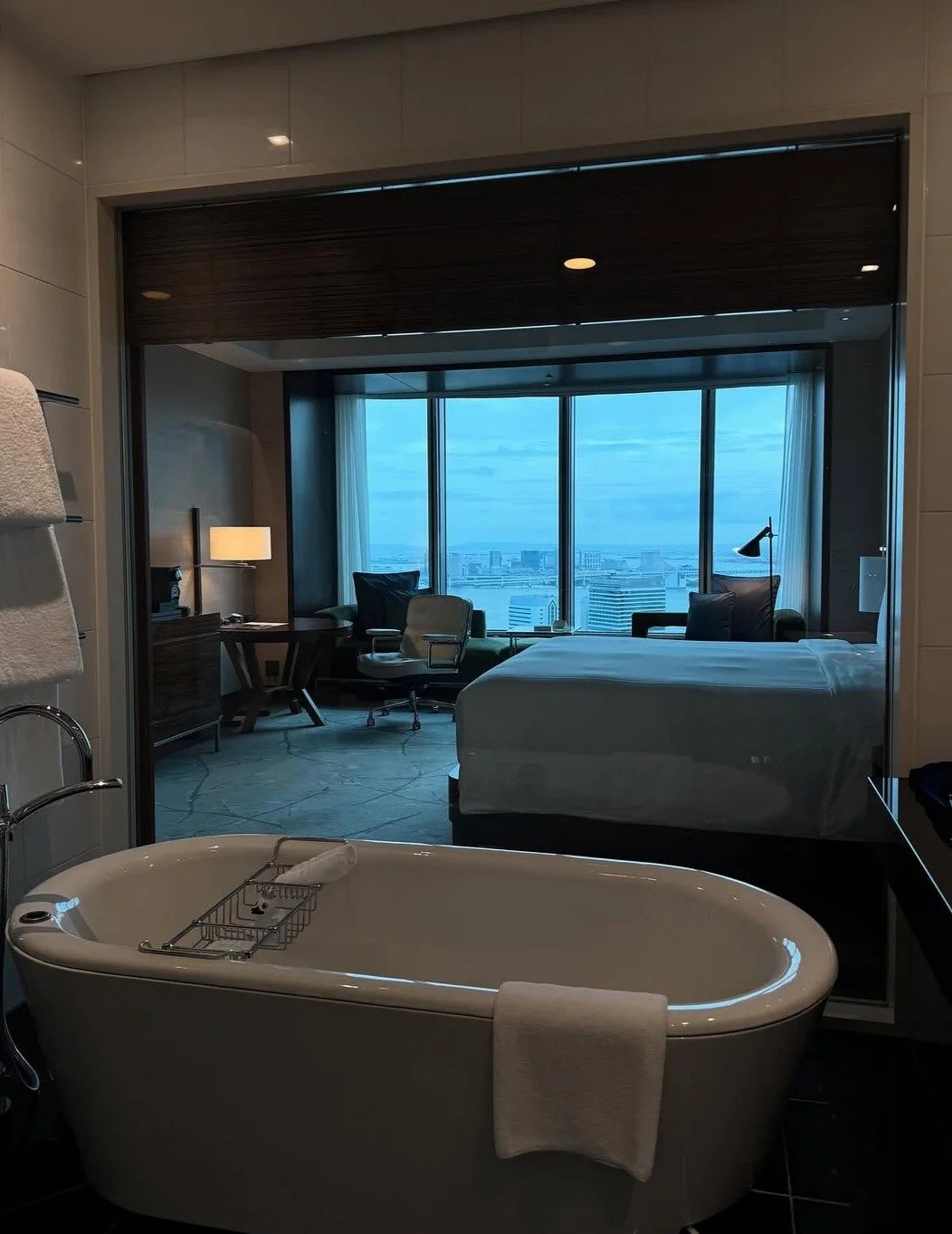
Upkeep is excellent. Everything was spotless, with nothing loose or musty anywhere. But the age shows:
- The bathroom fittings and doors are the same design Hilton uses at its DoubleTrees, which is a surprise in the Tokyo flagship.
- The TV is a 46-inch LCD, small by today's standards.
- The lighting is badly planned. There's one socket in the bathroom, the bathroom switches are outside the bathroom, and at night light leaks round the bathroom blind.
- The tub is shallow if you're tall. You can have warm knees or warm shoulders, but not both. Standard rooms don't have underfloor heating either.
Bedroom
The bed is excellent, and there's buckwheat on the pillow menu. Toiletries are Byredo, and there are plenty of towels. Every room also gets a little Conrad bear and a rubber duck, though supply runs short and sometimes only the duck turns up. The minibar is expensive, and internet is charged unless you're a Hilton Honors member. Membership is free, so join before you arrive.
Which side to book
Face the bay, always. The city side looks at the Shiodome towers, and the west side sits over the JR, Shinkansen and Yurikamome lines, which you hear even high up. If you end up on the city side, ask for a high floor away from the tracks.
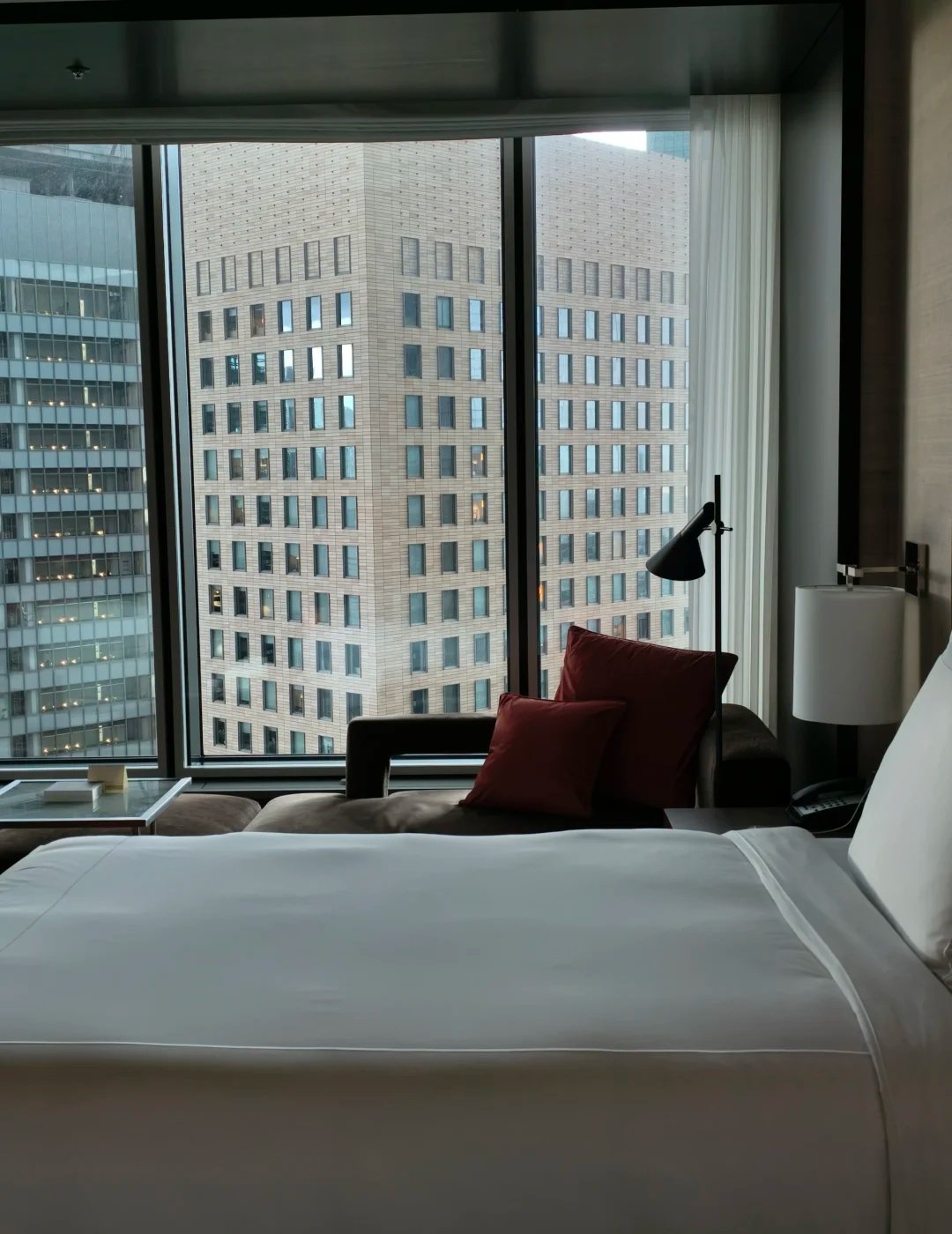
"Bay view" varies too. Some bay rooms look at other towers rather than the bridge, and the lower bay floors get more of them. You can end up with a bay view that's mostly a view of other people's bay views. Ask for a high floor.
Other rooms and suites
I'd take a bay-view room over a city-view suite. If you want a suite, the 72 square metre King Suite Bay View is the one. The bigger corner bay suite isn't worth the extra: all the extra space goes into the living room, and the bedroom is compact.
If you're travelling with children, a rollaway costs about ¥10,000 a night and makes the room tight.
Service
After the view, the staff are the best thing here, though things go wrong when they have to pass something on.
One on one they're very good, and the English is excellent. Lounge staff picked up a detail from my pre-arrival email and asked me about it, which was lovely. The manner is the most Japanese thing in the hotel, attentive without ever being pushy.
The trouble is getting information from one shift to the next. On my first evening the lounge booked me the teppan counter for the next night. The next evening's shift had no record of it, and it took ten minutes to sort out. If something's been promised, mention it again to whoever's on next.
The hotel was full of corporate groups while I was there, and at peak times it doesn't feel calm.
Hilton status shapes this stay more than most. Diamonds get the lounge, breakfast and an upgrade when available. Golds get breakfast but no lounge. Since Hilton added a tier above Diamond in 2026, plain Diamonds should expect a bay room rather than a suite. Book with Hilton directly, because third-party bookings lose your status benefits.
If the desk offers you a paid upgrade, ask the price before you answer. Depending on the night, it can be anything from about ¥3,750 to ¥100,000.
Breakfast
The lounge breakfast is the best meal in the building, and much better than the same food downstairs at Cerise.
I tried Cerise, on 28, on the Saturday. It costs ¥6,500, seats only 36, and at nine there was a queue out of the door. You get the buffet plus one cooked dish, and only one. The overflow sent me to China Blue, which turned out to be the best room for breakfast. At weekends, go before 7:30 or after ten.
On 37 the buffet is smaller, but it's quiet, there's a chef at the live station, and you can order from the menu as often as you like. I had the uni scrambled eggs and the lobster omelette on the same morning.
What I'd order:
- Uni scrambled eggs, with fresh sea urchin. Better than the famous lobster omelette with bisque.
- French toast (a big portion) and the maple butter pancakes.
- Truffle eggs Benedict. The plain Benedict comes overcooked.
- The Japanese side: good rice, grilled fish and a build-your-own seafood bowl with salmon roe and mentaiko.
Skip the filter coffee, which is watery, and ask for a barista coffee. The fruit is thin and the taco station isn't worth the walk.
If breakfast is included, have it, and upstairs if you can. Without lounge access, I wouldn't pay ¥6,500 to queue for one dish; walk to Shimbashi instead.
Restaurants and bars
Book the teppan counter and have one drink at dusk. Kazahana's teppan counter is the best food in the hotel. The rest is fine or overpriced.
Kazahana
Kazahana has teppan, an eight-seat sushi counter and kaiseki. Book the teppan for dinner. The kaiseki lunch at about ¥9,000 is the value meal. Hilton Golds and Diamonds get 25% off in-house dining.
China Blue
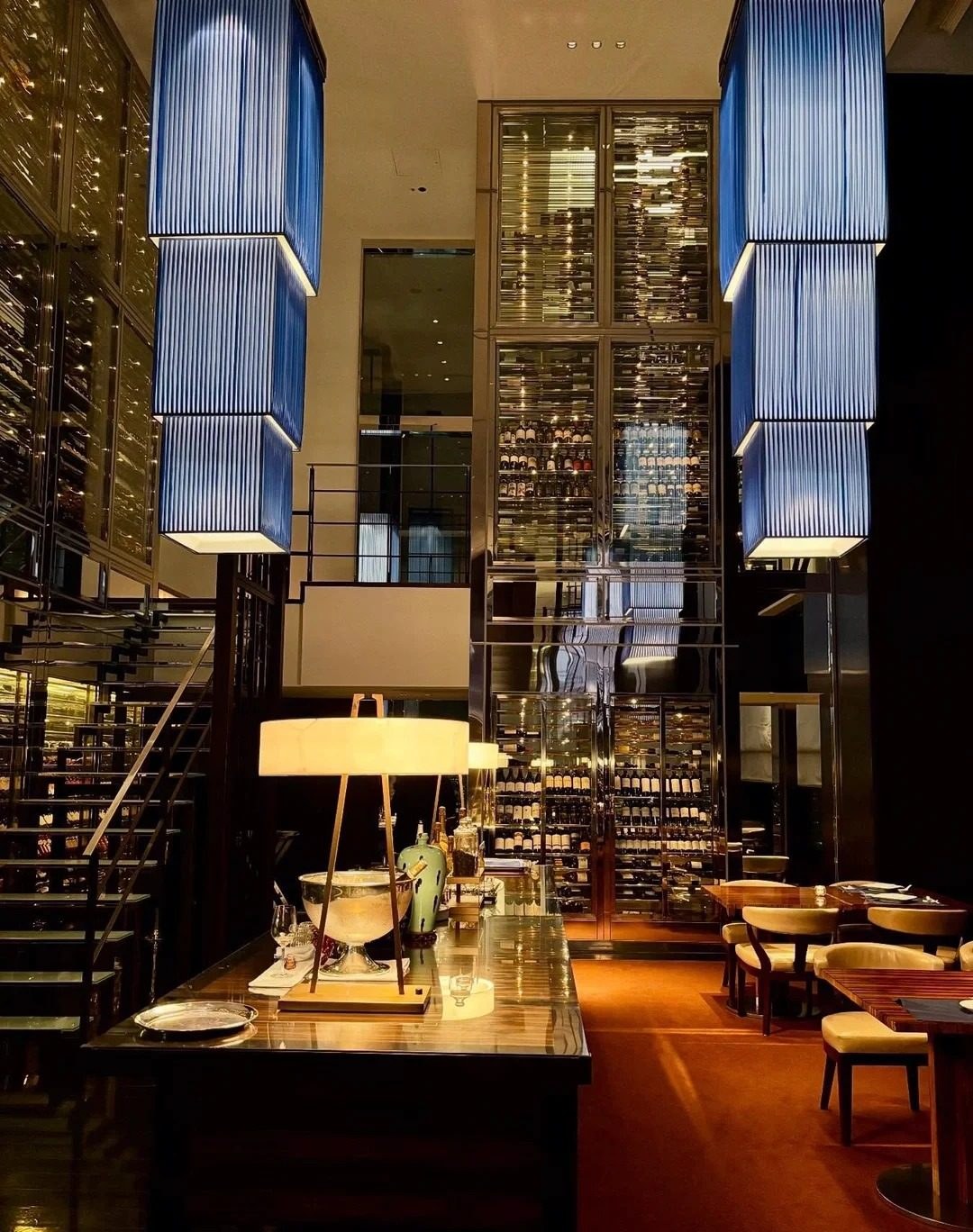
China Blue is a dramatic blue room with an eight-metre wine cellar, and Cantonese food that doesn't match the price. I'd see it at breakfast, when the room is just as good and the food costs much less.
TwentyEight
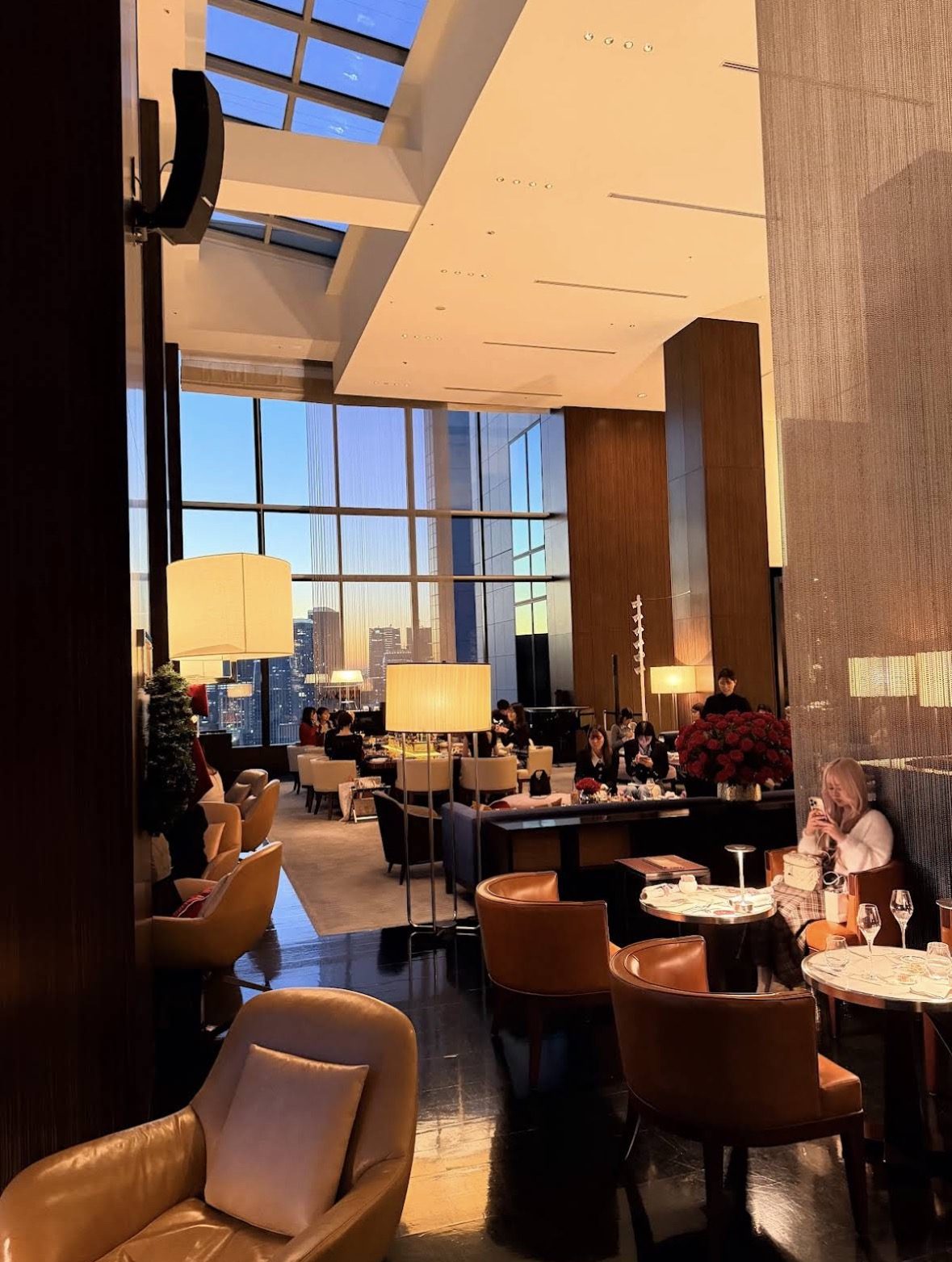
TwentyEight, the lobby bar, has seven-metre windows over the bay and live music. My cocktail and a whisky came to ¥15,000, more than the kaiseki lunch downstairs. Have one drink at sunset, then go out. I'd skip the afternoon tea, which is mostly sweets.
Room service
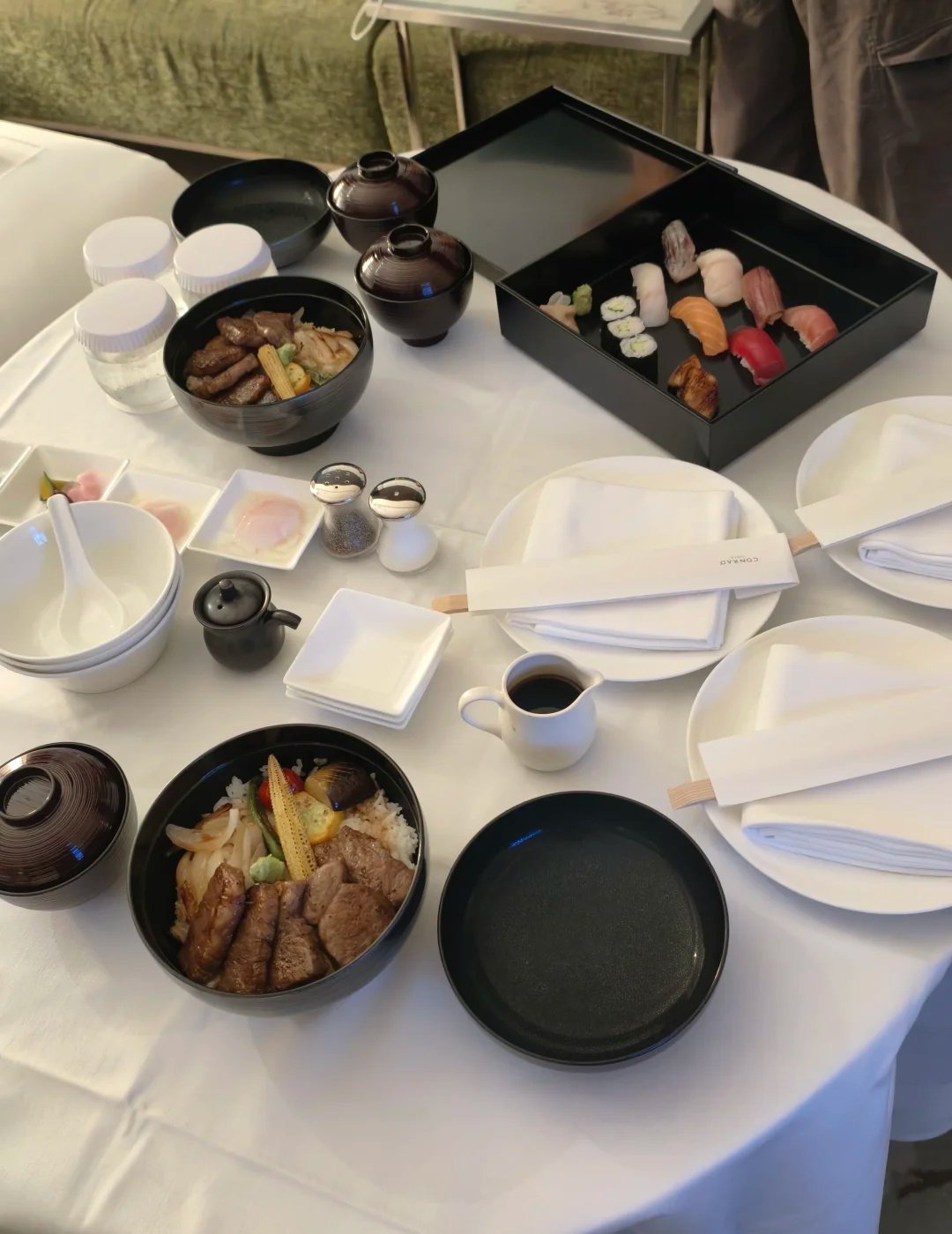
Room service runs 24 hours and is fast.
Executive Lounge
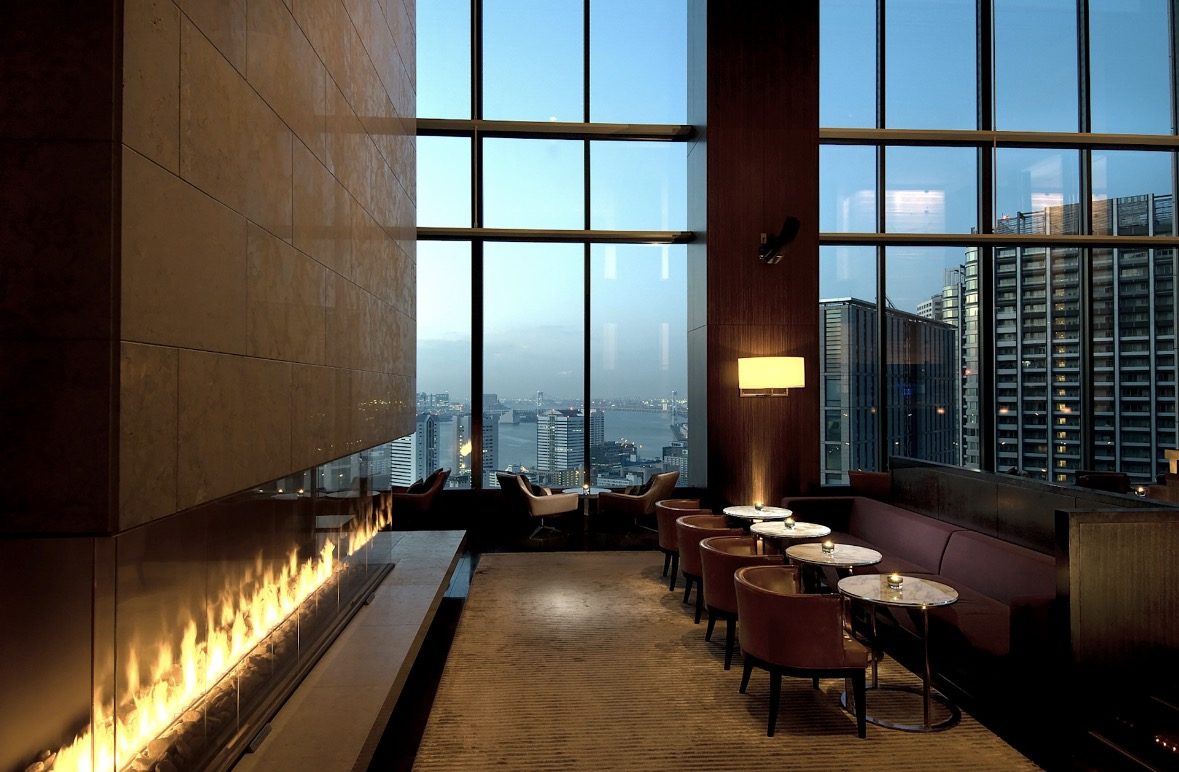
The Executive Lounge is better for drinks than food. The whisky list is one of the best of any club lounge, but the canapés won't replace dinner. At weekends and on holidays the evening drinks run in timed one-hour seatings, so book your slot at check-in. It's happy hour by appointment. Walk past the fireplace on the city side and sit on the bay side.
Pool, spa and gym
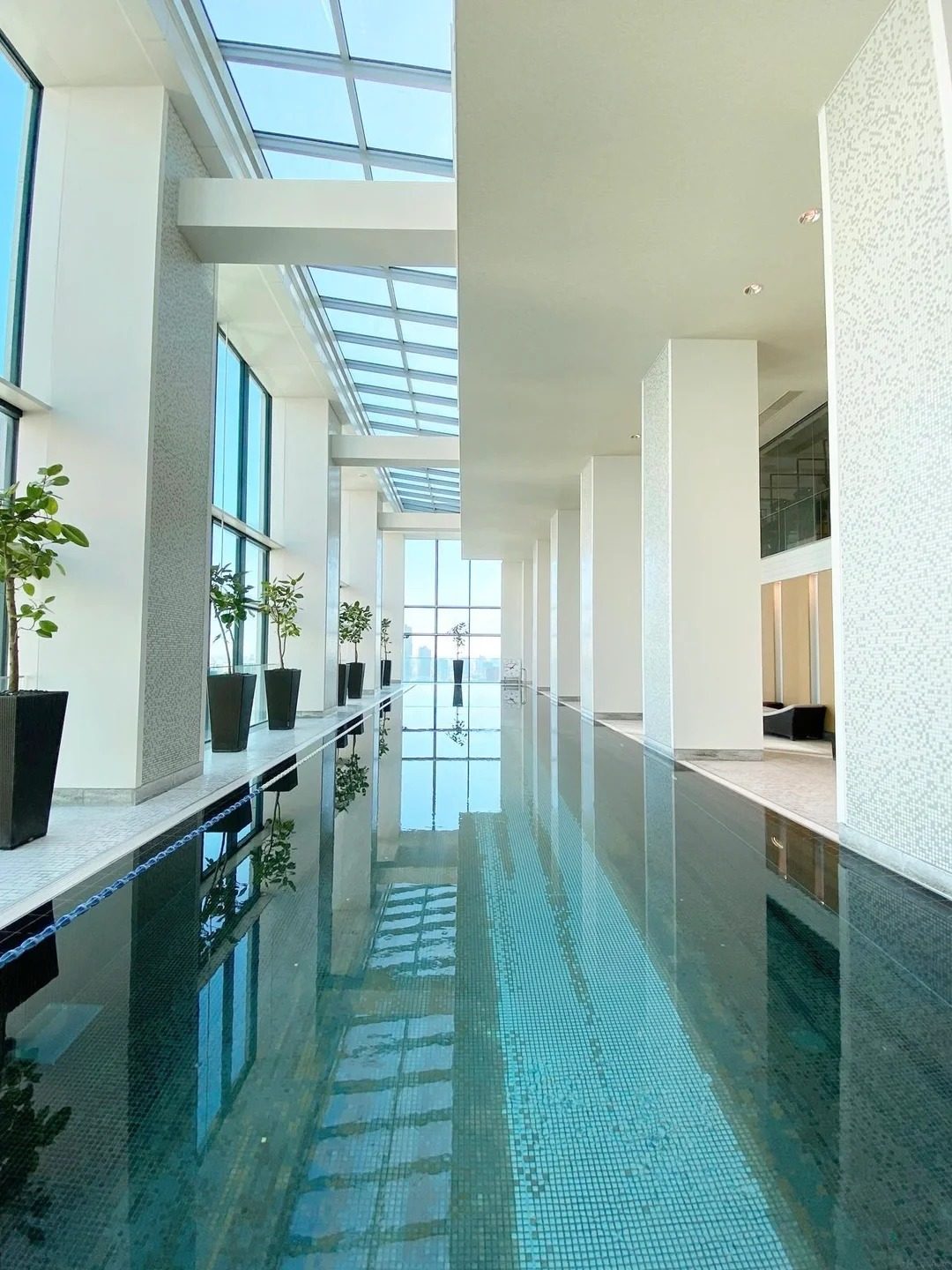
The pool is a real asset. It's 25 metres, indoors on 29, with glass on three sides, and it's free for guests. You share it with local club members, but I swam after eight in the evening and had it nearly to myself. Caps are compulsory and provided. It shuts for maintenance for a few days every mid-January. The changing rooms have a sauna, steam room and hot baths. The gym needs indoor shoes, so bring a pair or rent them.
Location and sense of place
The location is well connected but lifeless. Shiodome is an office district, and after dark there's little outside but offices. Ginza is a 10 to 20 minute walk, and the Shimbashi izakaya alleys are seven minutes. Shinjuku and Shibuya are a slog. The best walk is Hamarikyu, five minutes away. I went at opening one morning and passed almost no one.
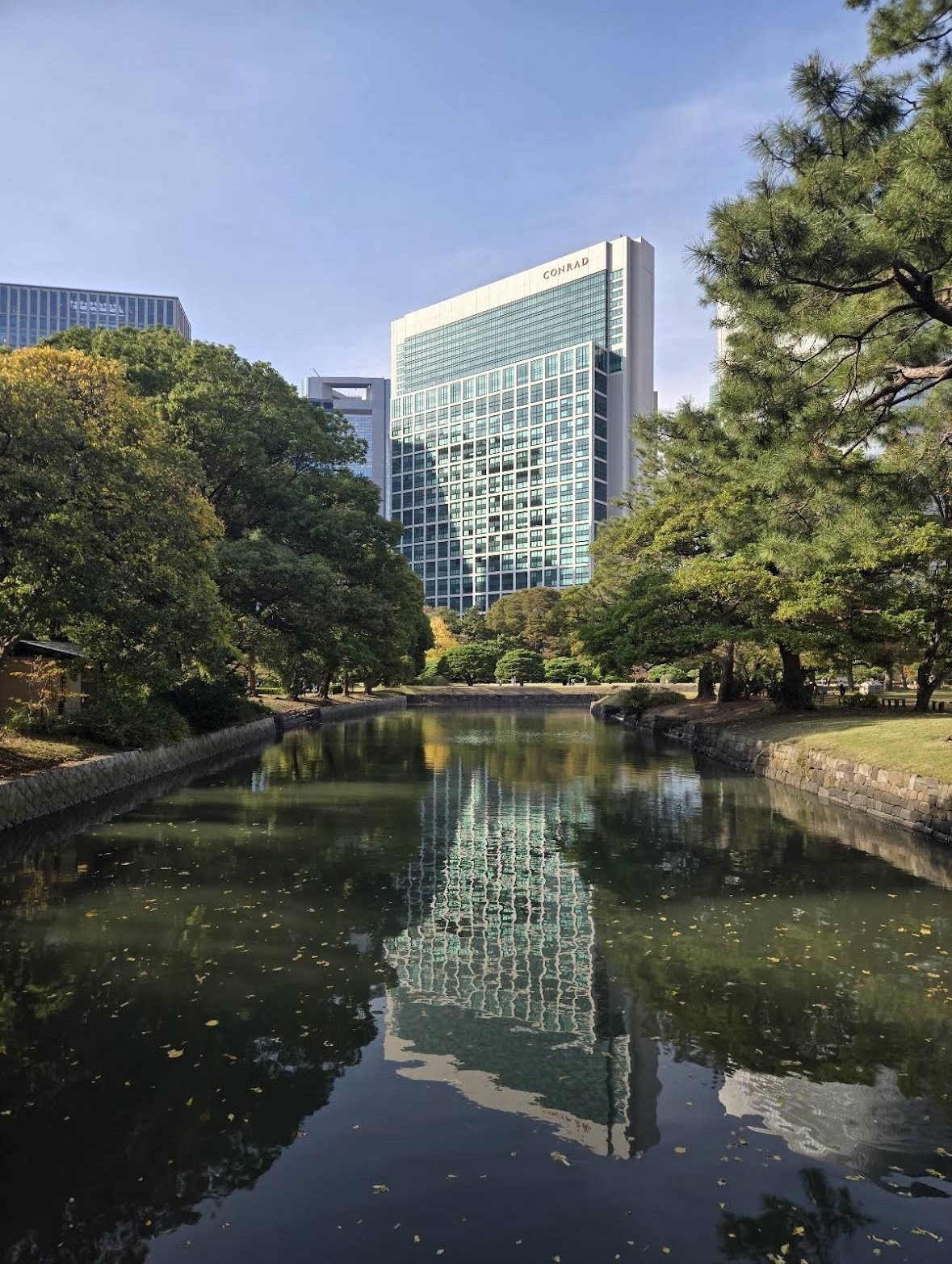
As for feeling like you're in Japan, the room has a sumi-e cherry blossom over the bed and not much else, so you're relying on the garden below. For Japan inside the hotel, Hoshinoya Tokyo, Aman Tokyo or the Okura's Heritage Wing do it far better.
Is it worth it?
Yes, but only in an Executive Bay View room with the lounge. Until they properly renovate the rooms, I think there are better places to stay in Tokyo.
With the lounge and the bay, you get a big room over a historic garden, a calm breakfast, a real pool and a team that looks after you. Without them, it's the 28th-floor queue, one dish at a crowded Cerise, a wall of offices and maybe the trains. Standard rooms now run about US$700 to $800 a night and over ¥100,000 at weekends. For that money the Ritz-Carlton is a grade higher, and for a base or view room the Andaz Toranomon Hills is the better hotel.
I'd book it if you hold Hilton Diamond status or a free-night certificate, want space and a bay view without Aman prices, have kids who want a pool, or are building the trip around Ginza, Tsukiji, Odaiba or Haneda.
I'd book something else if it's your first trip and you want to step straight out into the city; The Tokyo EDITION, Ginza puts you right in it. For finish and polish, the Palace, Four Seasons Otemachi, the Bulgari and the Mandarin Oriental are a tier above. And if you're a light sleeper and can only get a city room, I wouldn't come.
If you go, book the Executive Bay View King on 36 or 37, with the lounge steps away. For more space, take the 72 square metre King Suite Bay View.
At a glance
| Best for | Hilton Diamonds and free-night certificate holders, couples wanting space and a view, families who want a pool, Ginza, Tsukiji and Haneda trips |
| Not for | First-timers who want street life, design purists, light sleepers stuck on the city side, anyone wanting a Japanese interior or an onsen |
| Room to book | Executive Bay View King, 36th or 37th floor; King Suite Bay View (72 sq m) for more space |
| Room to avoid | Any City View room; the 85 sq m corner bay suite at its usual premium |
| Skip | Paid breakfast at Cerise, the filter coffee, China Blue for dinner, afternoon tea, the walk from JR Shimbashi with bags |
| Don't miss | Uni scrambled eggs in the lounge, the Kazahana teppan counter, the pool after 20:00, Hamarikyu first thing |
| Rough nightly rate | About US$700-800 for a standard room in 2026, over ¥100,000 at weekends; 130,000-190,000 Hilton points |