Imperial Hotel Tokyo: great staff, old rooms, and one side worth booking
Verdict. Old-school service, a great bar and dated but well-built rooms; worth it in a Main Building room on the Hibiya Park side, not in the Tower.
If you like a grand hotel run the old way, the Imperial is still the real thing. The staff are as good as at any big hotel in Tokyo, and the bar downstairs is one of the best rooms in the city. The bedrooms are plainly dated, though, and which side of the building you sleep on matters more here than at any rival. Get a Main Building room on the Hibiya Park side and it's a lovely, old-fashioned stay. Otherwise, you'll hear trains.
It's Tokyo's grand old hotel, with 909 rooms split between a 1970 Main Building and a 1983 Tower, facing Hibiya Park. It's independent, so there are no points to earn.
I stayed in an Imperial Floor Deluxe on the park side of the Main Building.
Arrival
Come by taxi if you can; the front door is the best part of arriving. A doorman took my bags at the porte-cochère and handed me to the bell staff, who walked me to the desk. It's a proper street-level grand-hotel welcome, and it runs like clockwork.
On foot it's less smooth. Hibiya Station exit A13 is three minutes away, but it has stairs, so with luggage I'd go through Tokyo Midtown Hibiya, which has a lift. From Haneda, take a taxi, about 45 minutes, because the airport bus is currently suspended.
Check-in took me five minutes. At busy times there's a queue, though, and the vast 1970s lobby, full of wedding parties by day, feels more like a railway station than a luxury hotel.
If you live outside Japan, join the free Imperial Club International before you arrive. It gets you a separate counter to the left of the main desk, plus 13:00 check-in and 15:00 check-out when rooms allow.
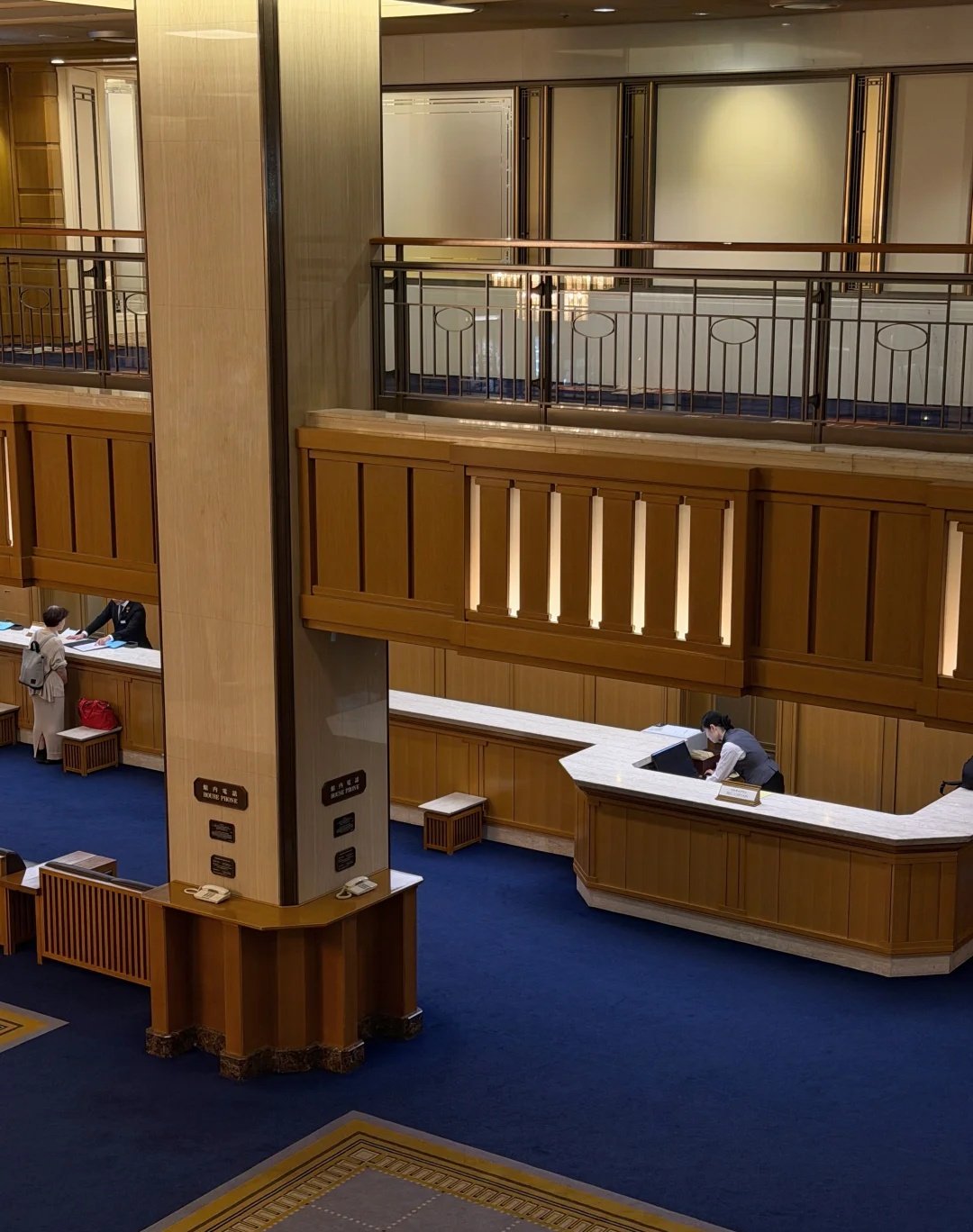
Someone walks you to your room. In the Tower that's a real help, because the route takes in stairs, a corridor and a key-card skybridge.
Upgrades come easily, because the hotel runs at about 62% full and often has rooms to spare. Ask at the desk what the next category costs on the day. The answer can be surprisingly small, sometimes about ¥10,000 for a suite.
The room
The side you face decides your night, and I'll come to that. First, the room itself.
Bedroom
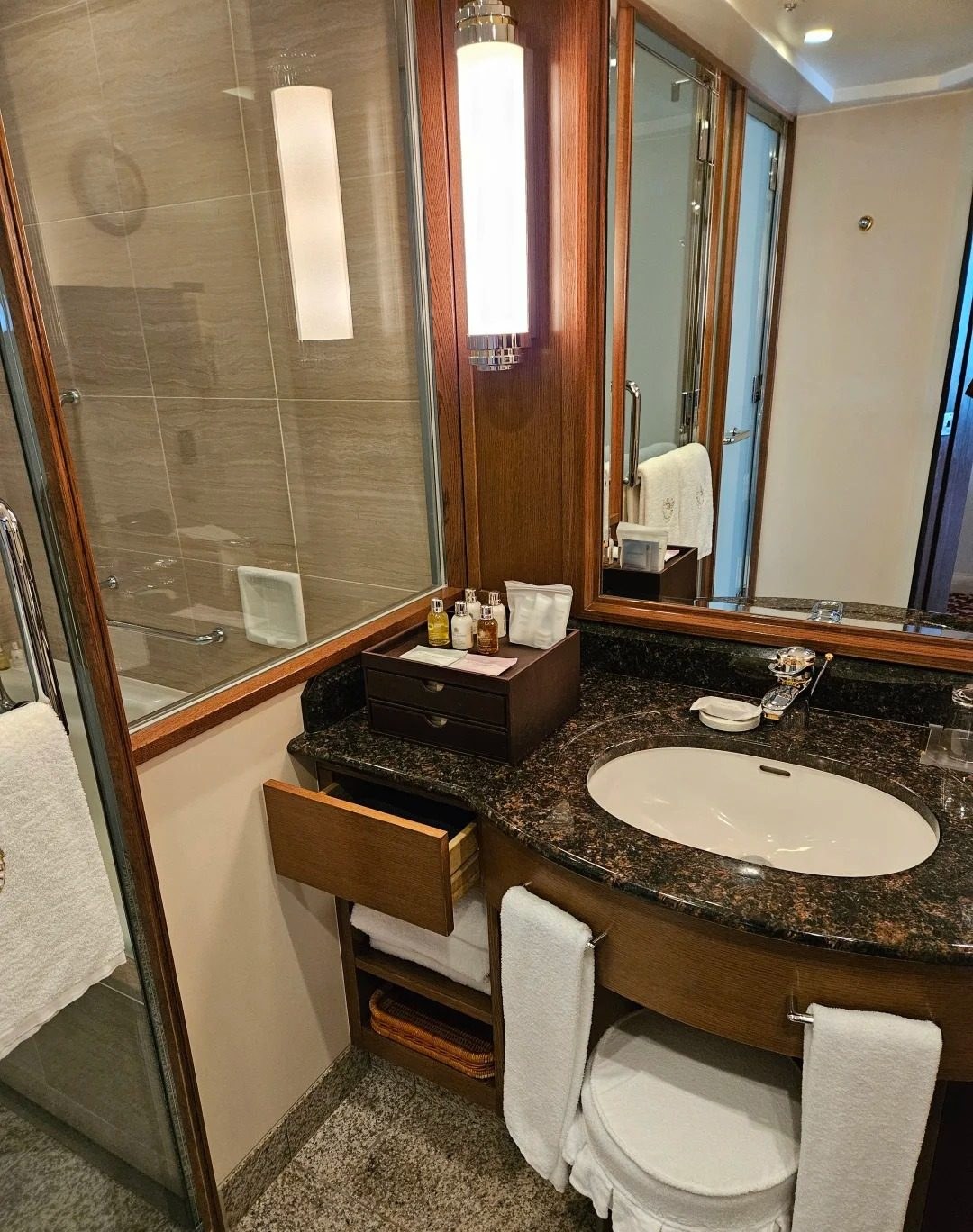
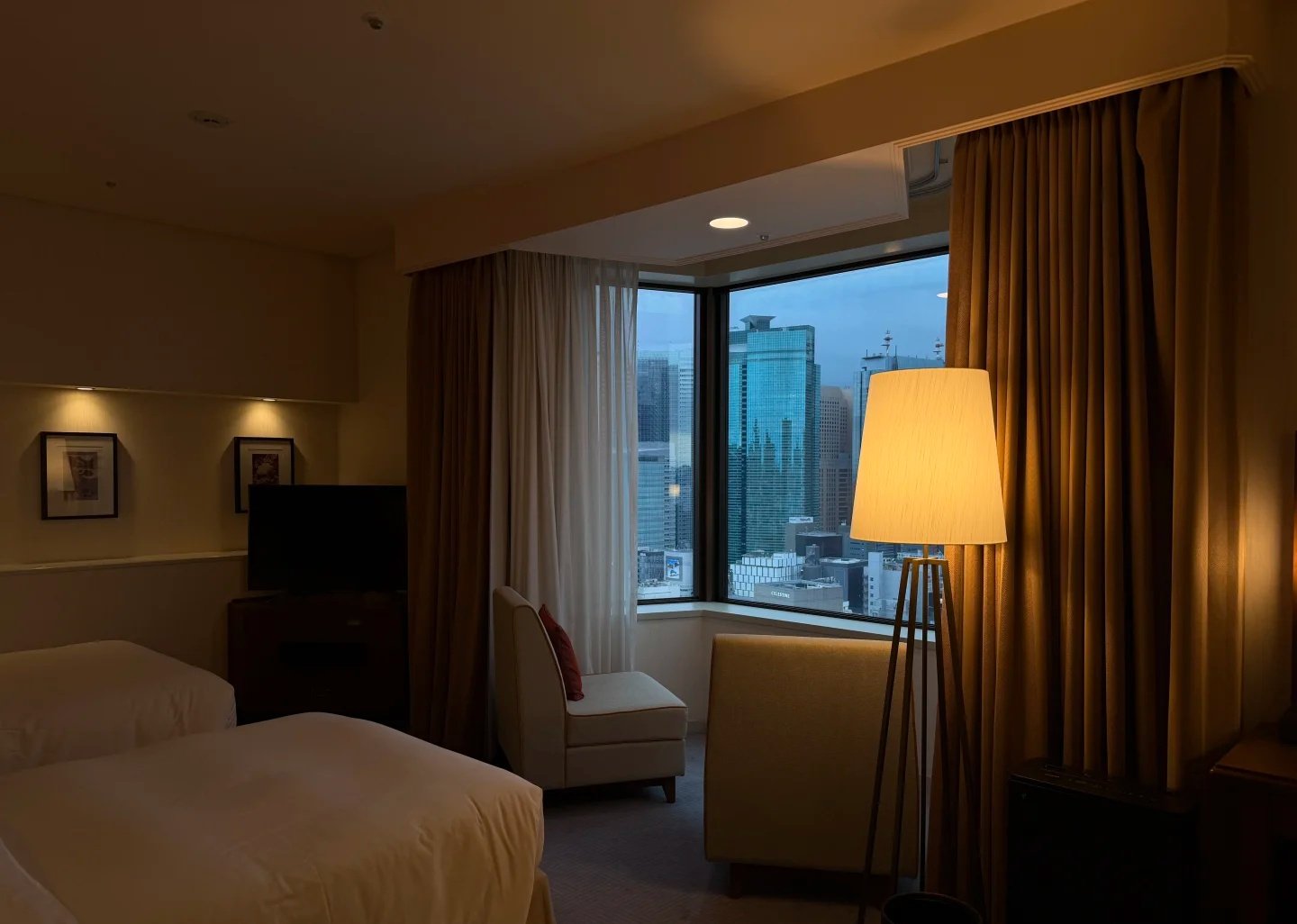
The rooms are dated, but they're solidly built. My Deluxe was 42 square metres, with a marble vanity, a three-way mirror and a lot of bordeaux-toned furniture. It looks like the 1970s because it's from the 1970s. Nothing was chipped or worn, and it was spotless.
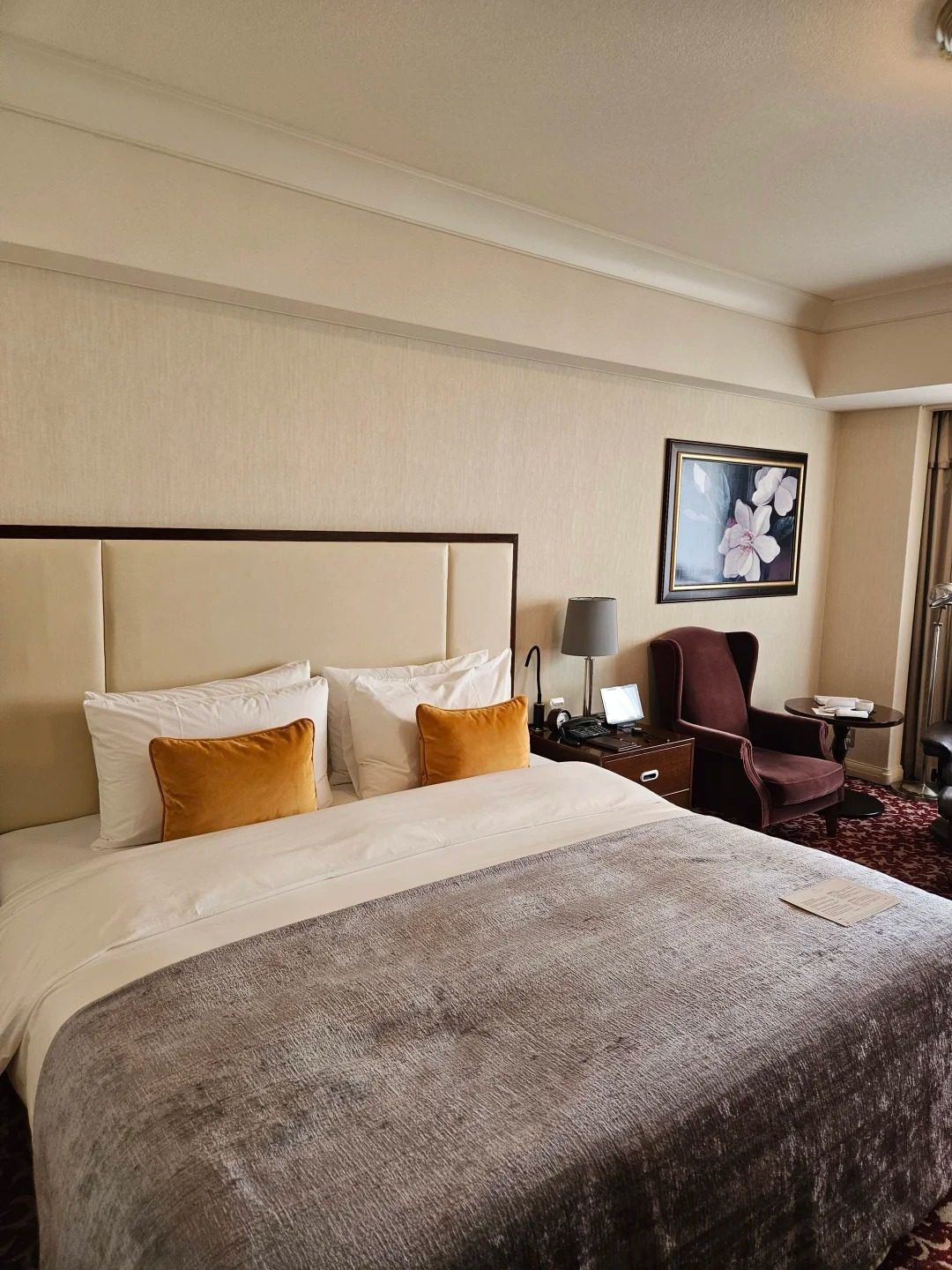
The Imperial Floor bed is the hotel's own mattress. Mine was firm, and I slept well. A bedside tablet runs the lights, curtains and air conditioning, and the soft drinks in the minibar are free on these floors.
Turndown is an Imperial Floor perk. An attendant came in the evening to change the towels and glasses and left a chocolate with a card giving the next day's high and low temperatures, which is the most practical turndown present I've ever had. Other rooms get no turndown at all.
Bathroom
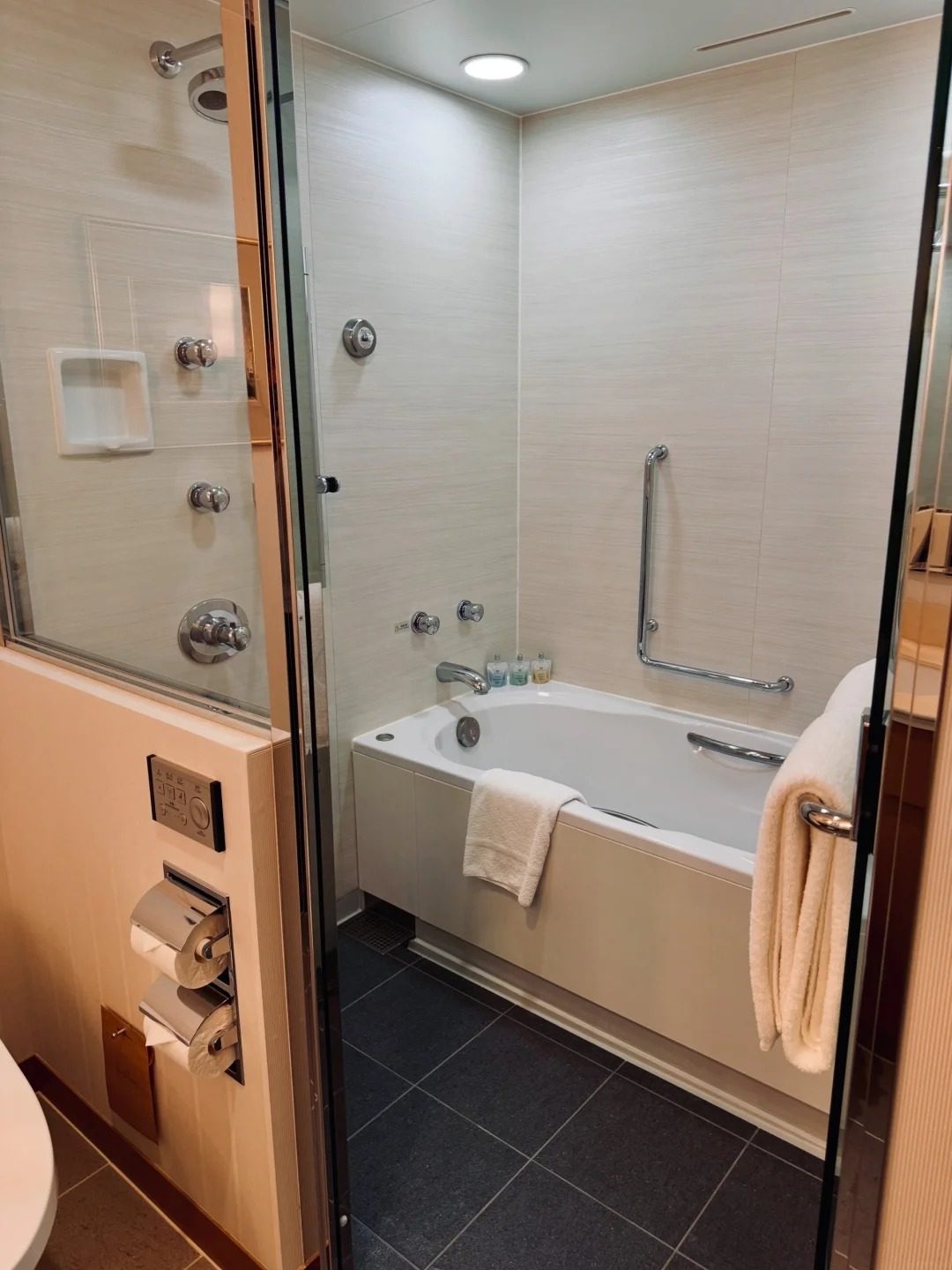
The bathroom is the best thing in the room. It's a proper Japanese wet room, with a washing area beside a deep tub that fills itself in four or five minutes and plays a little tune when it's ready, like a rice cooker that's very pleased with itself. If you're short, you'll be climbing into it.
Which side to book
Now the noise. The JR lines and the Shinkansen run on a viaduct along the east side, towards Yurakucho and Ginza, and two subway lines run underneath. On that side you hear trains all day without ever seeing one, a bit like sharing your room with a ghost who commutes. The sound carries right up to the top of the Tower.
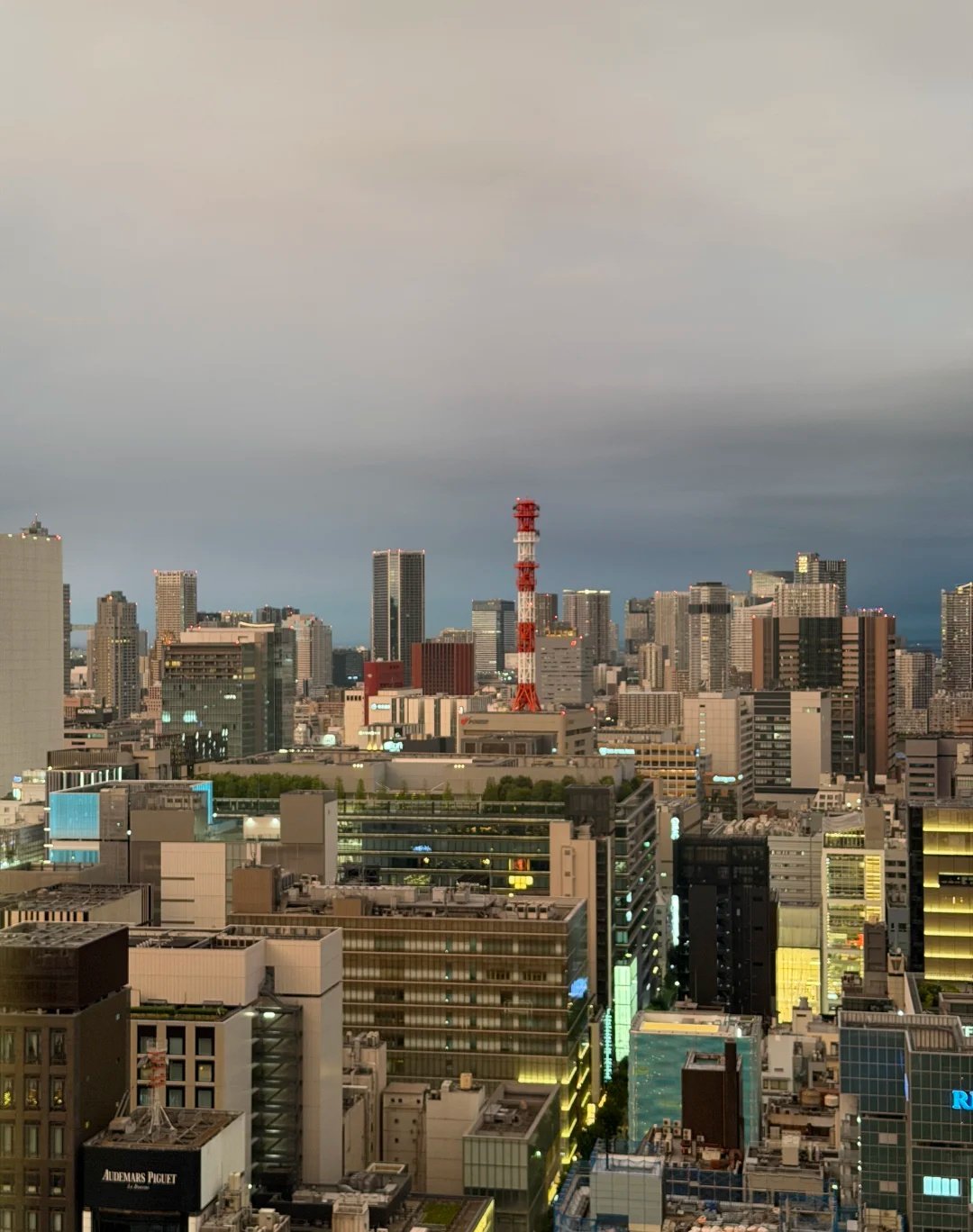
The south side has a different problem. Two towers are going up next door, and the hotel warns of construction noise by day and at night.
So ask for the Hibiya Park side ("Hibiya-koen-gawa") when you book. Mine was very quiet. Just know that "park view" can mean an angled glimpse of trees rather than a straight-on view. If your room is noisy, ask to move that afternoon. The desk will put you on the opposite side, and it makes a huge difference.
Other rooms and suites
The Tower Standard is the room to avoid. It's 30 square metres, with toilet, bath and basin all in one room in the 1980s style, and a 170cm king instead of the Main Building's 180. The upper floors see the tip of Tokyo Tower, but often the railway too.
Don't wait for a refresh. The Tower is due to come down around 2031, the new Main Building has no completion date, and nothing in the rooms suggests money is being spent in the meantime. Nobody buys new curtains for a building they're planning to knock down.
Service
The service is why you stay, and it's excellent at anything routine. Many front-of-house staff have been here twenty or thirty years, and it shows in the things they do unasked. My taxi destinations were written out in Japanese, an umbrella appeared at the door before I'd noticed the rain, and on the Imperial Floor the attendant pressed the lift button for me as I left my room.
The laundry is outstanding. Mine came back with the pilling removed, the stains gone and even the loose buttons sewn back on. On a long stay, that alone is a reason to pick this hotel. English is good to fluent at the desk and the concierge, and thinner in the restaurants and among the floor attendants.
The downside is that it's rigid. There are dress codes, and sandals or a missing jacket will get you turned away in places. Breakfast closes at ten, and staff will move you along before you've finished. Some of the older men in the lobby come across as stiff, though the younger staff are warmer.
The concierge is reliable for normal bookings and the hotel's own restaurants, but don't expect a fixer. For Jiro- or Mizukami-level counters, it will sometimes tell you seats exist and then, like a magician, make them disappear. Email is slow, the desk answers on weekdays until 16:00, and it only books for dates you're staying in the house. The Peninsula's concierge is far better at this, so I'd sort out top sushi another way before you arrive.
Breakfast
Skip the famous buffet and go downstairs to Nadaman. Nadaman's Japanese breakfast in the basement is the best meal of the morning: rice or porridge, miso, grilled salmon, simmered vegetables and chicken meatballs, all cooked properly. It's ¥5,800, and the queue is shorter than upstairs.
Imperial Viking Sal on the 17th floor is the famous one, and it's the bottleneck. The buffet is ¥6,800. On a weekday at seven it's excellent and there's no wait. Order the omelette, which is as good as any I've had, and the matcha red-bean croissant. After eight it's crowded. At weekends it opens at 6:30, and that's the only safe time, because by seven there's a queue. The dishes barely change from one morning to the next.
Les Saisons does a quiet, windowless plated breakfast for hotel guests over ten, at ¥6,700, with last orders at 9:30. I'd skip Parkside Diner.
Room service breakfast is very good, with eggs cooked to order and a rose on the tray, all ordered from the bedside tablet. If you hate queues, just do that. All breakfast prices include tax and service. If breakfast isn't in your rate, a Hibiya café two minutes away does fine for much less.
Restaurants and bars
Drink here, have one dinner at Kamon, and eat out the rest of the time.
The Old Imperial Bar
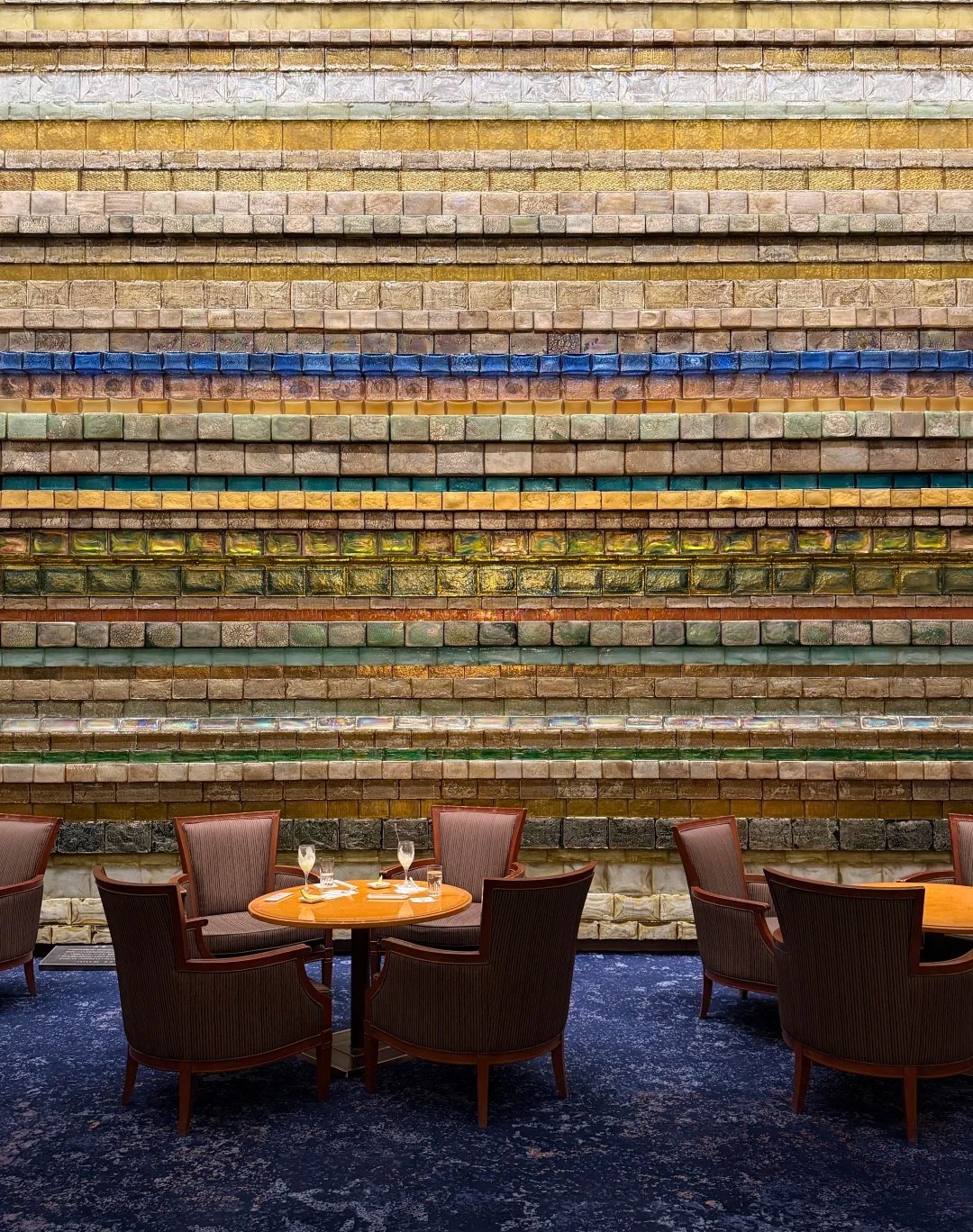
The Old Imperial Bar is the best room in the hotel. It's the one surviving piece of Frank Lloyd Wright's 1923 building, with his reused brick and a stone mosaic, and it's beautifully lit. Order the Mount Fuji, which they've been making here since 1924. Cocktails start at about ¥3,000 plus 10% service, staying guests get 10% off, and last orders are at 23:30.
Imperial Lounge Aqua
Imperial Lounge Aqua on 17 is the other good place for a drink at night, with a pianist on one side, the Ginza skyline on the other, and similar prices.
Kamon
Kamon, the teppanyaki on 17, is the dinner I'd book. The scallop starter is superb.
Les Saisons
Les Saisons holds one Michelin star, and Thierry Voisin has run the kitchen since 2005. Dinner starts at ¥25,000, jacket required. For one dinner in the hotel, I'd still take Kamon.
Other outlets
I'd skip the Rendez-Vous Lounge, where a coffee is ¥2,250, and dinner at Sal, where a gong goes off when the limited-run dishes come out; it's fun to see once, but poor value as a meal. Hotel prices run high in general, and the izakaya under the railway arches at Yurakucho and Shimbashi are a few minutes' walk away.
Imperial Club Lounge
There's no club lounge in the usual sense. The Imperial Floor's evening drink is one glass per guest, brought to your room between 18:00 and 20:00, and the beer glass is small. The 5F Imperial Club Lounge has soft drinks and snacks until 17:00 and closes on Sundays and holidays, so don't expect evening canapés. Room service, on the other hand, is fast and arrives hot.
Pool and gym
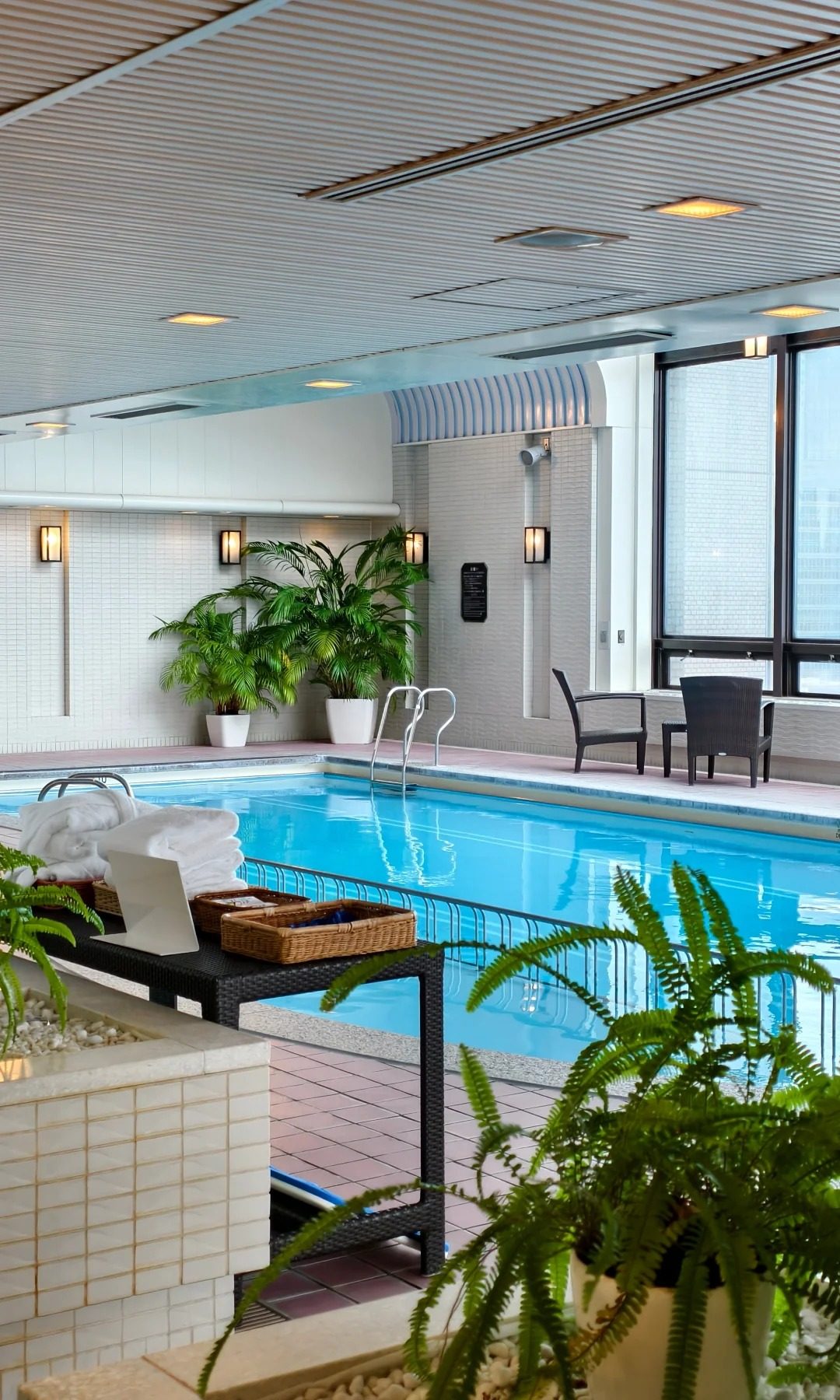
The pool on the Tower's 20th floor is free, 17.5 metres long and a metre deep, with a sauna. The gym is in the other building, unstaffed and without showers, so after a workout you walk back to your room in your gym kit. There's no spa and no communal bath; massage is done in your room.
Location and sense of place
The location is excellent for Ginza, seven to ten minutes on foot, and for Hibiya Park, the theatres and the palace gardens. It's an office and government district, so it's quiet at night. Tokyo Station is five minutes by taxi, but too far to walk with bags.
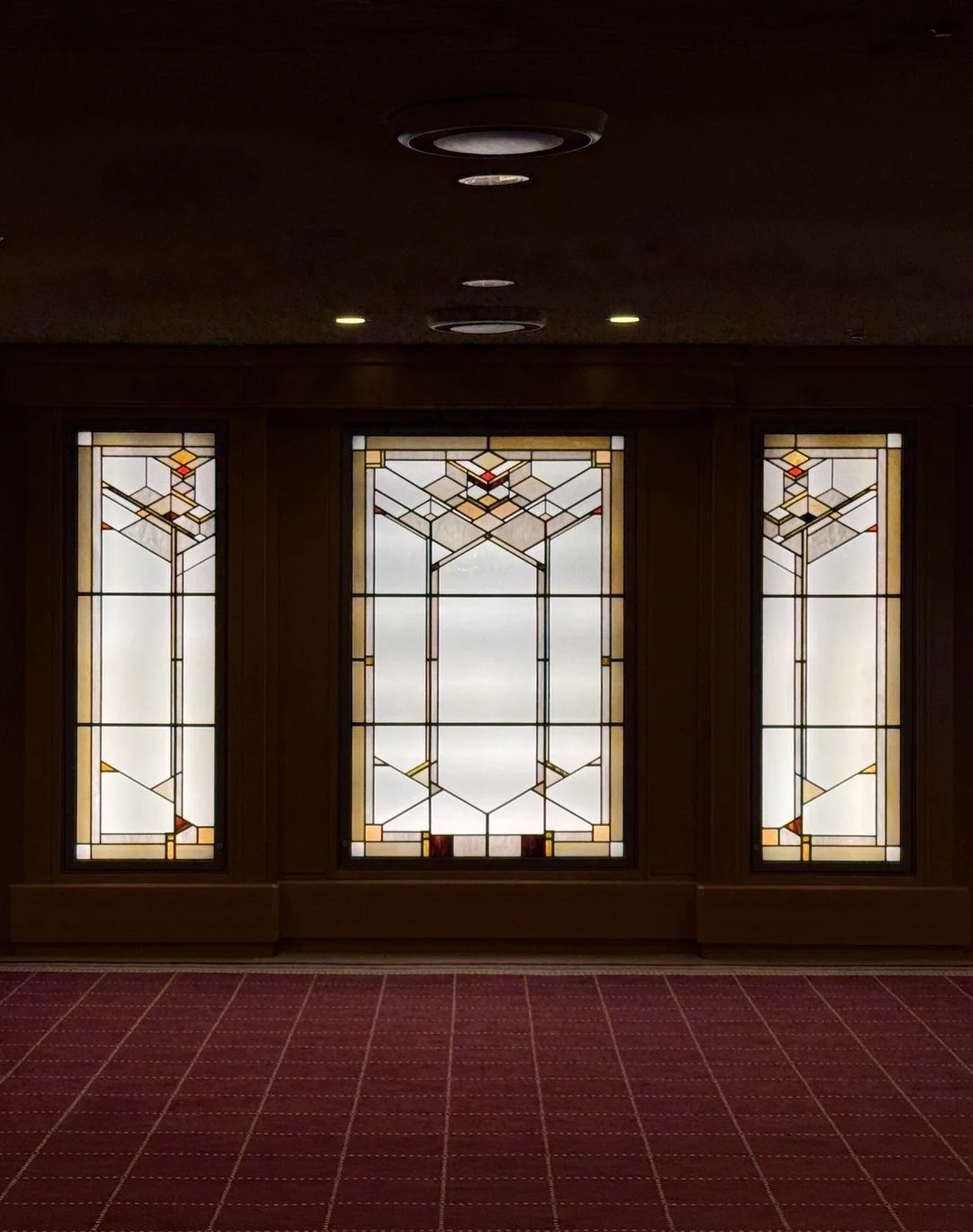
As for feeling like you're in Japan, the rooms won't do it. There's no tatami or hinoki like at Aman Tokyo or Hoshinoya Tokyo, just Western mid-century rooms. What feels Japanese is the institution itself. This has been the hotel of state guests since 1890, with kimono-clad attendants, only real flowers anywhere in the building and a fresh rose in every lift each day. I liked that rose more than I expected to.
Is it worth it?
Yes, in a Main Building room on the park side. I wouldn't stay in the Tower.
In the right room you get quiet, a real Japanese bath, service that's among the best in the city at this scale, and a great bar downstairs. A Tower Standard gives you a cramped 1980s bathroom, a long walk and trains.
The awards aren't kind to it. In Michelin's 2026 Key list, the Palace has three Keys and the Okura and the Peninsula one each. The Imperial has none, while its brand-new sister hotel in Kyoto got one. Forbes gives it four stars, which I think is fair for a service hotel in an old building.
I'd book it if it's your first trip and you want a central, well-staffed base. I'd book it with children, too: the pool is free, there's a nursery, and there are 143-square-metre family connecting rooms. It suits theatre-goers, long stays and anyone who likes a grand hotel run the old way.
I'd book something else if you want modern rooms; the Palace Hotel Tokyo has better ones. For a historic Tokyo name in a rebuilt hotel, go to the Okura, and for Japanese design in the room itself, Aman Tokyo or Hoshinoya Tokyo. If your trip is heavy on the Shinkansen, The Tokyo Station Hotel makes more sense. And if you collect points, nothing here earns them.
If you go, book the Main Building Deluxe on the Hibiya Park side, on the Imperial Floor if you want the turndown, the attendants and the free minibar.
At a glance
| Best for | First-timers wanting a central, staffed base; families; theatre-goers; long stays; grand-hotel traditionalists |
| Not for | Design-led travellers, spa seekers, light sleepers who can't get the park side, points collectors, anyone needing a fixer for top sushi |
| Room to book | Main Building Deluxe (42 sq m), Hibiya Park side; Imperial Floor for turndown |
| Room to avoid | Tower Standard (30 sq m, combined bathroom); anything on the rail side or facing the construction |
| Skip | Sal on weekends after opening, Parkside Diner, the Rendez-Vous Lounge, dinner at Sal |
| Don't miss | The Old Imperial Bar, Nadaman's Japanese breakfast, dinner at Kamon, the laundry |
| Rough nightly rate | From about ¥61,000; Imperial Floors considerably more; dearest in cherry-blossom season |