Aman Tokyo: the best room in Tokyo, run like a big hotel
Verdict. The most Japanese room and the best bath of any tower hotel in Tokyo, let down by service that saves its best for known guests, ordinary food and a rate about double the Bulgari's.
I love the room at Aman Tokyo. I'd happily live in it. It's the rest of the hotel I have a problem with.
Aman Tokyo was Aman's first city hotel. It opened in 2014 on the top six floors of an office tower in Otemachi, and it still has the best lobby in Tokyo, the most Japanese room of any tower hotel, and a bathroom nobody has beaten in twelve years. It also has service that's polite but a bit distant if they don't know you, food that's fine, and a rate about twice the Bulgari's.
Would I book it for a first stay? No, and I'll explain why.
I stayed in a Garden View Suite on the 38th floor.
Arrival
Try to arrive before 11:00 or after 16:30. In between, the lobby belongs to afternoon tea.
The Lounge is right where you step out of the lift on the 33rd floor, and its seasonal teas are some of the most popular in Tokyo. I arrived at three. The lift was packed, the landing was loud, and I stood there with my suitcase like I'd walked into the wrong wedding. About twenty people were photographing a strawberry, and nobody was checking me in.
In the morning or early evening it's a different place. The atrium is enormous and almost silent, and it really is the best lobby in the city.
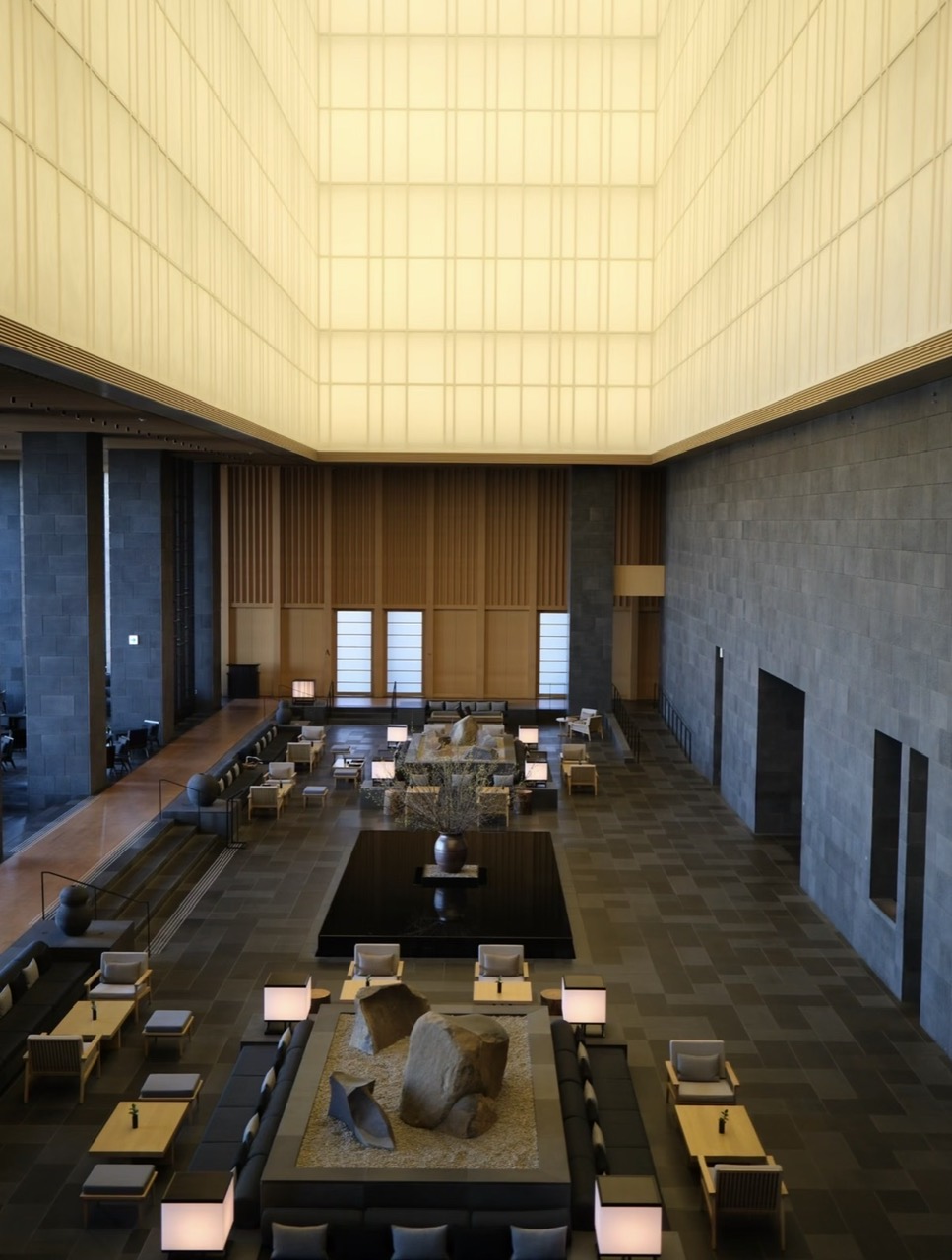
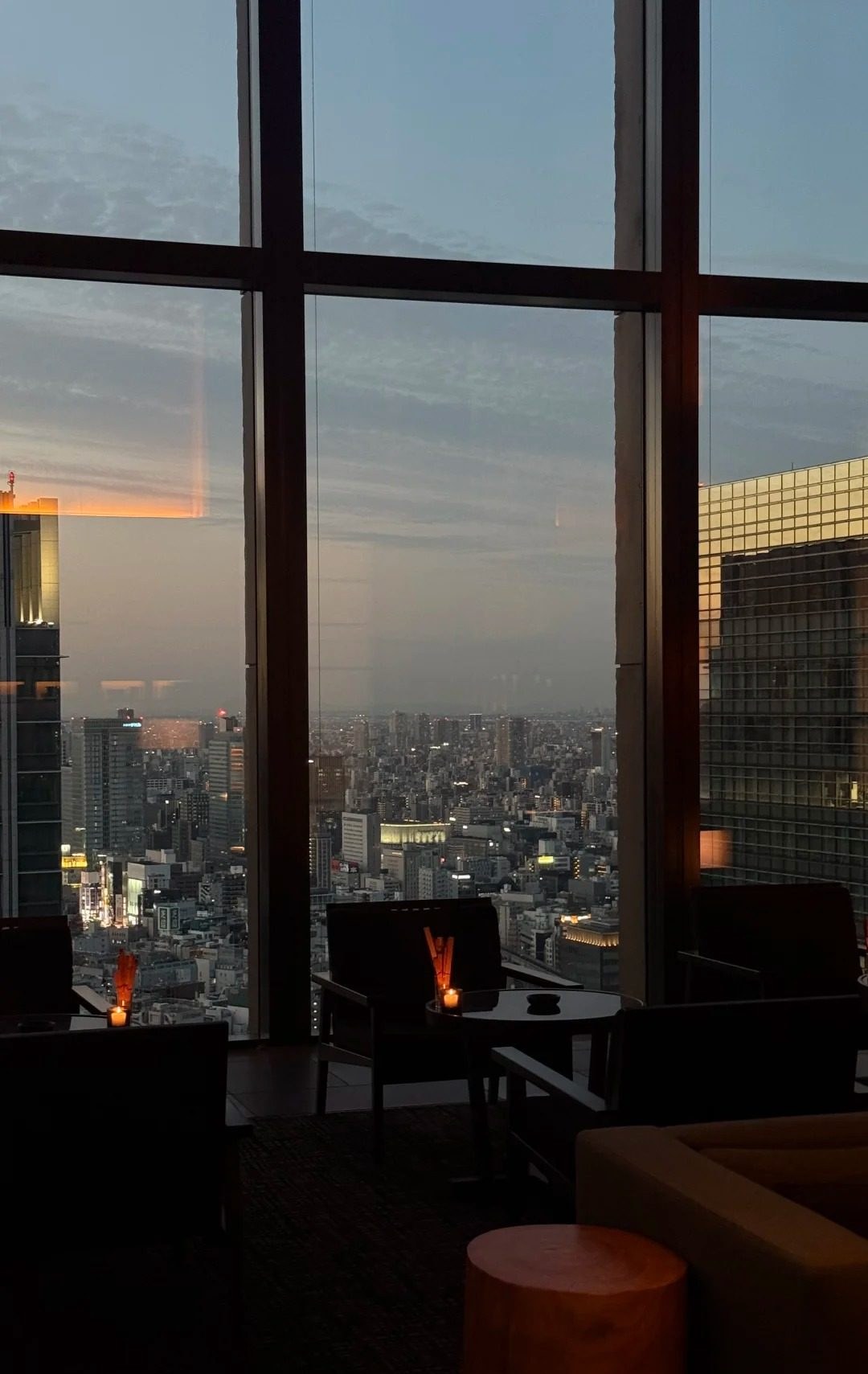
Finding the place takes some care. The street entrance is a plain door off a side road. If you come by car it's easy: bell staff check your name, take your bags and send you up. On foot, it's very easy to miss; the most expensive hotel in Tokyo hides behind a door you could mistake for the bank's fire exit. When you get up to 33, you change lifts again for the rooms.
Check-in is done sitting down, with someone kneeling beside you with a cold towel, a drink and a small sweet. It's a lovely gesture, though modest for what the room costs.
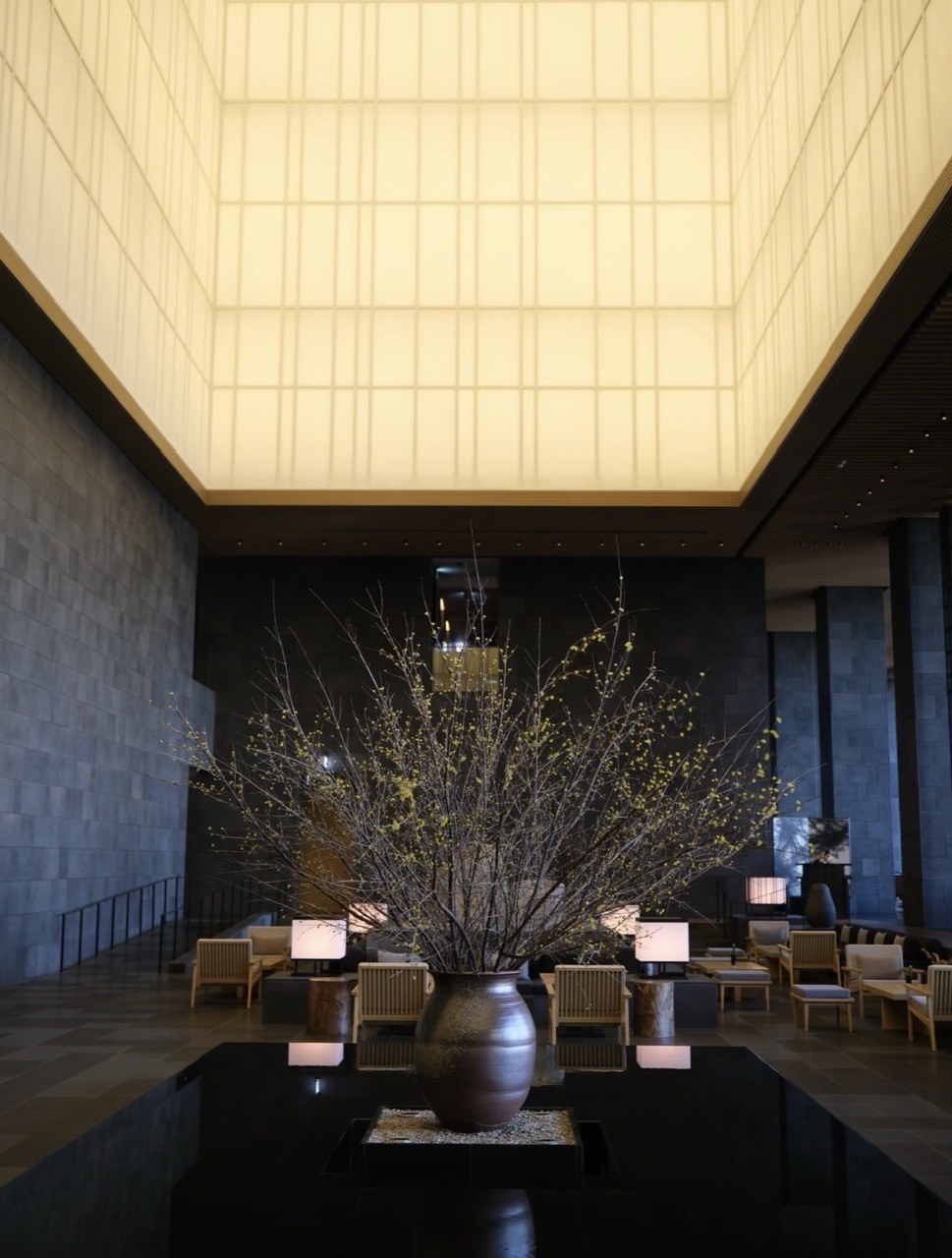
There's also a side door straight into the tower's mall, which is the quickest way to the metro and somewhere cheap for lunch.
The room
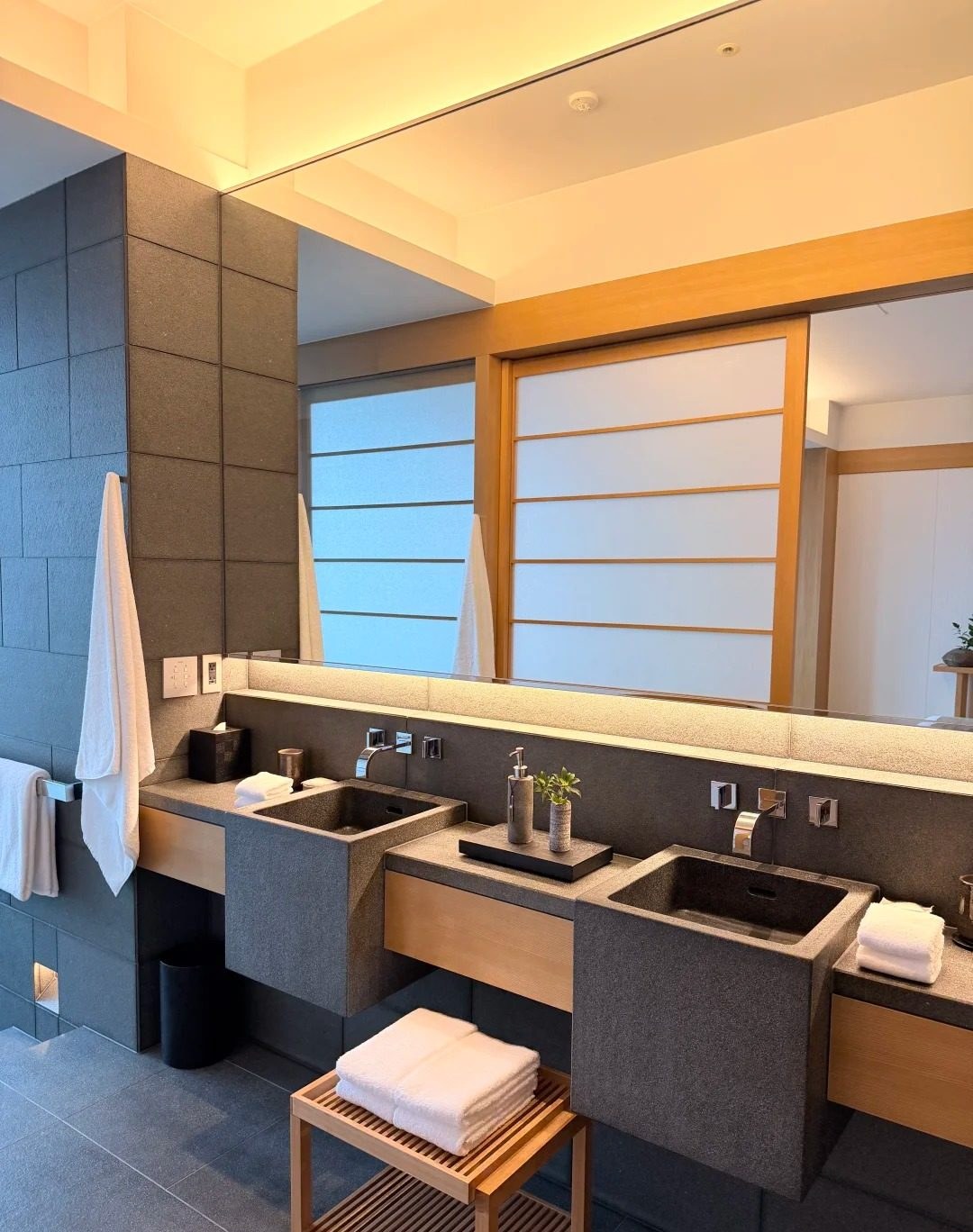
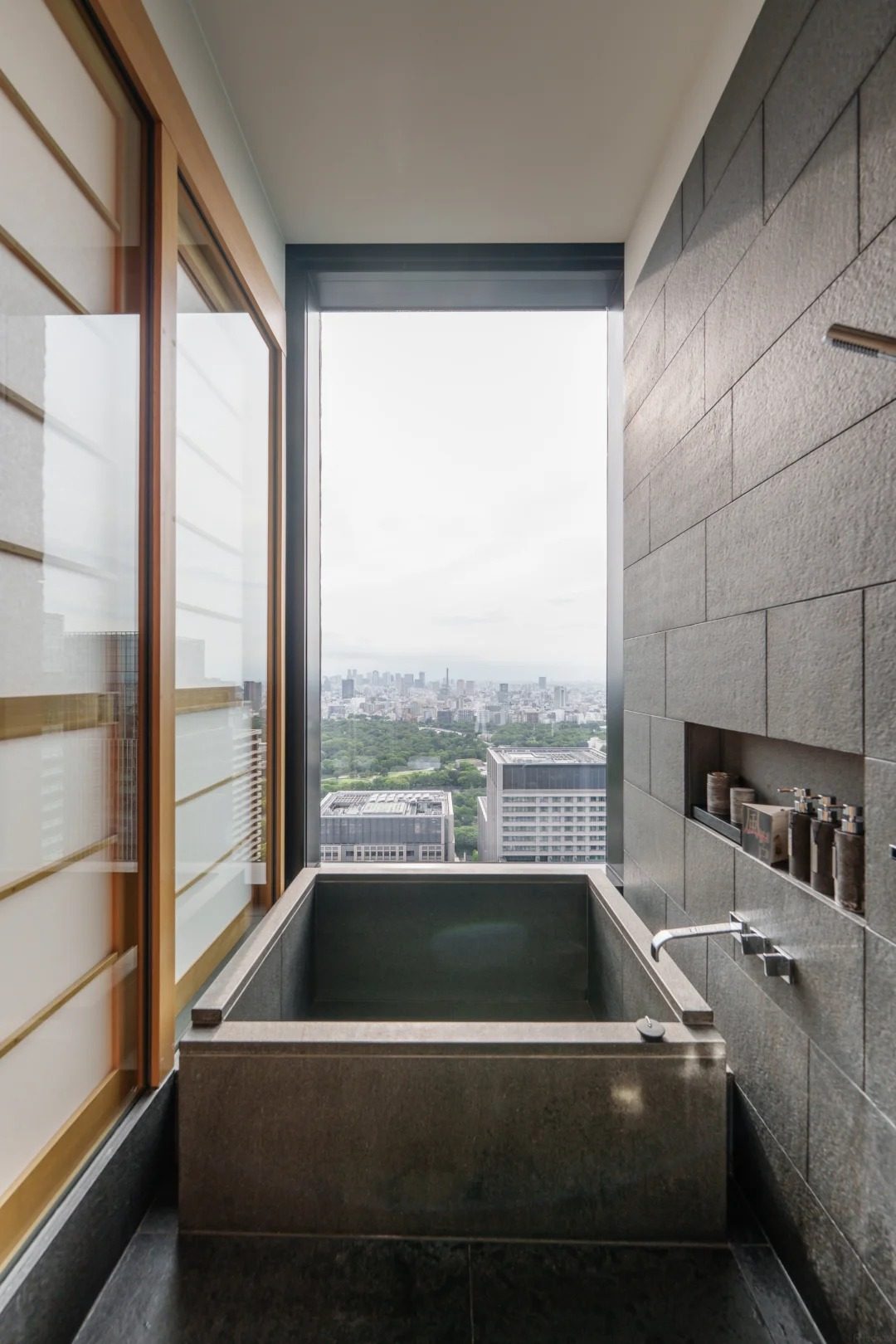
The room is why you come. I think it's the best-built hotel room in Tokyo. The walls are basalt, the tub is stone and the washing area is hinoki, and none of it is a printed panel pretending to be wood.
Bathroom
The bathroom is the best thing in the whole hotel. The deep stone furo sits right at the window, and at turndown they left a tenugui towel, a herbal bath sachet and a single hinoki leaf. I had a bath at sunset looking out over the palace and seriously thought about not checking out. I haven't found a better bath in Tokyo, and I've tried the Bulgari's and Janu's.
Bedroom
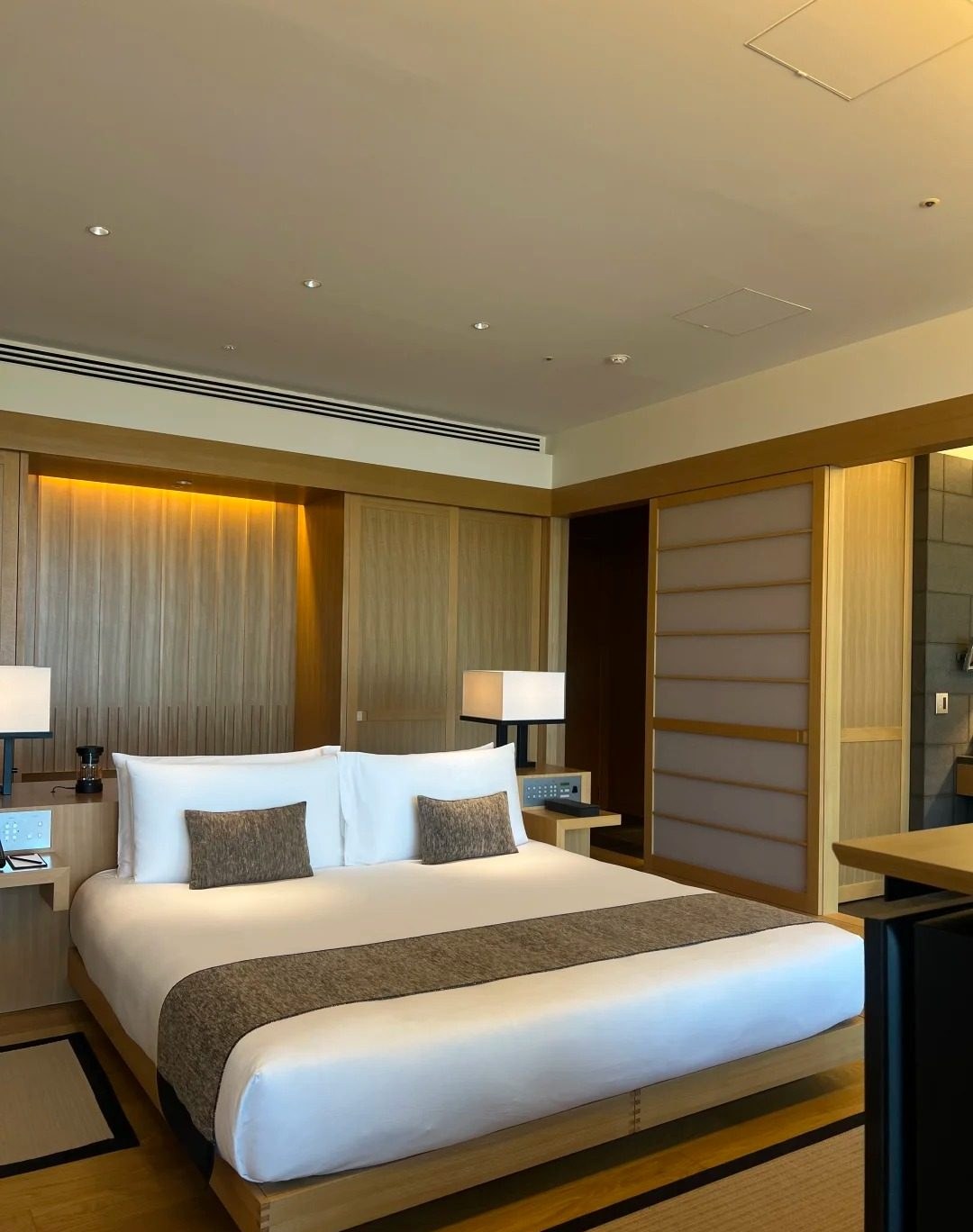
Now the less good news. Every room here is now called a "suite", but nothing was rebuilt when the names changed. The 71 sq m Deluxe Suite is the old Deluxe Room. Everything is spotless and well looked after, but these are still the 2014 rooms, with a lot of pine, and next to the Bulgari (2023) and Janu (2024) they look their age.
Then there's the bed. My king was two single bases zipped together under one mattress, and I could feel the join all night; I spent the first night on the border between two countries. The linen is a bit rough too, which is hard to forgive at this price. If you sleep badly, ask for twins or a topper.
A few things worth knowing before your first night:
- The floor is cold. The underfloor heating is only in the bathroom, and the bedroom floor is wood, so pack slippers in winter.
- The minibar is mostly free. Soft drinks and snacks are included, but a bottle of Aman's own grapefruit juice was charged at ¥1,200.
- Power is 100V. Housekeeping has adapters.
- The bigger suites have no full-length mirror, except the one on the toilet door.
Which side to book
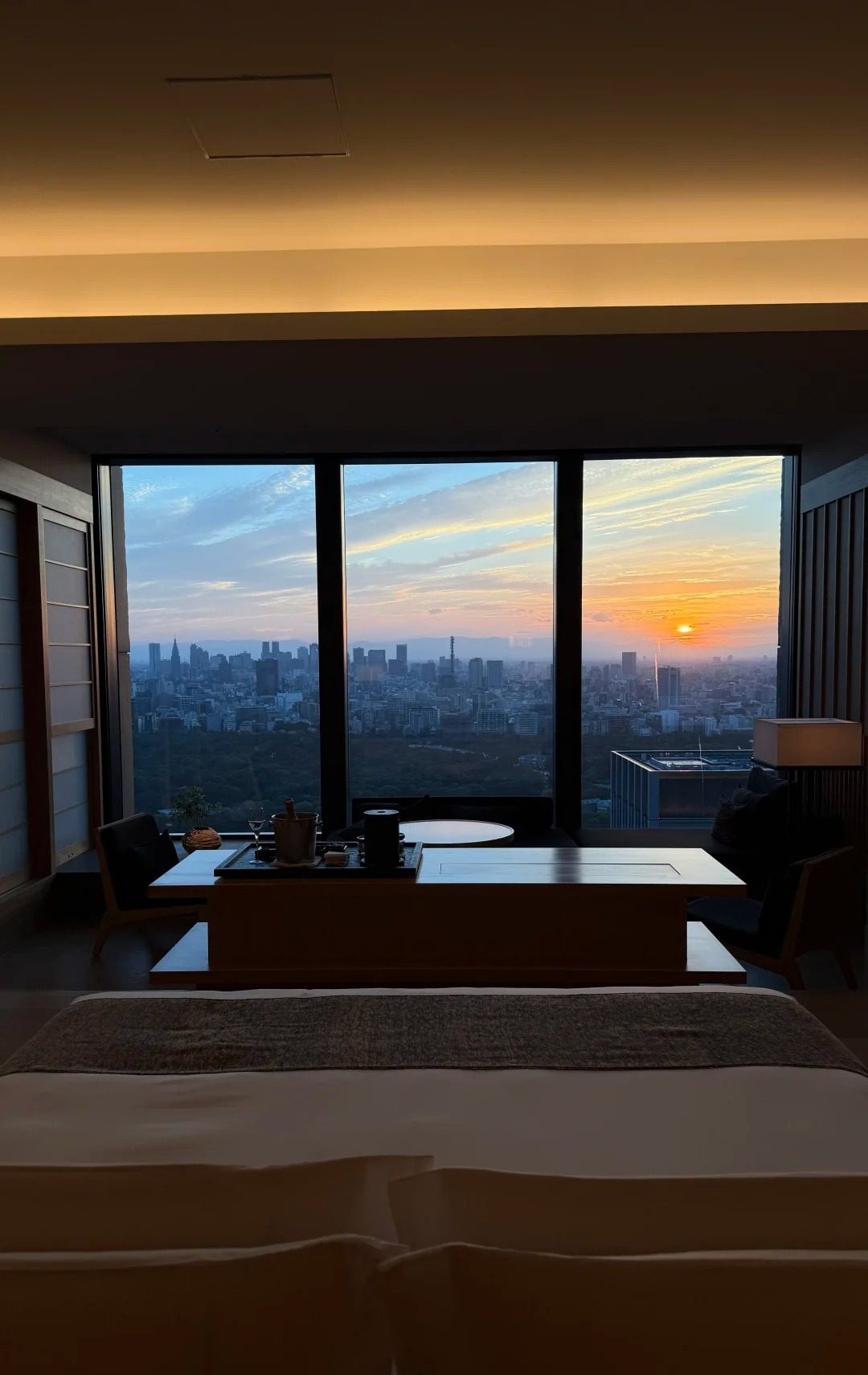
Face west. The Garden View Suite on 38 and the Deluxe Suite below it look over the Imperial Palace towards Fuji, and on clear winter mornings you'll usually see it. The palace is dark at night and the afternoon sun heats the room up, but the tub gets the same view as the bed, so I'd take it.
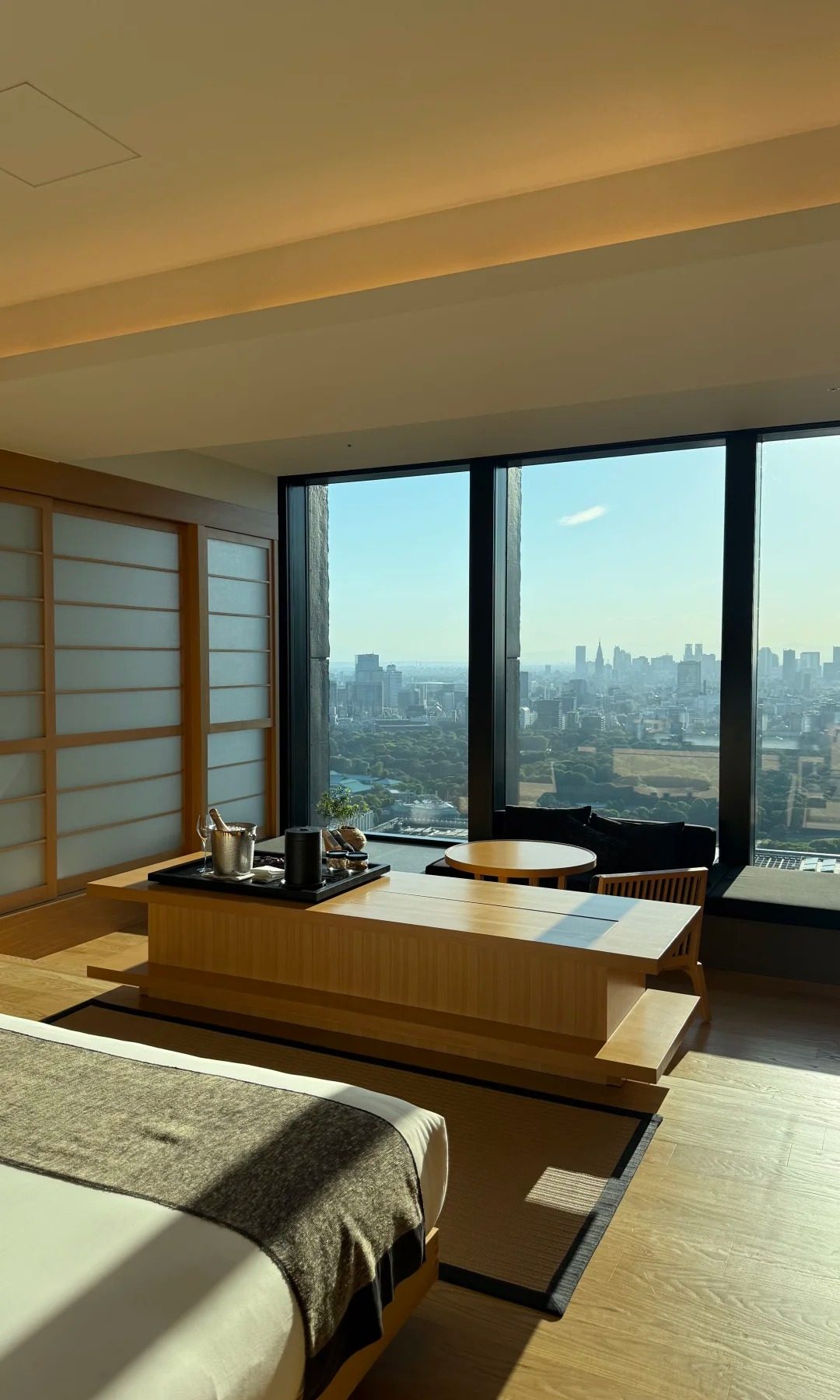
How much extra the Garden View costs over a Deluxe Suite moves around a lot. On some dates it's under 10%, on others it's over half. When the gap is small, take the 38th floor.
Other rooms and suites
The east-facing Tokyo Suite gives up the palace for the Skytree and the city lights. It's a fine second choice.
I wouldn't pay more for the City Suite or the Grand Suite, though. Both face mostly east and never see the palace, and in the City Suite the bed faces a wall. You only get a bed facing the window plus corner views in the Panorama and Aman Suites. Below that level, I'd take a west-facing entry suite over a bigger east-facing one.
Service
The service depends on whether they know you. Regulars get the hotel from the stories: staff remember the air purifier you asked for three years ago and engrave your name on a pair of chopsticks. If it's your first time, you get a good five-star hotel. Everyone is polite, calm and quick when you ask for something. They just rarely get there before you ask, and that's a big part of what people pay Aman prices for.
Nobody used my name the whole stay. Arva asked for my room number twice to find a table I'd booked the night before. Down at street level I was asked what I was there for three times, twice by the same person.
What they do, they do well. Housekeeping turned the room round almost as soon as I'd left it, and you never sign anything: you give your room number and walk off.
So if you're new here, tell them everything before you arrive: birthdays, pillows, dinner plans. They'll do whatever you ask, and do it well. They just won't guess.
The concierge is where it really falls down. The desk is only staffed from 09:00 to 19:00, and emails can take days to get a reply. Tokyo's top sushi counters are wary of hotel bookings because of late cancellations, and the Aman gets hit by that more than most. My advice is to ask for a type of meal ("traditional omakase, light on the vinegar") rather than a specific restaurant, and give them a few weeks.
At check-in I was offered a suite upgrade at 30% off, which is the cheapest way into a bigger room. Late checkout is the opposite. Checkout is at noon, and one extra hour can cost 20% of the room rate, which on an entry suite is about US$600.
The departure, though, they do better than any hotel I've stayed at. Tell them which train you're on, and someone walks you through Tokyo Station, waits while you buy an ekiben, and takes you right to your Shinkansen seat.
Breakfast
It's ordinary, and I wouldn't pay for it.
At check-in you choose between Arva (07:00 to 10:00) and in-room (any time), and you book a slot the night before.
I'd avoid the Japanese set. The ingredients are plain, the portions are small, and my green tea was stewed. It's basically a very expensive bento box. The Western menu is better, but the eggs Benedict is hit and miss; my hollandaise had split. The one to order is the Japanese-style pancakes with hazelnut, ricotta and maple, easily the best thing on the menu.
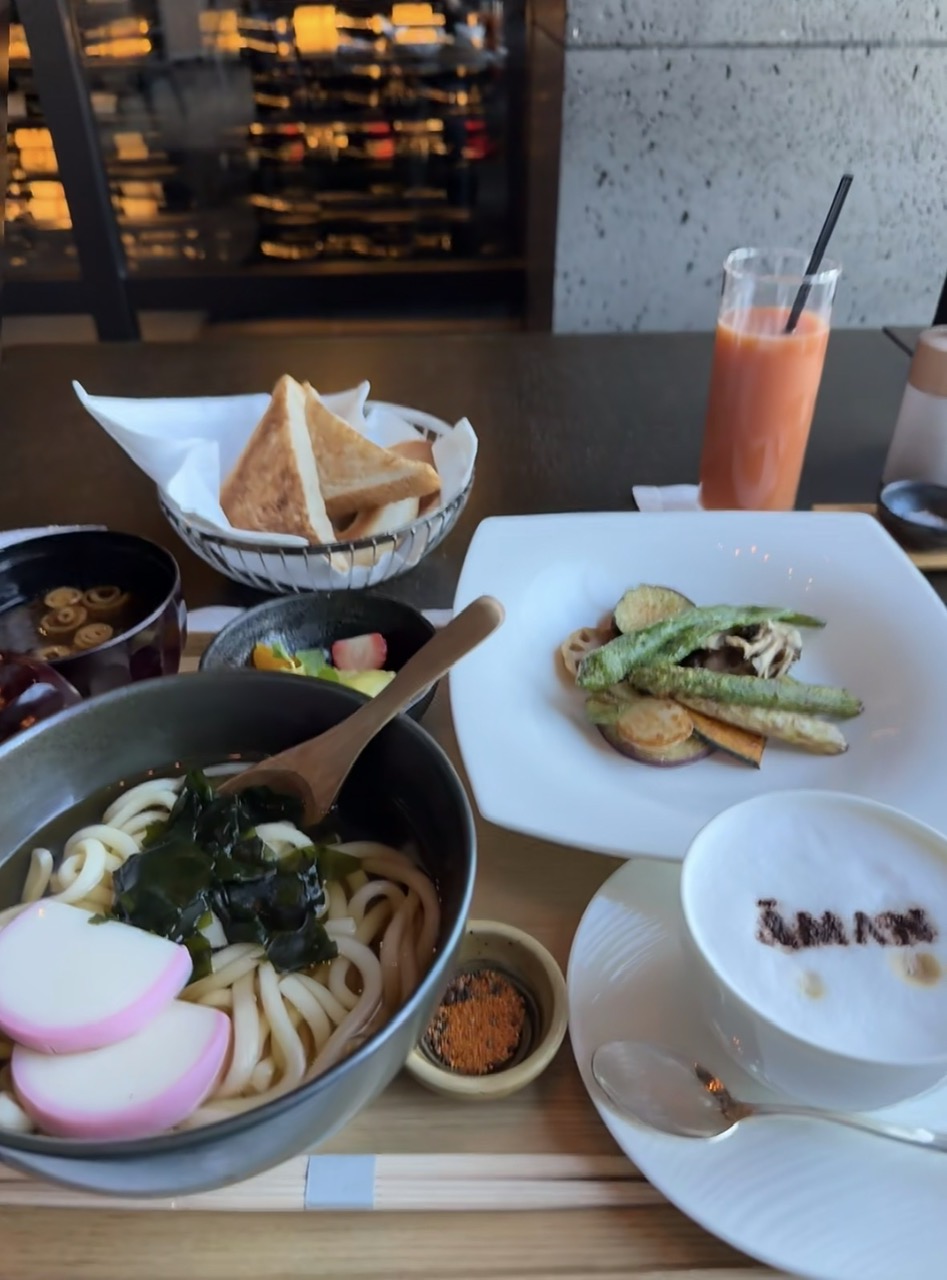
If breakfast is in your rate, have the pancakes in your room. If it isn't, head down to the tower's food floors or walk over to Marunouchi.
Restaurants and bars
Eat the unagi, then eat out. The best food in the building is the cheapest thing on the menu. Everything else is good and expensive, and I wouldn't stay here for it.
For dinner, go out. Otemachi is a banking district and it empties after dark, so you'll need a taxi every night. The location is great for leaving Tokyo, with five metro lines underneath and Tokyo Station five minutes away. It's just no good for an evening walk.
The Lounge
The Lounge is where I'd eat. The unagi rice at lunch was the best thing I ate in the hotel, and it works fine as room service too. Get the katsu sando to take on the Shinkansen. Food stops at 21:00 and drinks at 23:00. Afternoon tea changes with the season and costs about ¥10,500 to ¥12,000. When it's busy, service is stretched; I watched one waiter looking after the entire room.
Musashi by Aman
Musashi by Aman is the Edomae sushi counter on 34, with about eight hinoki seats. Chef Hiroyuki Musashi grows his own rice in Yamanashi and makes his own sake and his own plates. The omakase is solid, at ¥20,000 to ¥30,000 before some very expensive drinks. It's dinner only and closed Sundays and Mondays. But solid isn't really enough in Tokyo. You're in the best sushi city on earth, so you don't need to eat it upstairs from a bank.
Arva
Arva, the Italian on 33, does a five-course dinner called Coltivare for ¥25,000 including tax and service. It's fresh and very pretty, and the portions are small. Once is plenty.
Room service
Room service is better than the restaurants. It's fast, the menu is long, and there's a late-night menu after 21:30. There's no club lounge.
Pool and spa
The pool is better to look at than to swim in. It's 30 metres and heated, and it looks amazing at night with the city lit up outside. The problem is swimming in it: the water is warm, the dark stone feels heavy, and the more lengths you do, the more tired you get. I'd sit next to it with a drink. The Bulgari has the better spa now, with an outdoor terrace, and Janu has a bigger pool and a sauna.
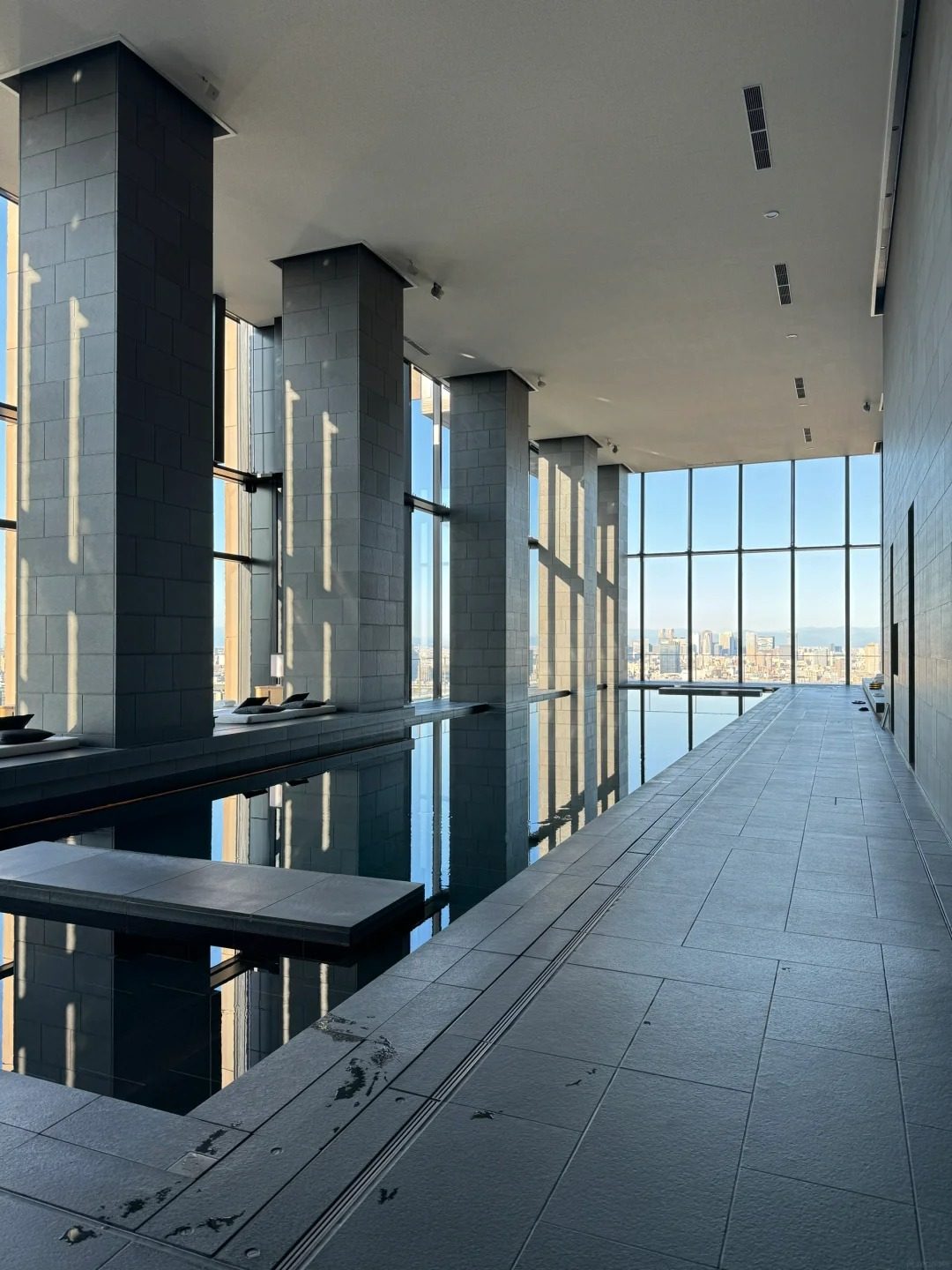
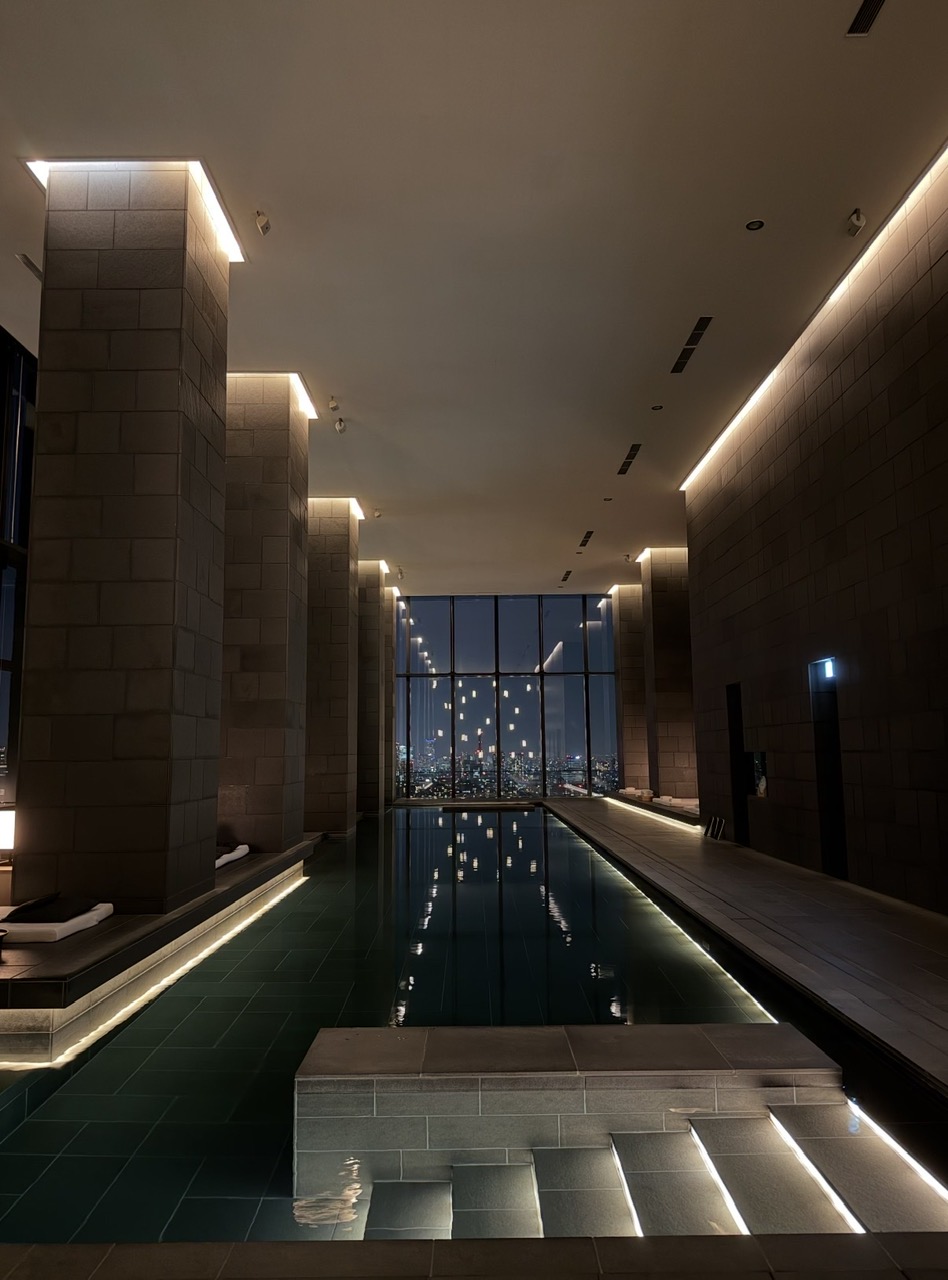
The single-sex Misogi baths have steam rooms and hot plunge pools, but no sauna and no cold plunge. I had the men's side to myself every time. The spa, baths and gym are 16 and over. Treatments are about ¥80,000 for 90 minutes in fairly plain rooms, so I'd skip them.
Go for a run instead. The palace loop starts at the front door, and staff hand you a printed map. It was my best morning here, and it's free.
Is it worth it?
Not for a first stay.
Aman Tokyo has the best room in the city, but you're paying top Aman prices for big-hotel service, ordinary food and a pool you can't really swim in. At these prices, I shouldn't have to tell the restaurant my room number twice.
And they are big prices. A base room was ¥110,000 in 2020. For a November 2026 night, the entry suite was about US$3,150 before tax and US$4,030 with it, and from April 2027 Tokyo adds an uncapped 3% accommodation tax on top.
The awards can't agree either. The World's 50 Best Hotels had it at No. 11 in 2026, top in Japan. Michelin gives it Two Keys, while the Bulgari, Four Seasons Otemachi and the Palace get Three, and Forbes gives it four stars. I think 50 Best is mostly rewarding the building.
I'd book it if they already know you here, because regulars get a different and much better hotel. It's also worth a night or two if the room matters more to you than anything outside it, or if you're leaving Tokyo by Shinkansen. Inside the room, this is the one international hotel in Tokyo that actually feels like Japan.
I'd book something else if service matters most to you. The Palace Hotel has warmer staff for about half the price. The Bulgari is also roughly half the price, with a fresher room and a better spa. Four Seasons Otemachi is next door, has a similar palace view and better food, and costs much less. If you want Japan in the whole building and not just the room, Hoshinoya Tokyo is down the road. And if you want to swim or train, go to Janu.
If you do go, book the Garden View Suite on the 38th floor, facing the palace and Fuji, and have them walk you to your train when you leave.
At a glance
| Best for | Repeat Aman guests, design lovers, one- or two-night splurges, Shinkansen departures, runners |
| Not for | First-time Aman guests expecting resort intimacy, lap swimmers, food-led travellers, anyone who wants to walk out to dinner, families with teenagers who want the spa or gym |
| Room to book | Garden View Suite (71 sq m, 38th floor, west); Deluxe Suite as the cheaper west-facing room |
| Room to avoid | City Suite and Grand Suite: more space, no palace view |
| Skip | Paid breakfast, the Japanese breakfast set, spa treatments, arriving between 11:00 and 16:30 |
| Don't miss | The stone tub at the window, unagi rice in The Lounge, the palace run, the walk to your Shinkansen seat |
| Rough nightly rate | Entry suite about US$3,150 before tax, about US$4,030 with tax (November 2026) |