Bulgari Hotel Tokyo: book the bay side, not the palace
Verdict. The most polished high-rise hotel by Tokyo Station, with superb in-room service, a near-empty pool and a great rooftop bar; book the east side and look elsewhere for Japan.
If you're after a short, indulgent stay in Tokyo, the Bulgari is the hotel I'd point you to first. The in-room service is as good as any in the city, the pool was the quietest I've swum in here, and the rooftop bar is worth a visit even if you sleep somewhere else. It's also very expensive, Italian through and through, and the bath faces a wall. If you can live with that, it's an easy yes.
It's 98 rooms on floors 40 to 45 of Tokyo Midtown Yaesu, the tower on the east side of Tokyo Station. It opened in 2023 and still looks new. I stayed three nights in a Deluxe King Skyline View on a high floor.
Arrival
Come by taxi if you can. On foot, you might not find the door.
The entrance is an unsigned glass door between shops, and that's deliberate. There's no public lobby, so nobody who isn't staying ever walks past the desk or the guest lifts. That's great for privacy, less great when you're wheeling a suitcase along a row of glass doors trying to work out which one is the hotel. The smartest address at Tokyo Station has the signage of a dentist who doesn't want new patients.
At the car entrance, a greeter used my name before I'd given it and walked me up through two lifts to my room, where check-in was done sitting down. It was very smooth. Have the address in Japanese ready, though, because drivers aren't always sure how to approach the building.
The underground link to Tokyo Station keeps you dry, but it's a maze the first time. I'd walk it once without luggage before you rely on it.
Inside, the room lifts run on your key card and go straight to your floor, and I never waited once. The public areas are dim and badly signed. And one thing to watch: although my rate was prepaid, they put a hold on my card for the full room charge again, so check your available credit before you arrive.
Which side to book
Which way you face matters more than which room type you book. The rooms themselves are quiet and immaculate.
The hotel sells the west side as the Imperial Garden view. In practice, the foreground is Tokyo Station and its tracks, and the palace is a distant strip of green behind the Marunouchi towers. It's less Imperial Garden View and more Platform View. If you want to look down on the gardens, the Aman and Four Seasons Otemachi sit right over them.
The west is also the railway side. High up you hear nothing, but on a low floor facing the tracks you can hear trains at night. If you're offered a "palace view" upgrade to a lower floor, I'd say no.
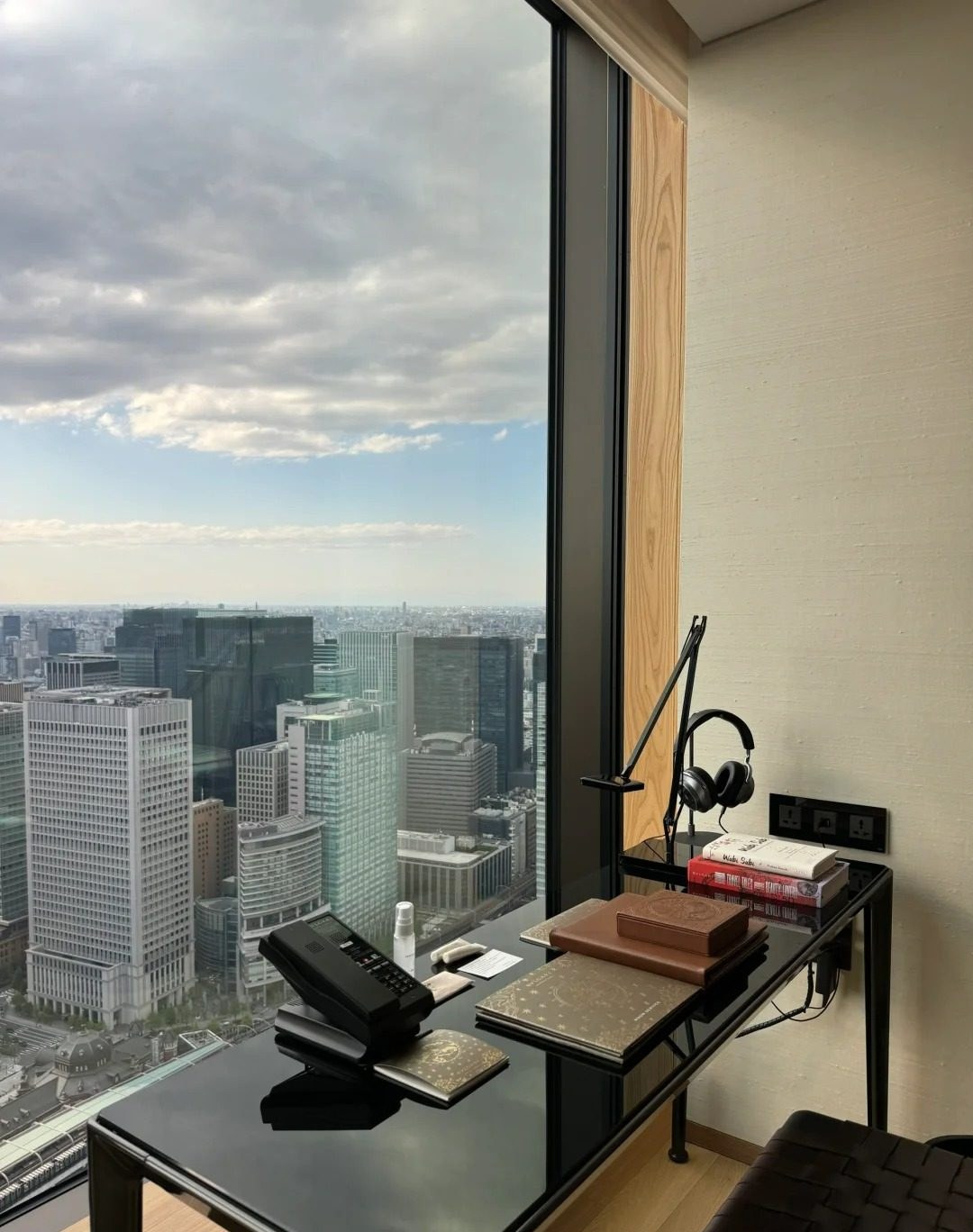
The east and south sides are better. No towers hem the hotel in, so you get one of the most open views in the city: the Skytree, Tokyo Bay and Rainbow Bridge. My room faced that way, and at night the view was the best thing in it.
The room
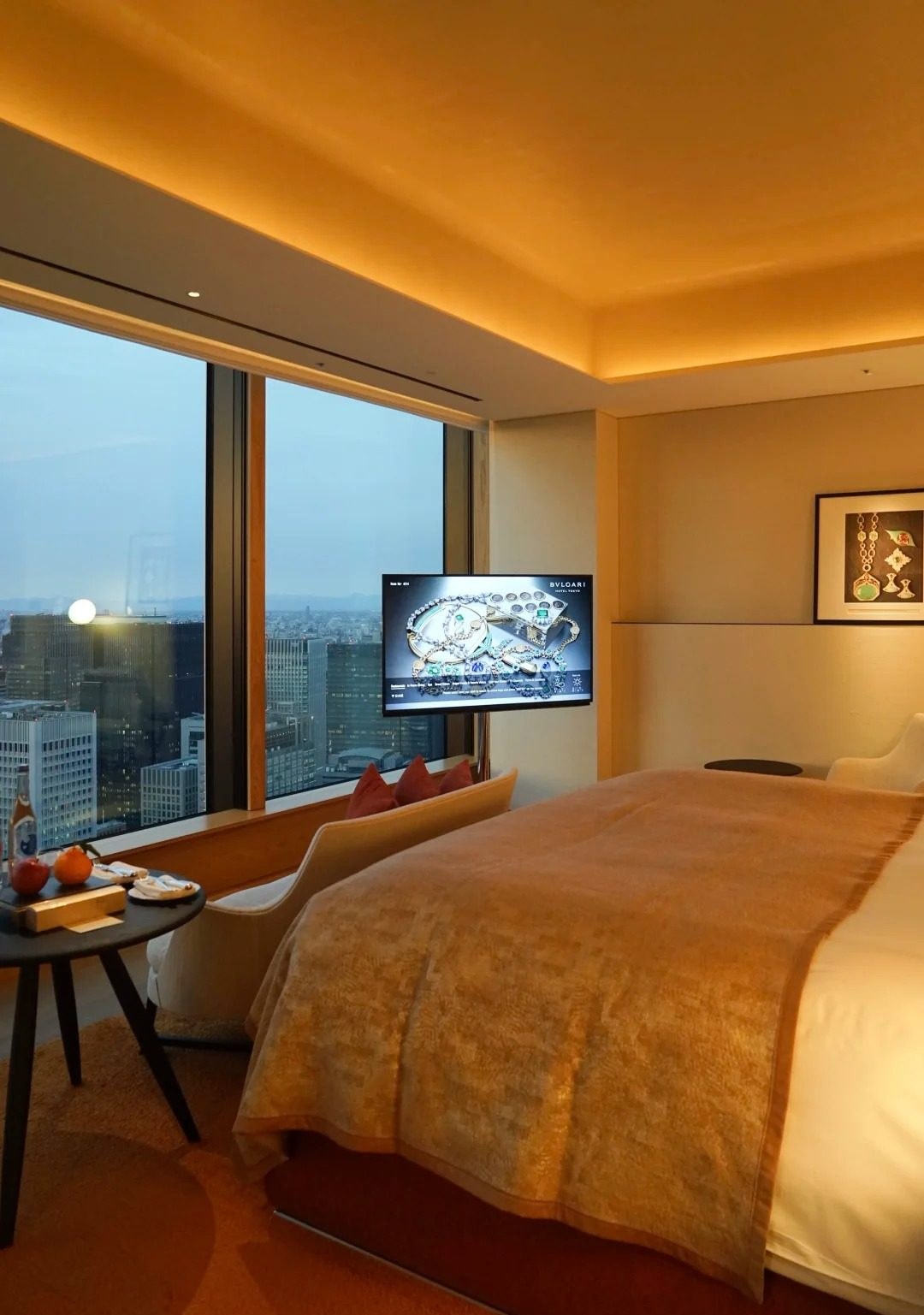
Build quality is excellent. After three and a half years I couldn't find a single scuff. What makes the room is the heavy leather and wood furniture from Ritzwell, a Fukuoka maker. The rooms look flat in photos but are warmer and richer in person, so don't write them off from the website.
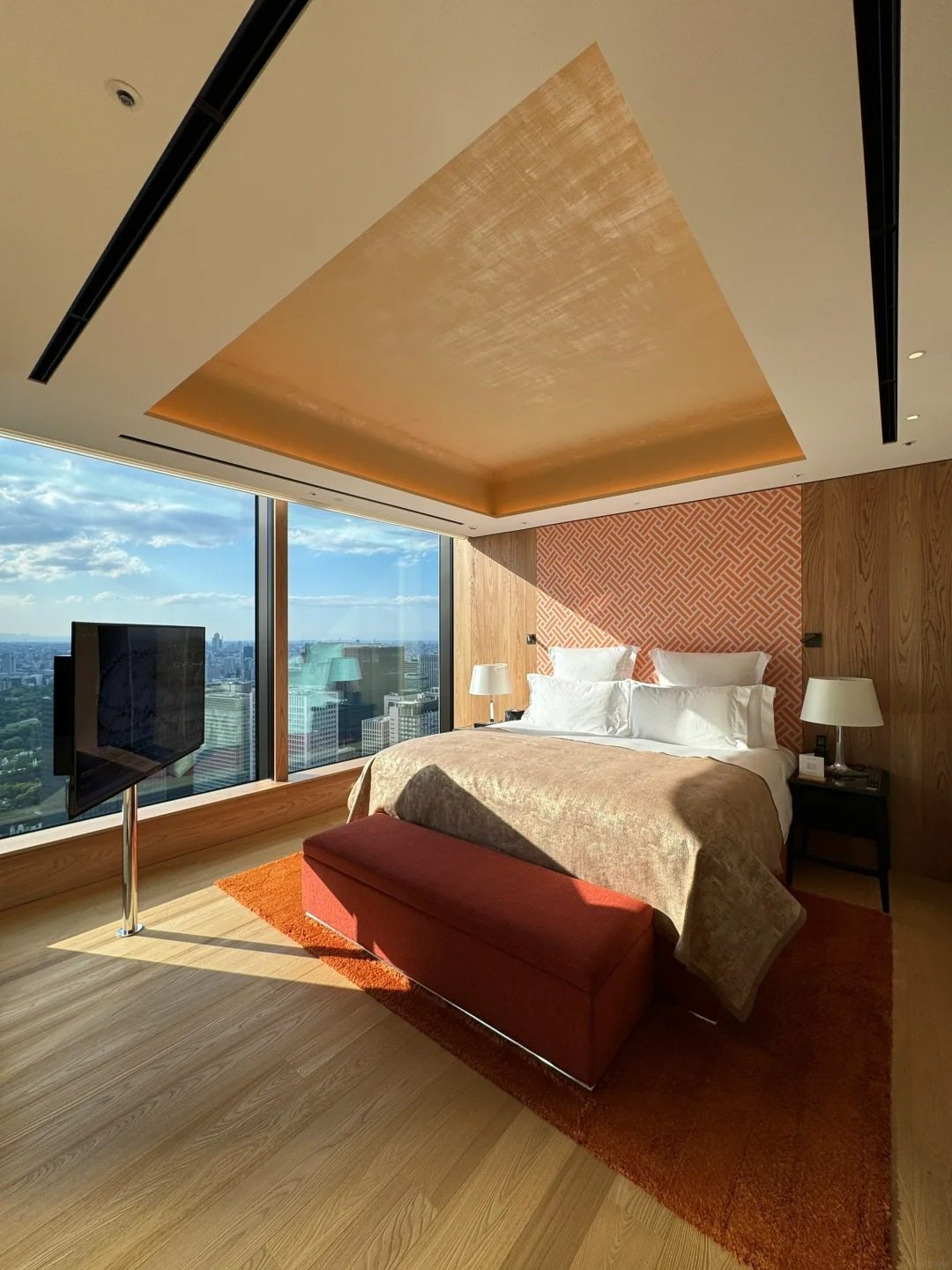
The layout is weaker than the floor area suggests. Around 55 square metres sounds generous, but a lot of it goes on a long entrance foyer and the bathroom. The bedroom gets two chairs, a small table and a slim desk with a backless chair, which isn't much if you need to work.
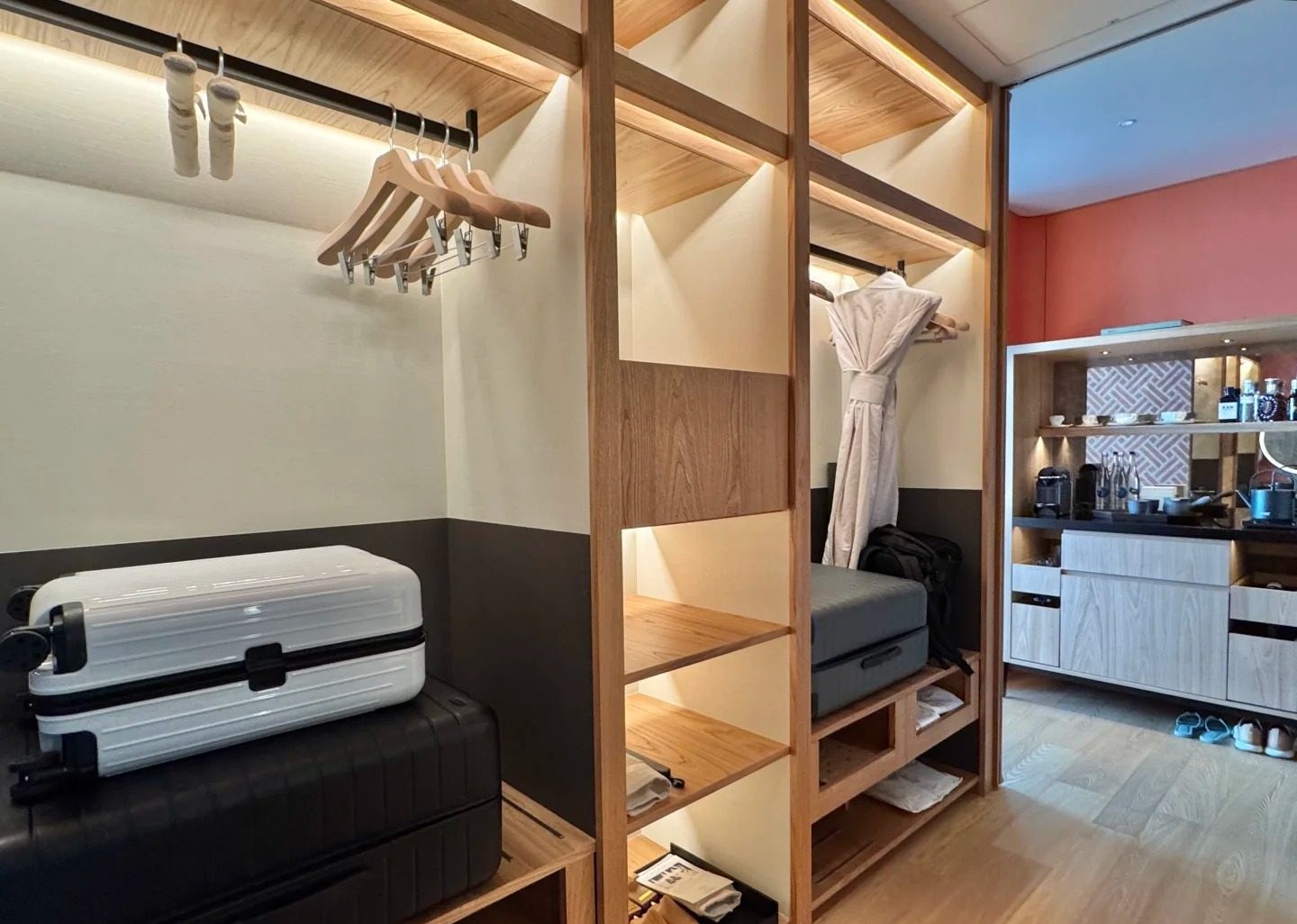
The bed is firm, the blackout is total and I never heard a neighbour. The irritations are small. The light switches are hidden in a bedside drawer, which you'll only discover in the dark. The sockets are USB-A, in a hotel that opened in 2023, so bring an adapter for USB-C. Mobile signal is weak this high up. The minibar's soft drinks are free; the Krug in the fridge is not.
Bathroom
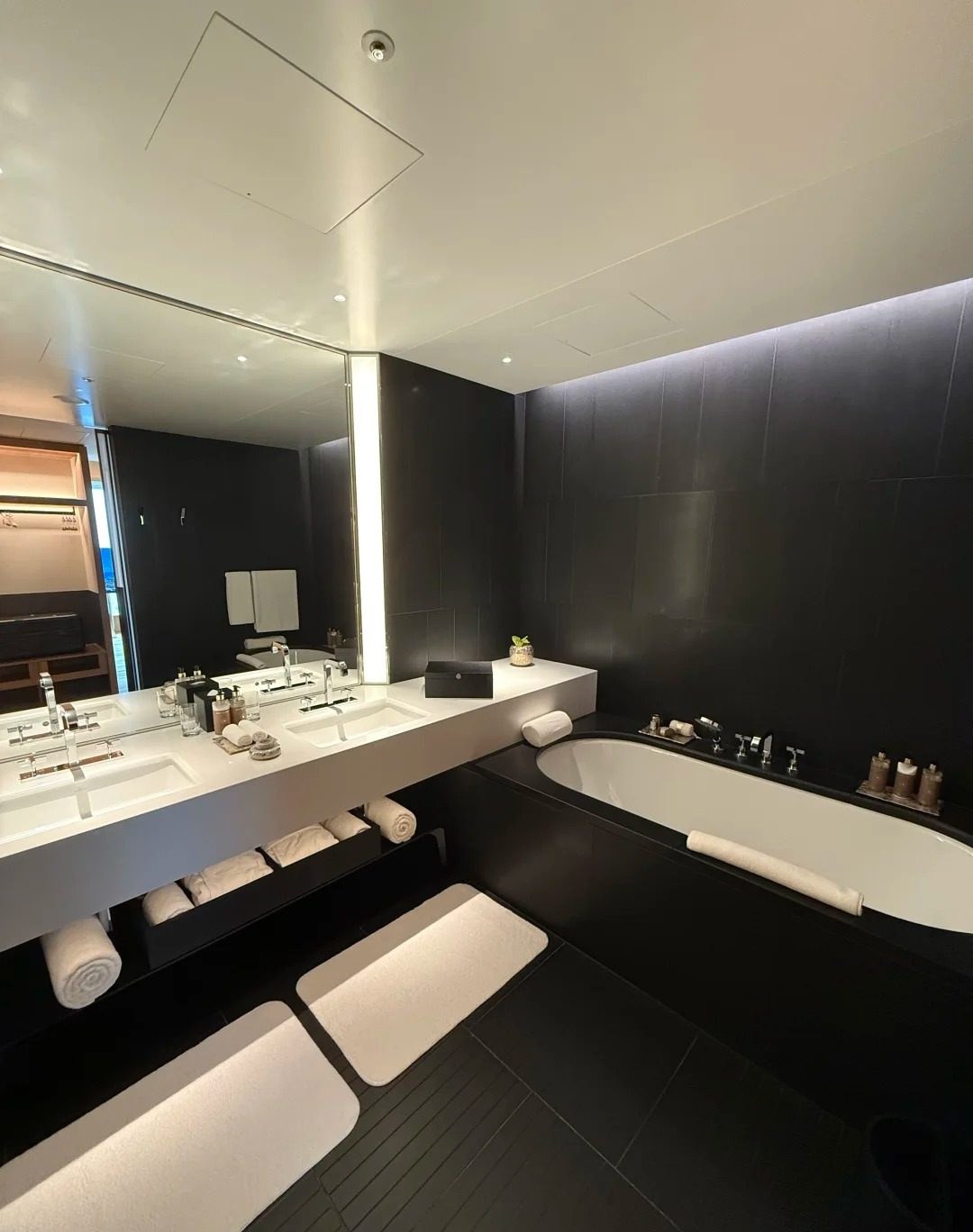
The bathroom is the real flaw. It's all black granite, with double basins, a rain shower and a long tub boxed into its own enclosure with no window. You're 40-odd floors above one of the best skylines on earth, and the bath looks at granite. The Park Hyatt, the Conrad and the Aman all put the bath against the glass, so I think this is a big missed chance. The shower partly makes up for it: one button does everything, and the water pressure is some of the best I've had anywhere.
Suites and upgrades
If you're booking a suite, check the door. The Junior Suite has a glass door between bedroom and living room, and the Superior Suite comes in a glass-door and a solid-door layout, which you can't choose between. The Deluxe Suite has a solid door and a proper buffer, so that's the suite I'd share with a child. Suites don't connect to standard rooms, so a family of four is better off in two Deluxe rooms.
Don't count on an upgrade. The Bulgari is run by Marriott but sits outside Bonvoy, so your Marriott status won't help here. The paid move to a Junior Suite offered at check-in costs close to the full price difference, and I don't think it's worth it. A 227-metre tower is going up next door on the Ginza side until early 2029, so expect cranes on that side.
Service
Service in the rooms and at arrival and departure is as good as anywhere in Tokyo. It's personal without being fussy, and they get there before you ask. At check-in they asked what time I wanted turndown, and each night it came with a flask of warm herbal tea, a different one every evening.
I mentioned a nut allergy on arrival, and the welcome dessert was changed without another word. When I said I liked the strawberries at breakfast, a box of them turned up to take away. On the last morning two bellmen carried my bags through Tokyo Station to the Narita Express platform, at checkout time, with half of Tokyo in that station.
The concierge is better at getting tables than choosing them. They can land Tokyo's hardest bookings, but the places I found myself were better than the ones they suggested. My advice: pick your restaurants yourself and let them do the booking.
Service is weaker in the bar, the lounge and the restaurant, where outside customers mix with guests. It's slower, less consistent and now and then a bit curt. Housekeeping slipped too, and my toiletries weren't always topped up. Even so, it felt more personal to me than Four Seasons Otemachi, which runs more like a corporate hotel.
Breakfast
Breakfast is very good if you order well. It's served in Il Ristorante on 40 from 07:00 to 10:30, and there's no buffet. You pick a plated set: Italian, Japanese, American, Chinese or a healthy one. The room was almost empty at eight every morning.
You can mix dishes across sets, and the kitchen will make waffles or pancakes off the menu. The bread is the highlight: Romito's potato bread, croissant and pain au chocolat, with leftovers boxed for later. The French toast is excellent, and the eggs Benedict are made to order in about ten minutes.
I'd skip the Japanese set. It barely changes from day to day, and any decent ryokan does it better than this Italian kitchen. Ordering it here is a bit like ordering carbonara in a ryokan. The coffee is ordinary.
It's also expensive. In 2026 the Italian set is ¥8,000 and the others ¥10,000, against ¥5,350 at opening. If breakfast isn't in your rate, walk two blocks to Centre the Bakery in Ginza 1-chome for French toast that's just as good for much less.
Restaurants and bars
You get an excellent bar, a very good sushi counter and a competent Italian. That's fine for three nights, but over a week it runs thin.
The Bvlgari Bar
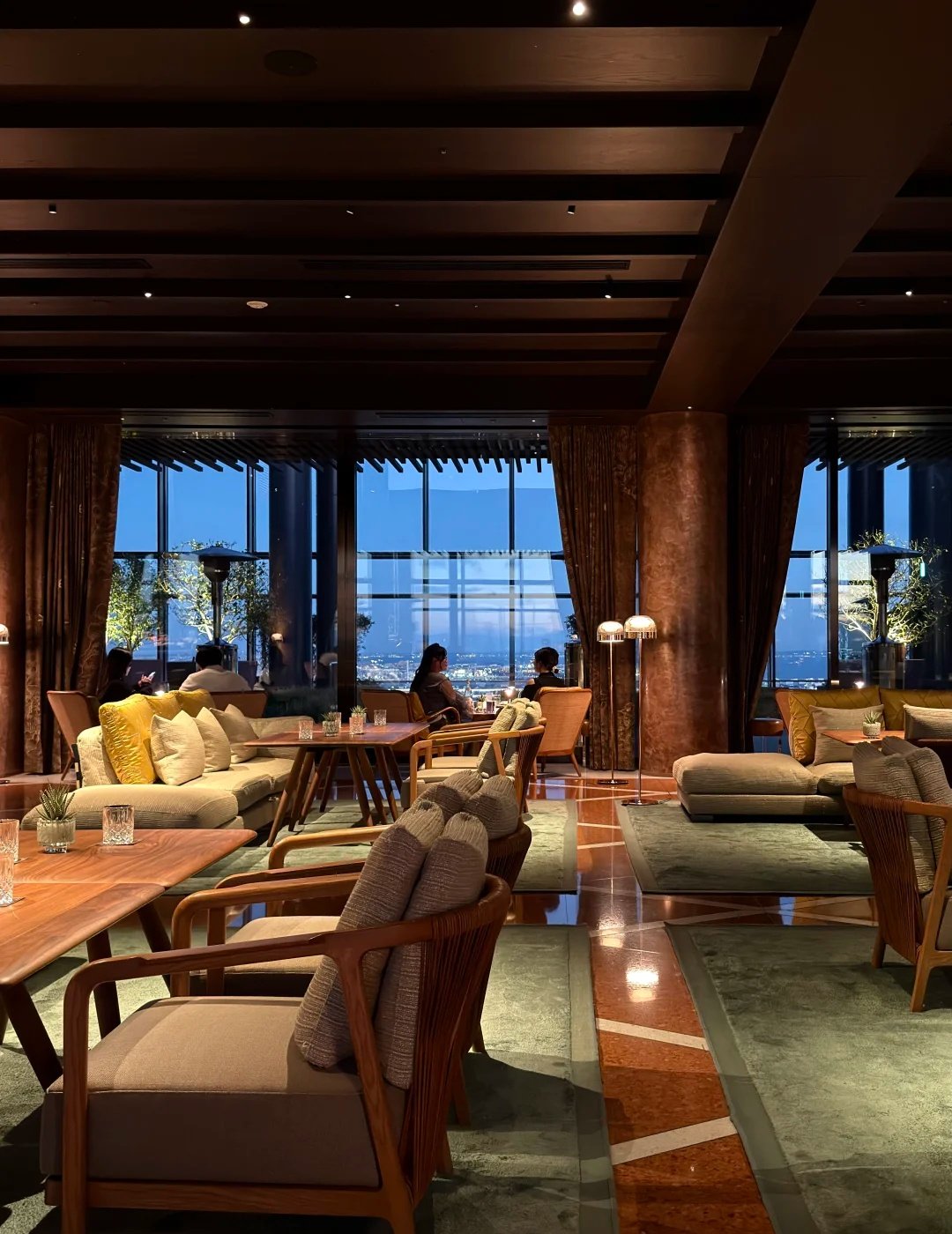
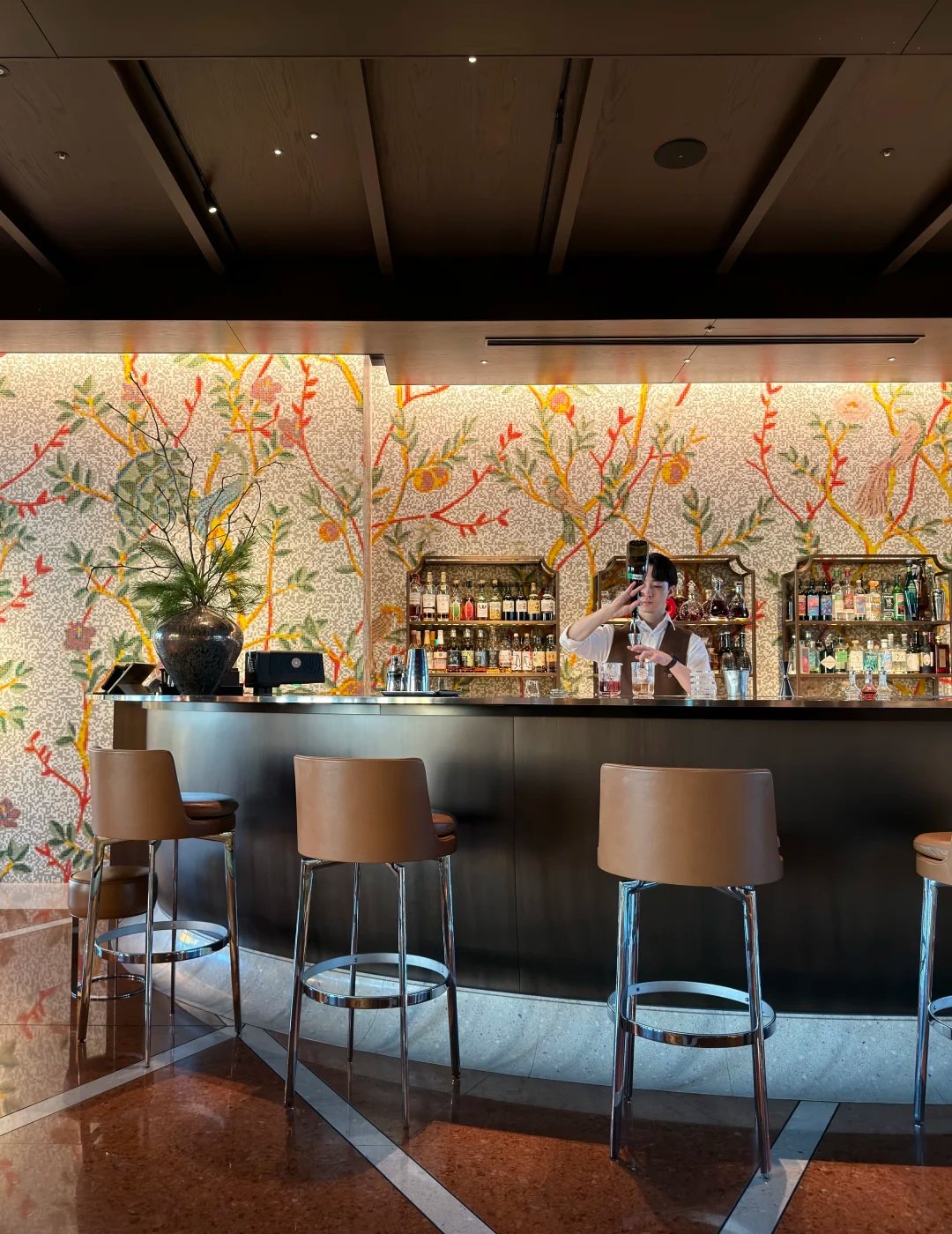
The Bvlgari Bar on 45 is the best thing here after the service. It takes up the whole floor, with terraces east and west and views to the palace, Shinjuku and Tokyo Tower. The Negroni is very good. Hotel guests are seated without a booking, which matters on packed weekend nights. The terraces close in strong wind, and the food is overpriced bar snacks, so eat elsewhere.
Sushi Hōseki
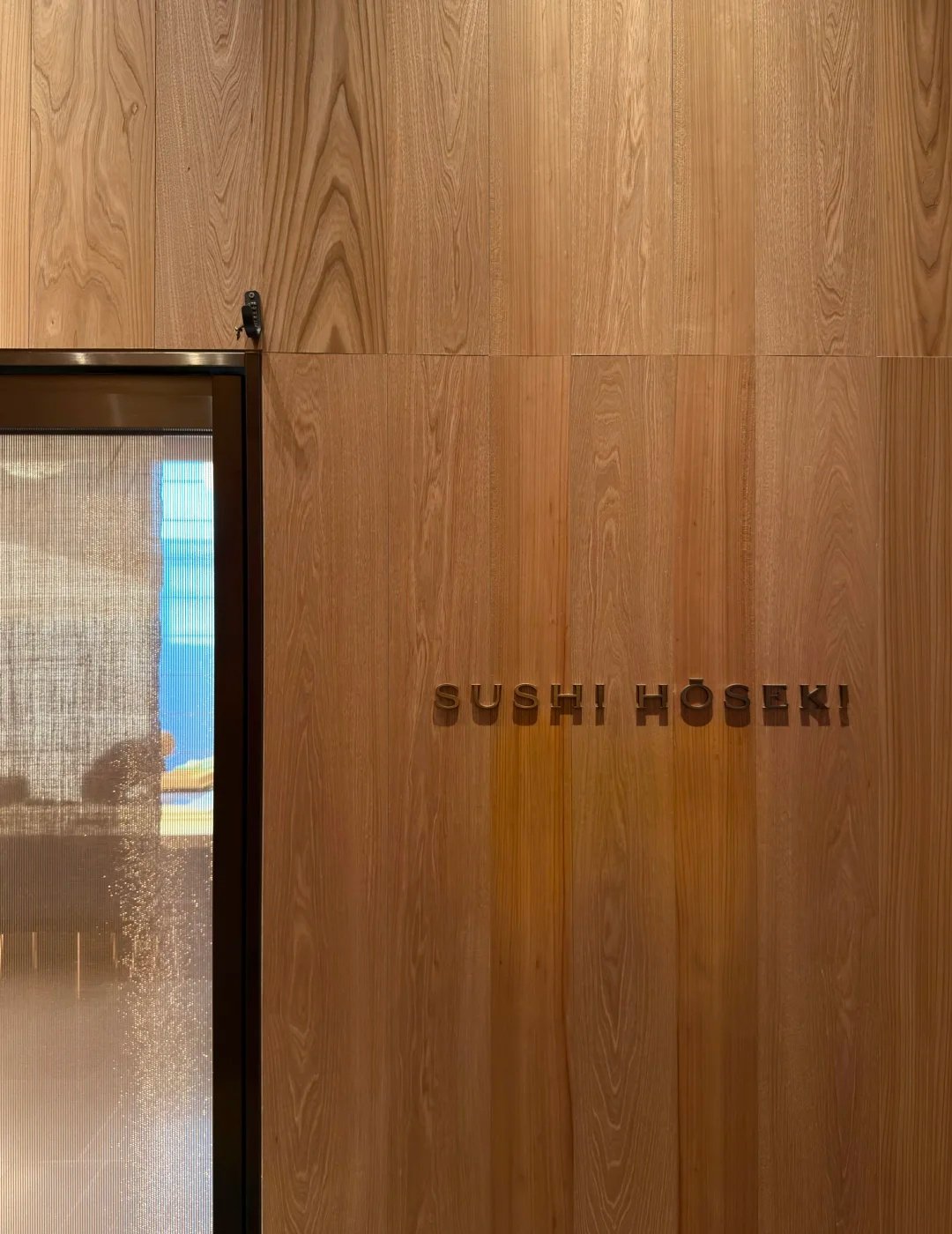
Sushi Hōseki is the reservation I'd make. It's eight seats at a hinoki counter, supervised by Kenji Gyoten of the three-star Sushi Gyoten in Fukuoka, with Takuro Shimizu cooking, and the rice is seasoned with a punchy red vinegar. Lunch is ¥28,000 and dinner ¥38,000, which is a little high, but the service is faultless and hotel guests can usually get in.
Il Ristorante – Niko Romito
Il Ristorante – Niko Romito won a Michelin star in 2024. It's a good hotel Italian, but I wouldn't come for it. The menu is short and largely the same one served at the Bulgaris in Beijing and Shanghai, and the cooking runs heavy and salty. If you go, stick to the pasta, such as the spaghetti al pomodoro (¥4,000), and the tiramisu.
Afternoon tea and room service
Afternoon tea in the Lounge has gone from ¥8,500 at opening to ¥13,500 in summer 2026. Those scones have had a better three years than most pension funds, and I'd skip it. Room service runs 24 hours; order the beef katsu sandwich. There's no club lounge.
My best dinner was in my room, with food from the Daimaru food hall a few minutes' walk away and plates brought up by staff. I'd recommend it.
Pool, spa and gym
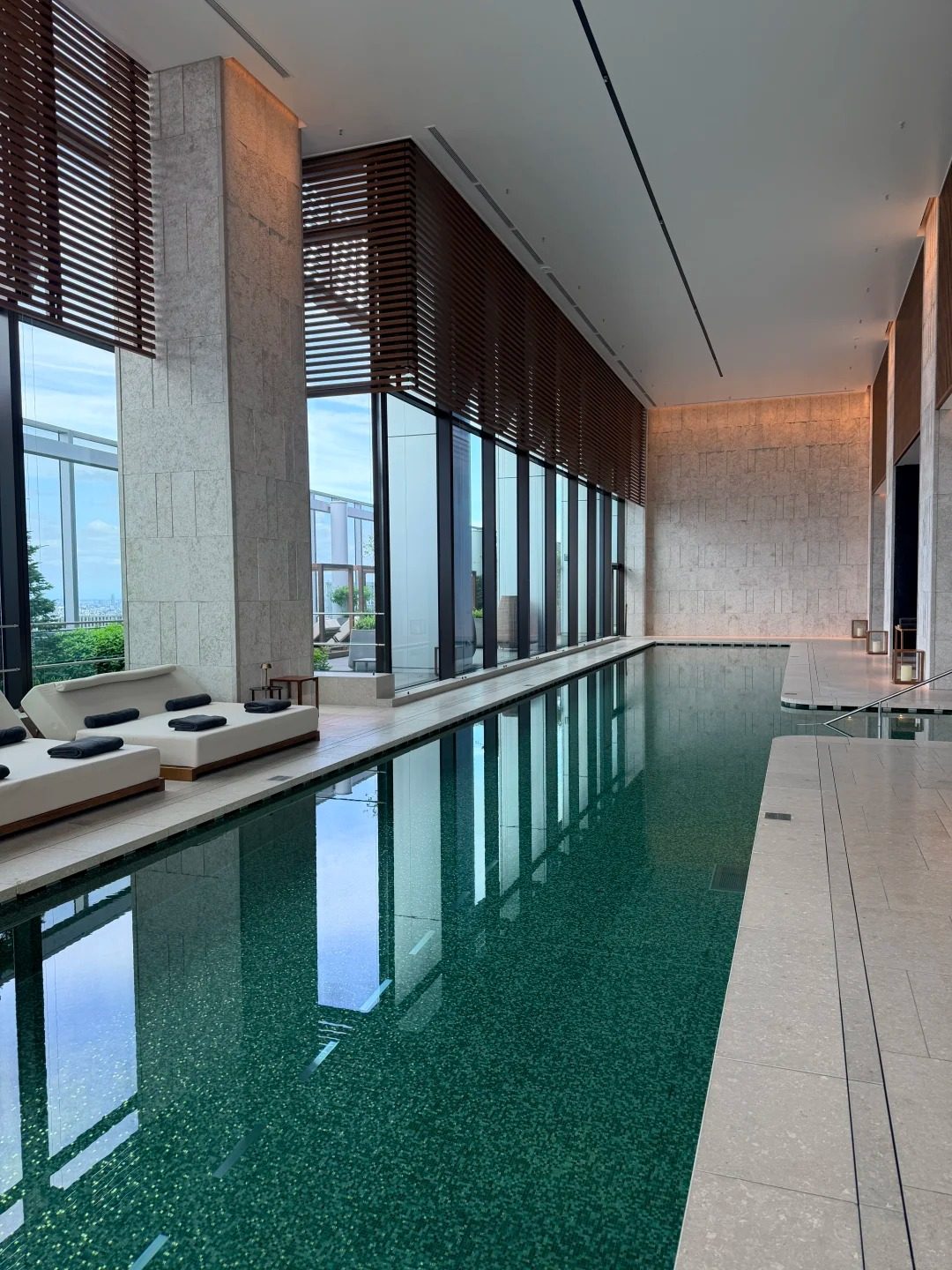
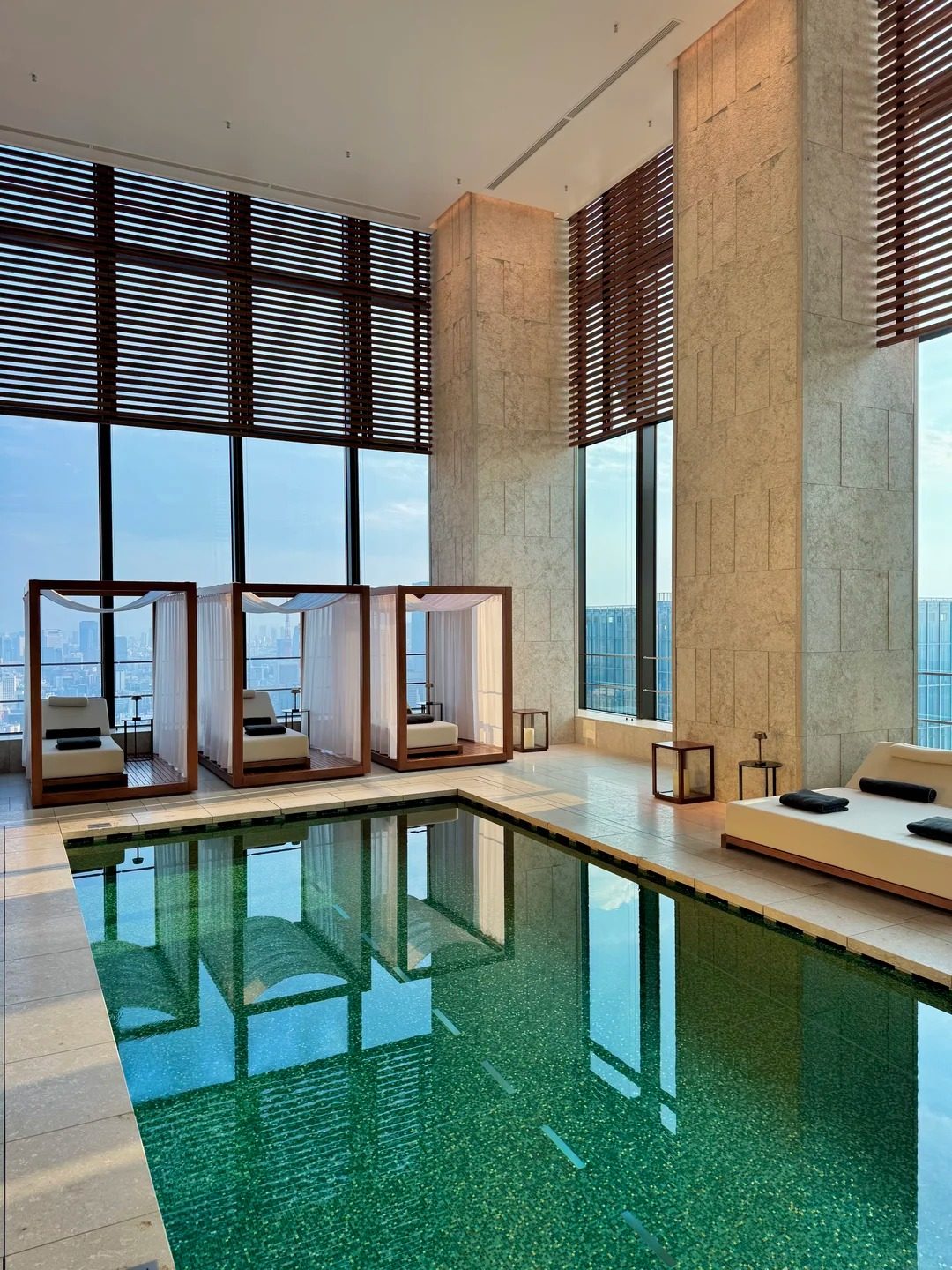
The pool is the other reason to stay. It's 25 metres of emerald mosaic behind full-height windows, for hotel guests only, and after dark I had it to myself. Bring a swimsuit, because they don't lend them. Children are allowed from four, between 09:00 and 17:00. A spa lift runs from the room floors, so you can go down in a robe. The single-sex baths are small and heated, but they aren't onsen. The 24-hour gym is serious.
Location and sense of place
The location is excellent for trains and Ginza and poor for west Tokyo. Kyobashi on the Ginza Line is three minutes away, Ginza is a 15-minute walk, and the Shinkansen and Narita Express leave from the station next door.
Don't come here for a sense of Japan; it isn't trying to give you one. This is an Italian brand doing Italy in Tokyo, with Japanese craft as decoration. Until the curtains open on the skyline, you could be in Milan. If you want the hotel itself to feel like Japan, book Aman Tokyo or Hoshinoya Tokyo.
Is it worth it?
Yes.
For a short, indulgent stay, it's the most polished high-rise hotel at Tokyo Station, with service, a pool and a bar to match anything in the city. At entry level it costs roughly half what Aman Tokyo does, and I think it beats the Aman on service, food, gym and spa. You do give up Japan, though, and a bath with a view.
Rooms start at around ¥260,000 a night. The hotel holds three Michelin Keys and five Forbes stars, and I think the service deserves both.
I'd book it for two to four nights as a couple, for a celebration, for Shinkansen trips, or if you swim or train every day. It's also the one I'd pick if you were about to pay Aman prices and care more about service and food than room design.
I'd book something else on a first trip if you want Japan indoors: Aman Tokyo or Hoshinoya Tokyo. On a long stay, the single restaurant and the price add up, and Four Seasons Otemachi is cheaper, with larger rooms, more places to eat and a better hand with children.
If you go, book the Deluxe King Skyline View, as high as you can get. With children, take the Deluxe Suite or two Deluxe rooms.
At a glance
| Best for | Couples on a short splurge, Shinkansen travellers, swimmers and gym users, repeat visitors who want privacy and polish |
| Not for | First-timers who want Japan inside the hotel, points collectors, long stays, anyone working from the room, anyone based in west Tokyo |
| Room to book | Deluxe King Skyline View, high floor; Deluxe Suite for families |
| Room to avoid | Low-floor rooms facing the station; the Junior Suite if you need a closed bedroom door |
| Skip | The Japanese breakfast set, the bar food, the paid suite upgrade at check-in, afternoon tea |
| Don't miss | The pool after dark, a Negroni on the 45th-floor terrace, Sushi Hōseki, a food-hall dinner in your room |
| Rough nightly rate | From about ¥260,000; ¥300,000 and up is normal in 2026 |